

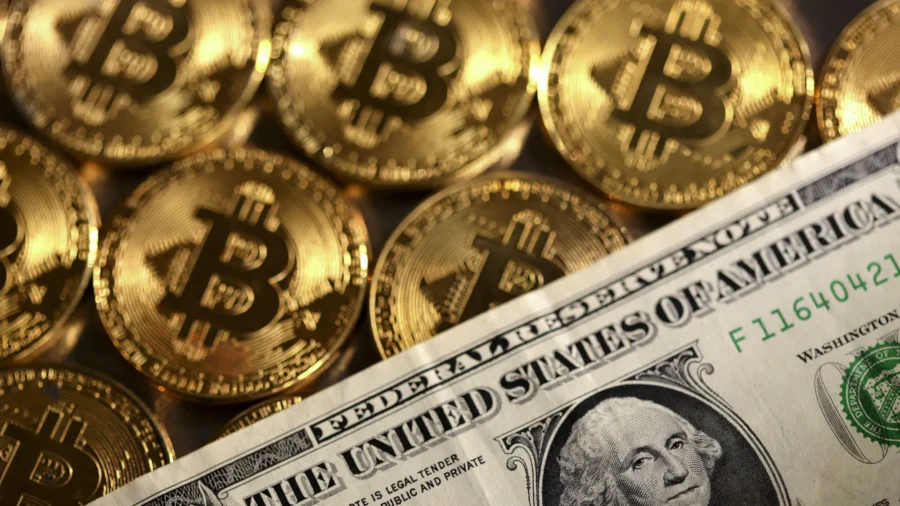
U.S. Attorney Jeanine Pirro announced this week that the Department of Justice (DOJ) filed a civil forfeiture legal action seeking to collect more than $5 million in bitcoin (BTC).
“It’s the new frontier of cyber crime enforcement or deterrence,” civil litigation attorney Shant Karnikian told NTD. “This is interesting because it's Bitcoin. You don't see civil forfeiture happening often with cryptocurrency.”
The DOJ complaint claims five unnamed people are victims of theft that occurred through unauthorized transfers from their cryptocurrency wallets, and the robbery allegedly took place between Oct. 29, 2022, and March 21, 2023.
“The plaintiff is the DOJ,” Karnikian said. “In an ideal world, the DOJ prevails in this case and they take the money and give it back to the victims.”
Under a SIM swapping scheme, according to the DOJ, a fraudster targets multi-factor authentication loopholes to access a victim’s phone number and switches that phone number to a device with a SIM card that's under their control.
The criminal can then intercept codes destined for the victim’s phone and utilize those codes to falsely legitimize the victim's identity and conduct improper activity transfers from the account without consent.
"Now that this has been filed, Stake.com will be told not to touch that money and have that money frozen specifically,” Karnikian said. “This legal action is also used when the perpetrators are overseas or are hard to prosecute.”
The DOJ further states that the wallet and the Stake.com account were perceived to be involved in the fraud, engaging in some 32 circular transactions, including repeated deposits and withdrawals of BTC.
NetBankAudit.com describes circular transactions as the recurring movement of funds that can blur their origin by inflating the volume of inflows and outflows in an account, causing the larger balance or source of funds to seemingly be conducting legitimate business.
Circular transactions are also known as round-tripping.
“Companies like Stake.com that accept cryptocurrency deposits might now be a little motivated to be careful who they take money from,” Karnikian added. “They may now be incentivized to ensure that whoever is depositing money into Stake.com, for example, is not a criminal or that the money being deposited isn't stolen funds.”