


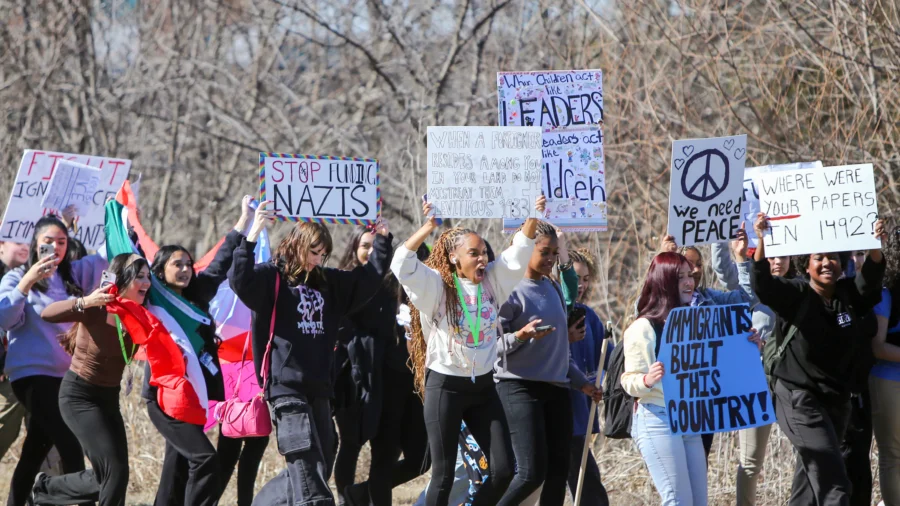
Student walkouts at public schools across the United States have increased sharply in recent weeks, with many demonstrations focused on immigration enforcement and policies of the U.S. Immigration and Customs Enforcement (ICE). The protests have taken place nationwide and, in some cases, simultaneously.
Lawmakers have raised concerns about the group’s funding, citing allegations that it is linked to Neville Roy Singham, a billionaire who has lived in China. Some members of Congress have subpoenaed Singham and asked the U.S. Department of the Treasury to investigate potential financial ties, including during a recent hearing titled “Foreign Influence in American Non-profits: Unmasking Threats from Beijing and Beyond.” The inquiry into Singham is ongoing.
The Party for Socialism and Liberation is one of several groups linked to organizing or promoting the walkouts, along with organizations such as the Sunrise Movement, the National Alliance Against Racist and Political Repression, and By Any Means Necessary. Staley said there have been about 330 school walkouts so far this year, compared with 51 last year. The protests have addressed a range of issues, including immigration enforcement, support for Palestinians, LGBTQ issues, diversity and inclusion programs, and environmental causes.
Staley described the trend as evidence of what he called “an activist pipeline in public schools,” arguing many participating students are very young and may not fully understand the political goals of the activist groups involved.