


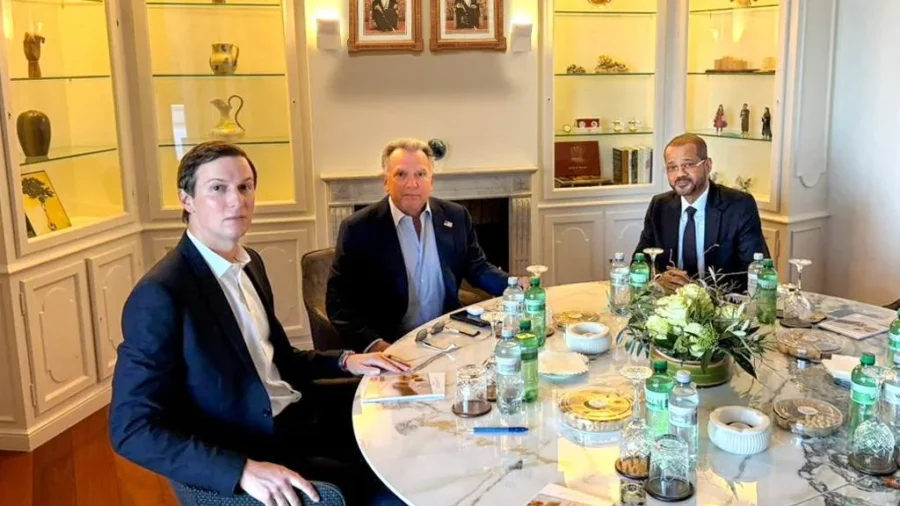
U.S. and Iranian delegations concluded a third round of indirect talks in Geneva on Feb. 26, without a diplomatic breakthrough to avoid potential armed conflict in the Middle East.
The U.S. military has been ramping up its force footprint in the Middle East since January, as President Donald Trump has pursued a new deal to halt Iran’s nuclear programs. Talks in Geneva came the same week the Trump administration raised allegations that Iran is trying to rebuild its nuclear program and pursue a warhead after the June 2025 U.S. strikes on three of its nuclear sites.
Despite not reaching a deal on Thursday, mediator and Omani Foreign Minister Badr Albusaidi signaled some progress and indicated the parties are prepared to continue talks.
“We have finished the day after significant progress in the negotiation between the United States and Iran,” Albusaidi said in an X post. “We will resume soon after consultation in the respective capitals.”
Albusaidi said the parties would meet next week in Vienna for a round of technical discussions.
Iranian Foreign Minister Abbas Araghchi, who has represented Tehran in discussions, also signaled progress following the Thursday talks. Araghchi said he welcomed the presence of Rafael Grossi, the director general of the International Atomic Energy Agency.
“Today was one of the most serious and longest rounds of negotiations,” Araghchi said.
The Iranian representative signaled Tehran’s readiness to enter another round of talks next week.
The White House did not respond by publication time to a request for comment about the Geneva talks.
U.S. special envoy Steve Witkoff and Trump’s son-in-law Jared Kushner represented Washington at the negotiations, just as they had in Geneva last week and in Muscat, Oman, on Feb. 6.
In an interview with Fox News on Feb. 22, Witkoff said Iran continues to retain stocks of uranium enriched to 60 percent purity. Weapons-grade nuclear material needs a purity of about 90 percent.
During the interview, Witkoff said Iran is “probably a week away from having industrial-grade bomb-making material.”
Speaking with reporters during a visit to the Caribbean island nation of Saint Kitts and Nevis, U.S. Secretary of State Marco Rubio also alleged Iran has taken steps to repair its nuclear program after the U.S. strikes.
“They were told not to try to restart it, and here they are. You can see them always trying to rebuild elements of it,” Rubio said, adding, “They’re not enriching right now, but they’re trying to get to the point where they ultimately can.”
Rubio also reiterated concerns about Iran’s conventional weapons, including ballistic missiles that can strike U.S. bases in the Middle East.
“Beyond just the nuclear program, they possess these conventional weapons that are solely designed to attack America and attack Americans,” Rubio said.
This week, Araghchi reiterated the longstanding Iranian assurance not to pursue nuclear weapons, but said his country would not forego peaceful nuclear energy. Araghchi has also said Iran’s missile programs would not be up for discussion.