


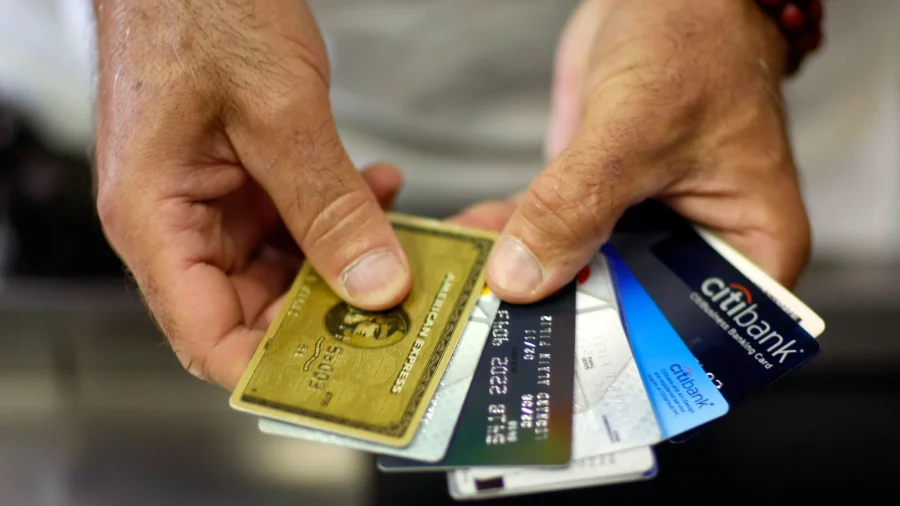
The difficulty in reading the fine print can cost cardholders big money. 59 percent of Canadians surveyed by Affirm say “hidden or unexpected credit card fees” have negatively impacted their household budgets, with 36 percent saying it happens “at least occasionally.”
Experts say the card readability issue is nothing new, and consumers can expect more of the same from their card providers.
“Reading credit card fine print can feel a lot like trying to decode dense legal code,” Leslie Tayne, finance and debt expert and founder of New York City-based Tayne Law Group, told NTD. “Credit card fine print is often written in complex terminology, making it difficult for consumers to understand, because it’s written to adhere to strict legal requirements, not because it’s meant to be user-friendly.”
Tayne noted that credit card lenders are legally required to include specific legal language, which makes documents lengthy and complex.
“Unfortunately for consumers, confusion can lead to overlooked fees, higher interest, and penalty charges, and credit reporting, which they may have only glossed over when reviewing the fine print,” she added. “This confusion will only benefit the credit card company.”
Additionally, late or returned payment fees often cost more than the consumer expected and can escalate quickly. “That causes the consumer to scramble to make a payment that is higher than they anticipated,” Tayne said.
Additionally, additional APRs may apply if a payment is missed, which is another factor to keep an eye on when opening a new account. “Another issue can be overlooked minimum payment requirements, which can be problematic as it can prolong debt repayment, and increase interest paid, keeping the consumer in the debt cycle for longer,” Tayne added.
The good news is that plastic users can decipher their card's fine print if they know how to penetrate the legalese and corporate jargon. These tips should get the job done.
Start your credit card fine print journey online and make sure you add an AI element to your search.
“There are solid sites online that review credit cards and get into the nitty-gritty of the card's terms,” Chris Motola, a financial analyst at National Business Capital, told NTD News. “You can also run the text through an LLM (e.g., a large language model AI platform), to try to isolate specific terms.”
Motola also recommends using AI tools to get a sense of what to look for in the fine print, not to confirm the exact details. (FinePrint and Legal Simplifier are good tools that are easy to use and easy to understand.) “Once you get a sense of how these terms tend to work, you'll have a better idea of what to look for when you're considering a card,” he said.
The exact terms of offers like rewards programs and introductory rates are what get buried in credit card fine print. “Caps on rewards, what purchases qualify for specific rewards percentages, and the circumstances under which rewards points expire are often in there,” Motola said.
Credit card fine print also provides details on what happens if you miss a payment, such as an increase in your interest rate. “Annual fees, if they exist, tend to be more prominently advertised, but they're in there as well,” Motola noted. “Another thing that's in there that most people forget about is the card's car rental insurance policy. Many offer primary or secondary insurance coverage for cars rented with the credit card.”
When reviewing credit card fine print, get specific.
“Look for language related to APRs, fees, such as late fees, and penalties, so you’re aware of these risks before agreeing to open an account,” Tayne said. “Consumers can also copy and paste the credit card fine print into Chat GPT and ask for a summary in layman's terms, although this should be used as a starting point in their research, and findings should always be verified independently by the consumer.”
Sometimes, credit card lenders provide simplified versions of the fine print on their websites that are easier for consumers to read. “It’s also a good idea to ask the lender directly if you have a question about the terms,” Tayne said.