


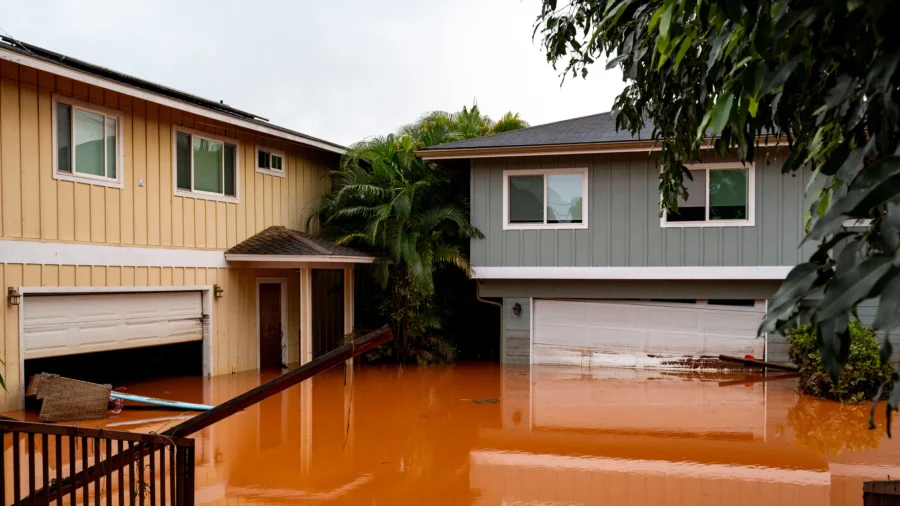
It was the state's most serious since flooding since 2004, the governor said, when floods in Manoa inundated homes and a University of Hawaii library.
State and county crews continued to assess the destruction, but by Monday, Oahu’s Department of Emergency Management had received more than 400 reports of damaged or destroyed homes, according to spokesperson Molly Pierce.
The City and County of Honolulu's Department of Emergency Management urged residents in Oahu to report any damage to their properties from two Kona low weather systems that pummeled the state with gusty winds, heavy rains and catastrophic flooding since March 11.
Rep. Ed Case (D-Hawaii) stressed the importance of reporting the damage.
Oahu’s historic North Shore, known for its big wave surfing, had been hit especially hard. Raging waters lifted homes and cars, and prompted evacuation orders for thousands of people north of Honolulu. Data from the National Weather Service (NWS) shows parts of Oahu received 8 to 12 inches on top of another recent storm that had dumped vast amounts days earlier.
Kaala, the island’s highest peak, got nearly 16 inches late last week, on top of 26.6 inches between March 10 and 16, according to NWS.
Residents on the island of Maui, still reeling from the deadly 2023 wildfire, at one point were placed under an evacuation warning due to the near-capacity of retention basins.
But the worst of the storms appear to be over, according to Hawaii meteorologist Matthew Foster, although additional flooding could still happen but more on an isolated scale.
Hawaiian Electric said on Sunday that it has since restored power to almost all customers who were impacted by two Kona low weather systems.
On Monday, public schools resumed operations, with the exception of a small number of campuses on Hawaiʻi Island, Oʻahu and Moloka‘i. Those campuses remain closed due to storm-related damage, access issues or safety concerns.
No deaths have been reported, but more than 230 people had to be rescued from rising waters.