



NEW YORK—The Democratic Party on Wednesday filed a lawsuit asking a judge to block President Donald Trump's executive order tightening mail-in voting nationwide, arguing it improperly impedes states' authority to conduct elections.
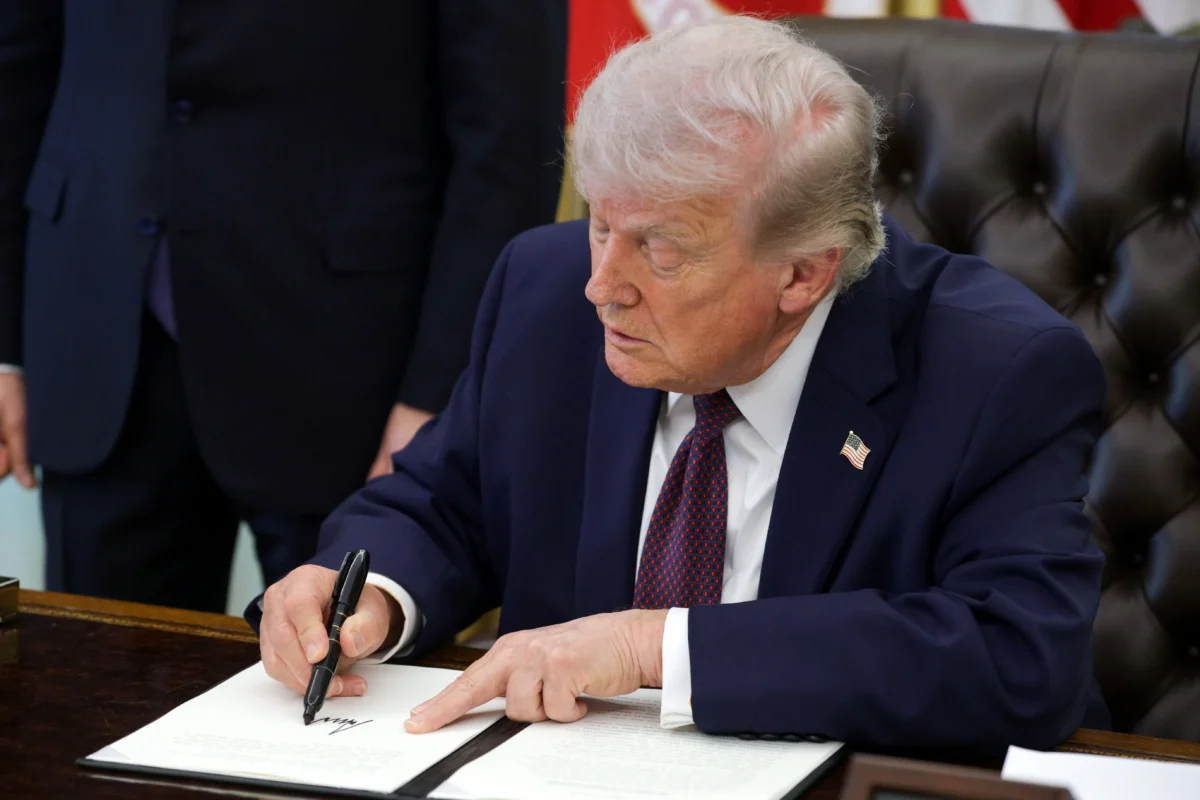
Tuesday's order also directed his administration to compile a list of confirmed U.S. citizens eligible to vote in each state and to use federal data to help state election officials verify who is eligible to vote. It also required absentee ballots to be sent only to voters on each state's approved mail-in ballot list.
In the lawsuit, filed in a Washington federal court, the Democratic National Committee and other party entities said the order was unlawful because the U.S. Constitution gives the states and Congress, not the president, the authority to regulate elections.
The order would also give the U.S. Postal Service the discretion to exclude voters from the eligibility list without their knowledge, the Democrats said.
"The Executive Order unlawfully burdens the right to vote by threatening millions of Americans with arbitrary disenfranchisement," wrote the plaintiffs, who are represented by prominent Democratic election lawyer Marc Elias.
The White House did not immediately respond to a request for comment. Trump said on Tuesday that he did not see how the order could be successfully challenged in court.
Trump's order came as the Senate weighs the SAVE America Act, a bill that would require proof of U.S. citizenship to register to vote and a photo ID to cast a ballot. The bill passed the House in February but faces long odds in the Senate, where Republicans lack the 60 votes needed to overcome Democratic opposition.
In the lawsuit, the Democrats said Trump signed the executive order after it became clear that the SAVE America Act would not pass the Senate.