


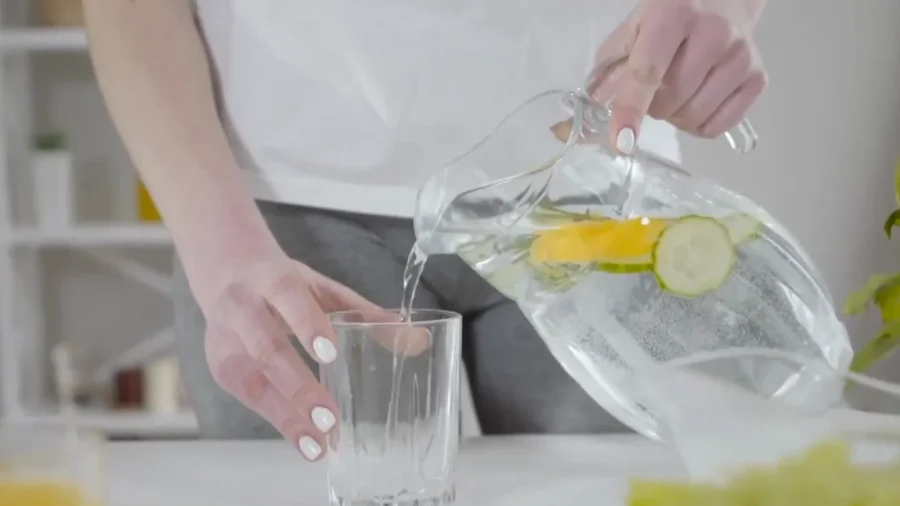
Could drinking water increase your risk of acid reflux, also known as heartburn?
Science says yes!
Pelletier explained to her 64,000 followers that she began noticing symptoms of acid reflux after drinking water, particularly cold water.
Specifically, she continued, "a valve called the lower esophageal sphincter prevents stomach acid from escaping back up the throat. But if [i]t weakens or relaxes at the wrong time, acid can escape and irritate the esophagus."
Other heartburn triggers include: consumption of alcohol or caffeine, the eating of chocolate, and even common stress.
But Pelletier emphasized that in her case, it was the water. She urged her followers to hydrate between meals instead of right before or after eating. That is because the water, along with the food contents in the stomach, consumed during a meal, can put pressure on the esophageal valve and lead to stomach acid escaping and irritating the esophagus.
"If only someone had told me 15 years ago that the way I was drinking water was worsening my acid reflux," she mused.
- Sip slowly: Especially during meals. Think gentle hydration, not flooding your stomach.
- Space it out: Aim to hydrate between meals instead of right before or after.
- Room temperature is best: Ice-cold water can be a shock to the system.
- Try smaller amounts more often instead of big gulps all at once.
Confirming Pelletier's Instagram suggestions, Broihier writes that spacing your water drinking is helpful. "Don't wait until the evening to compensate for not drinking enough water during the day."
Also, Broihier writes that sipping water is helpful, particularly in avoiding stomach distension or a "bloated" feeling.
And for those who love the effervescent beverages like seltzer water, the carbonation—like soda pop—can trigger acid reflux as well, so it is best to avoid them if you are concerned about heartburn and bloating.