


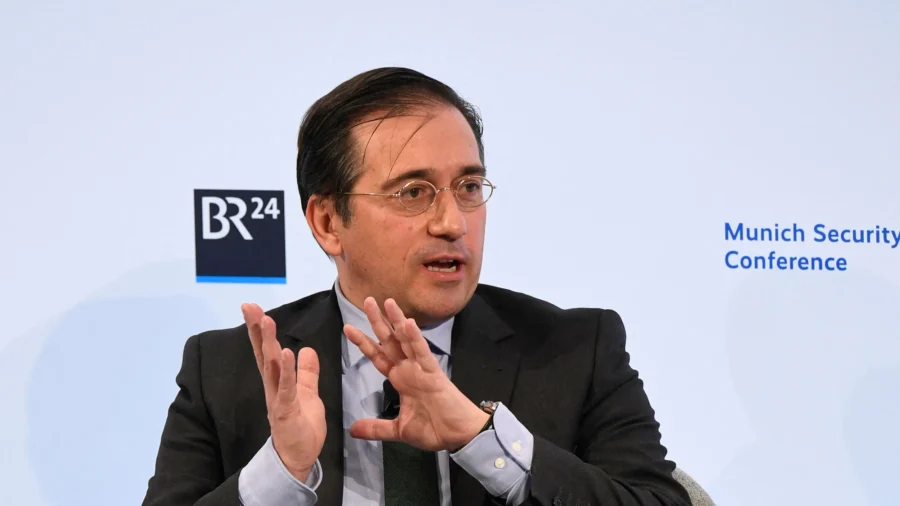
European countries, including Spain, Slovenia, and Ireland, on April 21 pushed for a suspension of a European Union pact governing its relationship with Israel, but the bloc remained divided on whether to take action.
The EU–Israel Association Agreement has been in force since 2000 and is designed to provide a framework for political dialogue, develop close political relations, create a free trade area, and promote cooperation in economic, scientific, technological, cultural, and social fields. The EU is Israel's largest trading partner, with trade in goods between the two totalling 42.6 billion euros ($50 billion) in 2024, according to the EU.
"Today, Europe's credibility is at stake," Spanish Foreign Minister José Manuel Albares told reporters, calling for a discussion on suspending the association agreement.
His comments built on a joint letter sent to Brussels by Madrid, Dublin, and Ljubljana dated April 17, which laid out their "deepest concern regarding several measures by the Israeli government, including executive decisions, military decisions and laws adopted by the Knesset (Israeli parliament), that contravene human rights and violate international law and international humanitarian law."
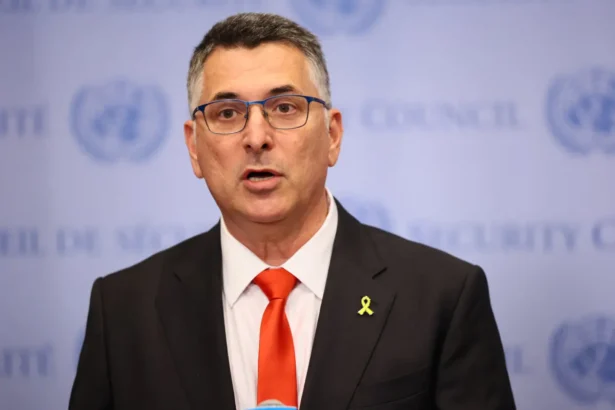
Israeli Foreign Minister Gideon Sa'ar responded to the letter in an April 19 post on X.
"We will not accept hypocritical criticism from someone who has a relationship with totalitarian regimes that violate human rights, such as Erdogan’s Turkey and Maduro’s Venezuela," he wrote in Spanish. "A government that receives thanks from the brutal Iranian regime and terrorist organizations, and that has dedicated itself to spreading antisemitism."
The European Commission proposed in September 2025 suspending some trade-related provisions of the association agreement, an arrangement affecting about 5.8 billion euros ($6.8 billion) of Israeli exports. Israel said at the time the proposals were "morally and politically distorted."
Suspending the pact would require a qualified majority vote among EU governments—the support of 15 out of 27 EU members representing 65 percent of the EU population. A full suspension of the association agreement would require a unanimous decision from all member countries.
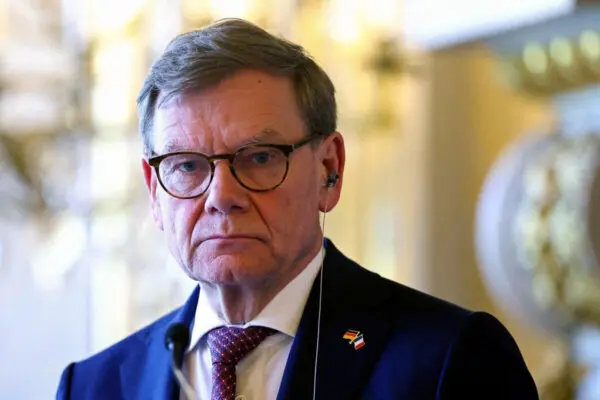
Germany indicated on April 21 that it was sticking to its existing position.
"We have expressed our criticism regarding the introduction of the death penalty," German Foreign Minister Johann Wadephul told reporters. "We warned against taking this step beforehand. We also have a very clear position on settler violence."
Danish Foreign Minister Lars Lokke Rasmussen said ahead of the meeting that "there is no sign of any majority in favor of doing anything with the association agreement."
Belgian Foreign Minister Maxime Prévot said his country was calling for at least a partial suspension of the association agreement, but added that Belgium is "aware that a full suspension is probably out of reach given the positions of the various European countries".
Sweden and France circulated a paper ahead of the April 21 meeting calling for the EU to take stronger action to limit commercial engagement with Israeli settlements.
Dutch Foreign Minister Tom Berendsen said it is "important to increase the pressure on Israel."
"The goal is behavioral change in Israel, and that is what we are working on," Berendsen said.