


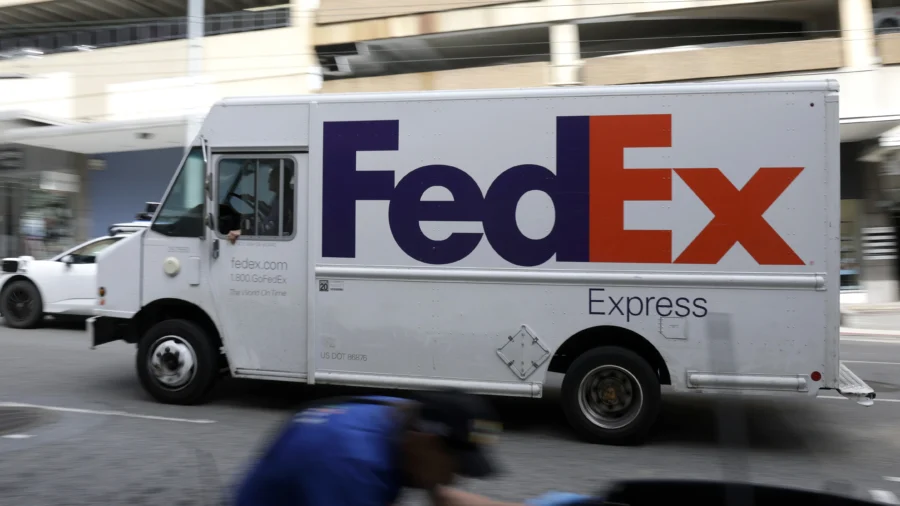
The FBI issued a warning about a surge in strategic cargo theft, with threat actors deploying “sophisticated, cyber-enabled tactics” to impersonate legitimate businesses and steal high-value shipments, hijack freight, and reroute deliveries.
Cyber threat actors are targeting transportation and logistics companies in the United States, including those involved in receiving, shipping, delivering, and insuring cargoes, the FBI said in an April 30 public service announcement alert. Since at least 2024, these malicious actors have hacked into the computer systems of freight brokers and carriers, usually using compromised carrier accounts, fake URLs, and spoofed emails.
“The cyber actors pose as victim companies and post fraudulent listings on load boards to deceive shippers, brokers, and carriers into handing over goods, which are redirected from their intended destination and stolen for resale,” the alert said.
Cyber-enabled cargo thefts usually start with threat actors compromising the load board accounts of freight brokers. Load boards are online marketplaces where freight brokers, truck operators, and shippers post listings and find cargo loads that keep freight vehicles moving.
Once the threat actor gains access to the account, they post fake loads by impersonating a real freight broker. Carriers see these listings and start bidding. The hacker responds by sending a malicious link to a Remote Monitor and Managing application. When a carrier downloads the app, the threat actor gains the ability to control the carrier’s computer accounts and systems.
The hackers then use these compromised carrier accounts to bid on real cargo loads. When they secure transportation rights to real cargoes, the load is transferred to drivers who may not be fully aware of the fraud. These drivers may end up transporting the cargo to a different destination than originally intended. This cargo is then transferred over to complicit drivers, who then steal the goods.
Overall cargo theft losses, including cyber-enabled ones, are estimated to have cost almost $725 million across the United States and Canada last year, according to the FBI. This is up by 60 percent from 2024.
“Confirmed cargo theft incidents increased by 18 percent. The average value per theft rose 36 percent to $273,990, driven by more selective, high-value targets,” the alert said.
In a Jan. 22 statement, data analytics company Verisk said there were 3,594 supply chain crime events across the United States and North America last year. Incidents involving confirmed cargo theft jumped 18 percent on an annual basis to 2,646 occurrences.
Food and beverage cargo theft jumped 47 percent in 2025 from the previous year, while theft of metals surged 77 percent, which the company attributed to the demand for copper products.
“Geographically, theft activity continued to expand beyond traditional hotspots. California remained the most impacted state with 1,218 incidents, but activity shifted away from Los Angeles County (down 11 percent) toward historically lower-risk regions such as Kern County (up 82 percent) and San Joaquin County (up 44 percent),” Verisk said.
“Several other states saw significant increases, including New Jersey (up 50 percent), Indiana (up 30 percent), and Pennsylvania (up 24 percent).”
Lawmakers have taken action to tackle the issue of cargo theft.
In April 2025, Rep. Dave Joyce (R-Ohio) introduced the Combating Organized Retail Crime Act to tackle theft, fraud, and other organized crimes targeting retail stores and supply chains across the United States, according to an April 2025 statement from the lawmaker’s office.
The bipartisan bill seeks to set up a coordinated multiagency response to threats and create new tools to deal with evolving trends in organized retail theft.
In January this year, Joyce’s office announced that the bill was marked and advanced by the House Judiciary Committee.
On March 17, the American Trucking Associations (ATA) said it sent letters to leaders of the House of Representatives and the Senate Judiciary Committee, requesting them to “swiftly pass” the Combating Organized Retail Crime Act and address “skyrocketing cases of cargo theft.”
In the letter to House leaders, ATA said that criminal networks are stealing an estimated $18 million worth of goods every single day, damaging businesses, worsening affordability concerns for families, and undermining supply chains.
“Cargo theft is not simply an economic issue. For those of us in commercial motor vehicle enforcement, it is a matter of public safety. Organized theft groups jeopardize the security of our national supply chains and place drivers and transportation workers at risk,” the letter said.
“Whether through direct hijackings, facility break‑ins, or increasingly complex schemes, these criminal operations continue to evolve. In many cases, drivers and employees are exposed to intimidation, physical assault, or other threats when attempting to safeguard freight.”