


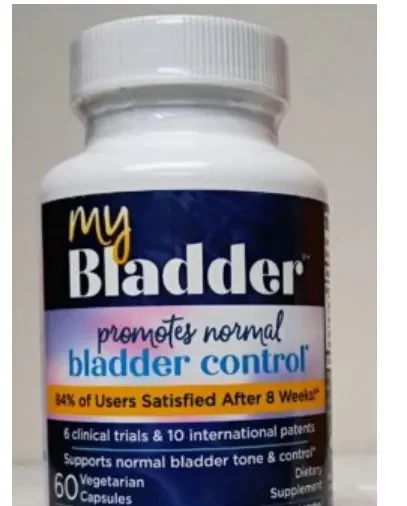
The U.S. Food and Drug Administration (FDA) announced the recall this week of a bladder control dietary supplement distributed nationally through Walmart and Amazon websites.
“Our routine testing has detected two strains of E. coli - O7:K1 (IAI39/ExPEC) and E. coli 1303 – in lot number 030425176 of this product,” the FDA said. “These strains are not permitted in dietary supplements under current regulatory standards. Subsequent investigation indicates the problem was caused by a temporary change in suppliers.”
The MyBladder product is packaged in an all-white plastic container with a cap in which there are 60 clear capsules containing brown powder, which states that the supplement “supports normal bladder tone and control” and that 84 percent of users are “satisfied after eight weeks.”
"It is rather worrisome that E. coli was discovered in a dietary supplement, something taken with the aim of enhanced health, to start with," Kansas City personal injury attorney James Roswold told NTD. "The presence of multiple E. coli strains in the supplement points to failures in quality control, most likely in terms of the raw materials involved."
The Mayo Clinic further states on its website that exposure to E. coli can occur from contaminated water or food, such as raw vegetables and undercooked ground beef.
When asked how the bacteria landed in the bottle of MyBladder capsules, a company leader said that Purity Products had taken a proactive step by submitting the voluntary recall.
"This precautionary measure underscores our commitment to prioritizing the well-being and safety of our valued customers," the spokesperson told NTD.
Current Good Manufacturing Practices are regulations set by the FDA, which warns that the presence of E. coli strains may pose a risk for gastrointestinal or other infections, particularly in vulnerable individuals.
For example, according to the FDA, E. coli O157:H7 can cause severe stomach cramps, bloody diarrhea, and vomiting while E. coli - O7:K1 can lead to meningitis.
"Strict monitoring of suppliers, microbiological testing of all ingredients, clean manufacturing facilities, and compliance with FDA guidelines for Current Good Manufacturing Practices is needed," Roswold added. "It is imperative that every supplement maker test for E. coli before they put the products out on the market."