


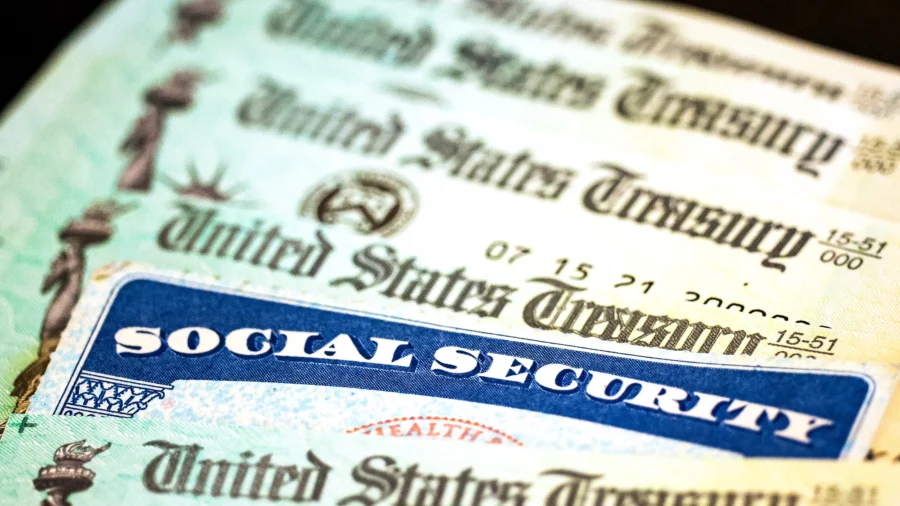
There’s no magic age number for taking Social Security. After all, everyone has unique reasons for collecting payments either early at age 62, when you can start collecting, or at age 70, the last year you can start taking before the benefits stop increasing.
Still, there’s a school of thought that age 70 is the smartest age for taking Social Security payments. At age 70, you’re making the maximum amount of money Uncle Sam allows, even though Americans are eligible to start taking Social Security benefits at age 62.
Why is age 70 the best age to take SSA benefits? Finance and retirement experts point to one major reason: greater payments.
Even though Social Security recipients can begin receiving payments at age 62, the payout grows 8 percent for every year a recipient waits to receive benefits. That’s a bigger cash difference than one might think.
There is a caveat, and it’s a big one.
At 70, your Social Security payment is as big as it will get, but statistically, you will collect it for a shorter term. “Waiting depends on having other sources of funds to draw on while you wait to collect,” said Scott R. Majbar, managing director at Senior Benefits Boston, by email to NTD.
Social Security recipients should also factor in income and health needs. If you don’t need the income yet and are in good health, waiting can make a lot of sense. But if you have health issues or low or no savings, taking Social Security payments early can be a better move.
“I always tell clients we should run the numbers first,” said Aaron Cirksena, founder at MDRN Capital, a financial advisory firm, via email to NTD. “Then look at your break-even point, how long you expect to live, and whether your spouse might rely on survivor benefits.”
The Social Security program is primarily funded by taxes on current workers, as long as there are workers, income comes into the fund. “What happens in 2033 is that the cash reserves and interest on those reserves will end,” Majbar said. “That’s a problem that can and should be addressed, as the income cap on SS taxes has not been updated in decades. The full retirement age can also be raised.”
So, is age 70 the best time to start taking Social Security? If longevity has you living well into your 80s and 90s, it makes sense.
“Waiting until 70 does maximize your monthly payment, since benefits increase for every year you delay past your full retirement age up to 70,” said Ashley Akin, a certified public accountant and senior analyst at Gold IRA Companies, a retirement advisory firm, by email to NTD. “However, this only pays off if you live long enough to make up for the years without payments.”
Some people might never reach that break-even point, especially if health is a concern.
“Claiming earlier gives you income sooner, which can help with expenses or give peace of mind. It also lets you adjust your overall retirement strategy if your situation changes,” Akin said. “So age 70 is often ideal in theory, but not always in practice. It depends on your personal health, finances, and preferences.”