


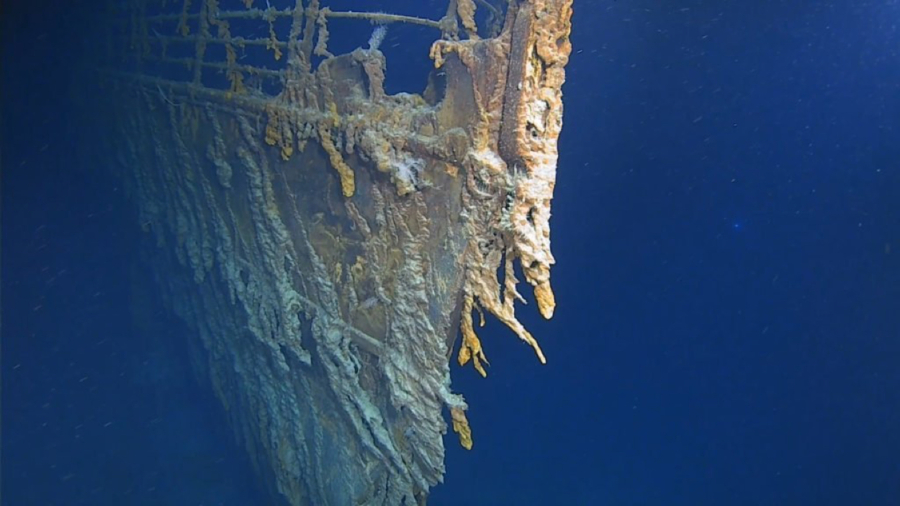
The RMS Titanic was visited by divers for the first time in 14 years, and the ship that was once a picture of luxury was found in the process of being swallowed up by the ocean floor and ravaged by metal-eating bacteria.
A team of experts, scientists and a National Ocean and Atmospheric Administration representative captured footage of the 107-year-old wreck with specially adapted cameras. The 4K footage will make it possible to see the wreck in augmented and virtual reality technology.
The ship sank in 1912 when it hit an iceberg, leading to the deaths of 1,517 of the 2,223 people on board.
"The most fascinating aspect was seeing how the Titanic is being consumed by the ocean and returning to its elemental form while providing refuge for a remarkably diverse number of animals," said Patrick Lahey, the president and co-founder of Triton Submarines.
Victor Vescovo, CEO of Caladan Oceanic and the submersible's chief pilot, noted that the success of this series of dives to the Titanic opens access to visit other hard to reach wrecks using a similar process.
"We now have a proven system that can easily and repeatedly visit any ocean wreck, at any depth, anywhere in the world, and study it in detail. We're seriously thinking about where to take her next," Vescovo said.
The site was not just used for study, however. The dive team laid a wreath and held a ceremony to honor those who died in the ship's sinking.