


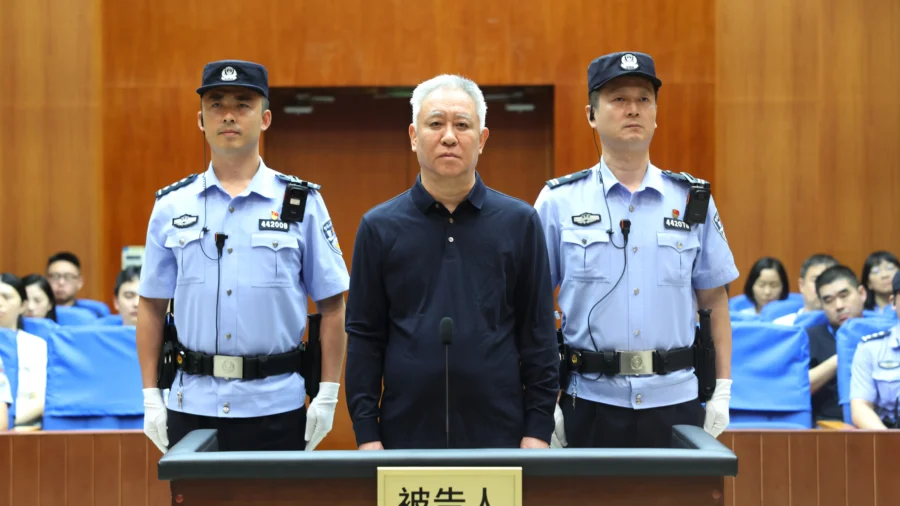
Former China's richest man and Evergrande Group founder Hui Ka Yan (Xu Jiayin) has been sentenced to life imprisonment for fundraising fraud, embezzlement, and multiple other charges.
On the morning of the 20th, the Shenzhen Intermediate People's Court in Guangdong Province announced the verdict: Evergrande Group was fined ~$1.31 billion, while Evergrande Real Estate was fined ~$1.04 billion. The 67-year-old Hui Ka Yan was jailed for life with all personal property confiscated.
A total of 56 individuals affiliated with Evergrande Group were sentenced on Thursday, among them are Hui's two sons.
From Impoverished Villager to Asia's Richest Man
Thirty years ago, he was merely a poor young man hailing from a rural area in Henan Province; 10 years ago, he was one of the wealthiest men in Asia; today, he is a prisoner serving a life sentence.Following China's reform and opening-up, the nation's urban housing system underwent a fundamental transformation. The welfare housing allocation system gradually faded into history, and housing increasingly became a commodity that could be traded, mortgaged, and invested in.
In 1996, Hui founded Evergrande in Guangzhou. It was a profound year—one where many Chinese people had not yet realized that an unprecedented wealth redistribution was about to begin. And Hui caught this moment.
During its peak, Evergrande Group was not just a real estate developer, but a massive "commercial empire" propelled by China's rapid urbanization wave. Its unprecedented popularity was evidenced by its extreme sales scale, breathtaking rate of expansion, and ubiquitous brand presence.
Between 2016 and 2020, Evergrande operated over 1,300 projects across more than 280 cities nationwide, with annual contracted sales surpassing ~$104 billion, directly and indirectly driving millions of jobs.
As China Evergrande's stock price surged, Hui's net worth soared to ~$45.3 billion in 2017. He not only topped the Forbes and Hurun Rich Lists as China's richest man, but also briefly surpassed India's Mukesh Ambani and Jack Ma to become the richest man in Asia.
The Bursting of the Bubble
China's commercial housing pre-sale system is rare: most new homes a Chinese household buys are bought "off-plan" (a pre-sale unit), meaning the house is not yet built, but they still need to pay a down payment to the developer, rather than a third party, and start paying a mortgage.In other words, the homebuyers at the very end of the real estate development chain became the largest providers of capital.
Consequently, China formed a unique operating cycle for real estate: the government transfers land use rights, developers buy land, and the government uses the proceeds to build urban infrastructure. The improved infrastructure drives up land value, rising land values push up housing prices, and rising housing prices incentivize residents to buy homes. Developers then receive sales revenue, which they use to purchase even more land.
However, this 20-year frenzy required one vital prerequisite—what happens if one day the homes stop selling?
That day arrived in 2020, when Chinese leader Xi Jinping introduced the "Three Red Lines" policy, mandating real estate developers de-leverage and curb high-debt expansion. Evergrande's financing channels were abruptly tightened.
Thereafter, Evergrande's liquidity crisis fully erupted, and projects in numerous regions ground to a halt due to unpaid construction costs. Hui resigned as chairman of Evergrande Real Estate. The company's stock price collapsed, and its market value vanished rapidly. In 2023, Hui Ka Yan was taken into custody on suspicion of illegal crimes.
Although Hui has been sentenced, those suppliers left unpaid by Evergrande and those families who bought homes but cannot get their keys remain trapped in hardship.