


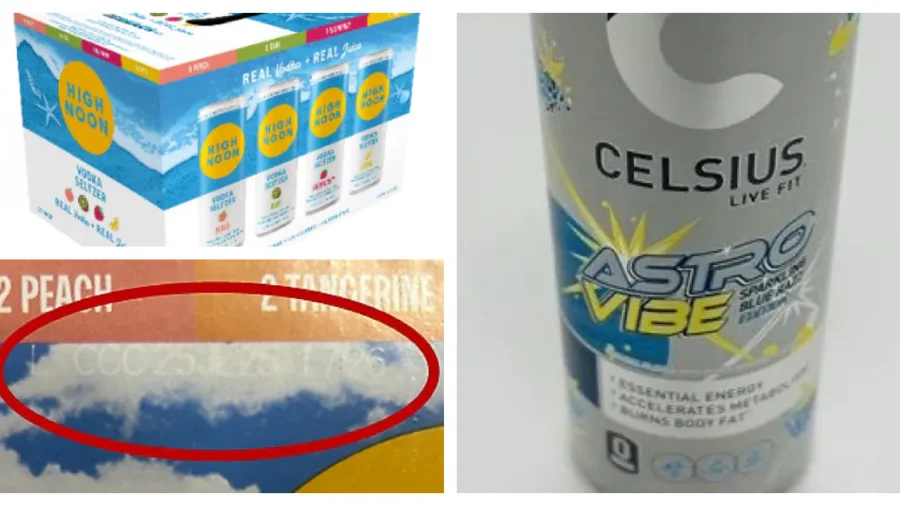
The U.S. Food and Drug Administration (FDA) published a recall notice this week from a beverage company over a supplier error that resulted in energy drinks being filled with vodka seltzer.
Beverage brand High Noon said it has recalled two production lots of its High Noon Beach Variety packs (12-pack/12 fluid ounce cans).
“Consumption of the liquid in these cans will result in unintentional alcohol ingestion,” it said. “No illnesses or adverse events have been reported for this recall to date.”
The 12 fluid ounce cans were distributed in Florida, Michigan, New York, Ohio, Oklahoma, South Carolina, Virginia, and Wisconsin between July 21 and July 23.
“High Noon is voluntarily recalling a limited number of High Noon Beach Variety Packs due to a labeling error from our can supplier," company spokesperson Krista Fontana told NTD. "We are working with the FDA, retailers and distributors to proactively manage the recall to ensure the safety and well-being of our consumers."
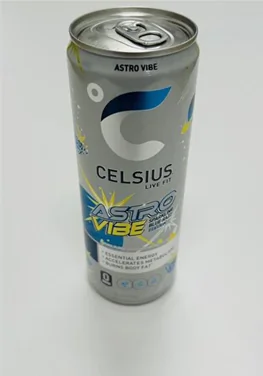
The CELSIUS ASTRO VIBE Energy Drink, Sparkling Blue Razz Edition cans have lot codes L CCB 02JL25 2:55 through L CCB 02JL25 3:11, while the High Noon Beach Variety packs have lot codes L CCC 17JL25 14:00 through L CCC 17JL25 23:59 and L CCC 18JL25 00:00 through L CCC 18JL25 03:00.
The FDA urged consumers who purchased the recalled products to contact High Noon consumer relations to get more information on next steps, including refunds.
The FDA further stated that the High Noon Beach Variety cans have silver lids, and the affected CELSIUS cans will also have a silver lid, instead of a black lid.
“CELSIUS and High Noon are not owned by the same company nor affiliated in any way,” Fontana added. “In this case, a can supplier that is shared by both brands erroneously sent empty CELSIUS cans that were mixed among High Noon cans.”
The mislabeling incident has concerned some in the beverage and food industry, including FruitSlabs.com CEO and Yeastie Boys Bagels part-owner Brandon Dorsky.
“What shocks me most about this recall is that a packaging supply business exhibited such negligence in meeting its customers' needs,” Dorsky told NTD.
“Selling a product that contains alcohol without identifying that it contains alcohol is not only dangerous, but could trigger significant legal liabilities,” he said.
To prevent such mislabeling in the future, Dorsky said the packaging supplier should institute multiple different error mitigation protocols, including having a packaging order checked by two people and doing a pre-pack and post-pack inventory count to ensure the proper number of units were packed in an order.
"With respect to packaging supplies used on intoxicating substances, the packaging supplier could further physically segregate packaging supplies so that supply would have to be retrieved from a different storage area for an intoxicating product versus a non-intoxicating product," Dorsky added.