


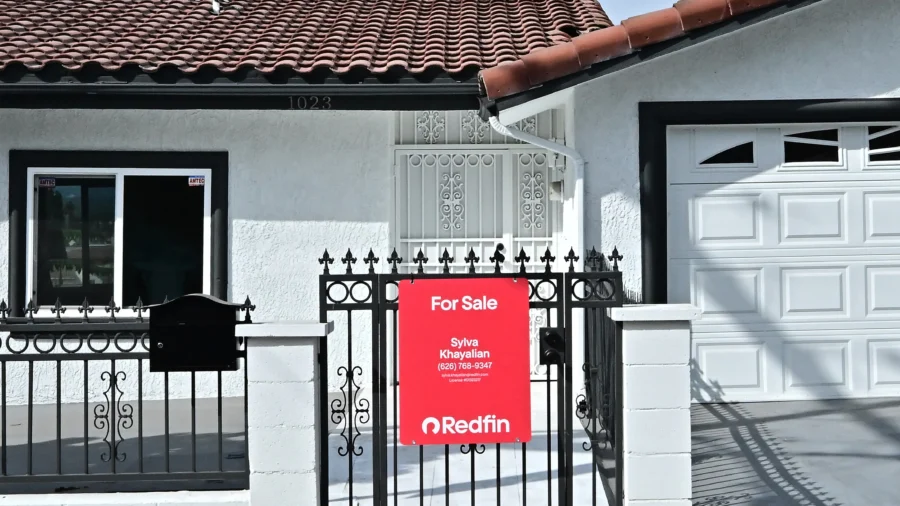
Close to 85,000 home sellers across the United States pulled their properties off the market in September, representing a 28 percent increase from last year and the highest level for the month in eight years, according to Redfin.
“That increase is bigger than it looks on paper; it represents a fairly significant jump in delistings from last year,” senior Redfin economist Asad Khan said in the report. “More sellers are giving up because their homes have been sitting on the market for a long time, and they don’t want to or can’t afford to settle on accepting a low price.”
For the past year and a half, the report notes, delistings have been on the rise, with year-over-year growth peaking at 39 percent in June.
In addition to sellers’ fear of losing profits, Redfin attributed the recent rush of delistings to several other factors, including the uptick in stale listings. According to its data, 70 percent of the nation’s home listings were considered stale in September, while the typical delisted home languished on the market for more than 100 days.
Demand has slowed in some regions of the country due to elevated mortgage rates and economic uncertainty. The report also indicates that some sellers are opting to rent out their homes instead of settling for lower offers.
In September, the total number of homes on the market increased by 8 percent year over year, and some regions are beginning to change over to a buyer’s market. However, home prices are continuing to rise by about 2 percent year over year.
“Many homes have a sticker price higher than buyers are willing to pay, but many sellers are unwilling to negotiate,” Khan said. “When tens of thousands of homeowners pull their homes off the market rather than accept a low offer, it effectively reduces the supply of homes that are actually available for buyers. That keeps sale prices elevated.”
Redfin indicated that 34 percent of September’s delistings were made by those who bought their homes between two and five years ago. Nearly 13 percent of homeowners buying between 2023 and 2025 pulled them from the market that month.
Virginia Beach experienced the most delistings at almost 75 percent year over year, followed by Washington, D.C., at nearly 54 percent, and San Jose, California, at just more than 53 percent. Two of the largest metropolitan areas in Texas—Dallas and Houston—saw delistings at 52.1 and 49.6 percent, respectively.
Florida metros, including Miami, Fort Lauderdale, and West Palm Beach, had the biggest shares of delistings compared to overall listings. In all three locations, more than 7.5 percent of total listings were pulled off the market. Philadelphia also accounted for 7.5 percent of delistings in September.
Only St. Louis, Chicago, and Nassau County, New York, experienced a decline in delistings, with St. Louis seeing the biggest drop by more than 12 percent.
Florida and Texas also led the nation for the most stale listings, with Miami at 84.6 percent and San Antonio at 81.2 percent. The California cities of San Jose and San Francisco had the least stale listings, along with Providence, Rhode Island, and Milwaukee, Wisconsin.