


The U.S. House of Representatives on Thursday voted to revoke the George W. Bush-era authorization to use military force in Iraq, sending it to the Senate.
Only one Democrat voted against the measure, while 49 Republicans joined Democrats to revoke the mandate. For years, Democrats and a smaller number of Republicans have tried to revoke the 2002 Iraq War powers and have argued that the authorization was unnecessary and allows the executive branch to keep Congress out of the loop on military decisions.
American troops left Iraq about a decade ago, although a number of contractors and some service members remain amid attempts to quash the ISIS terrorist group that emerged in the early 2010s.
“Congress has a historic opportunity to repeal this outdated authorization and reassert its proper authority over matters of war and peace,” House Foreign Affairs Committee Chairman Gregory Meeks (D-N.Y.) said on Thursday after the vote.
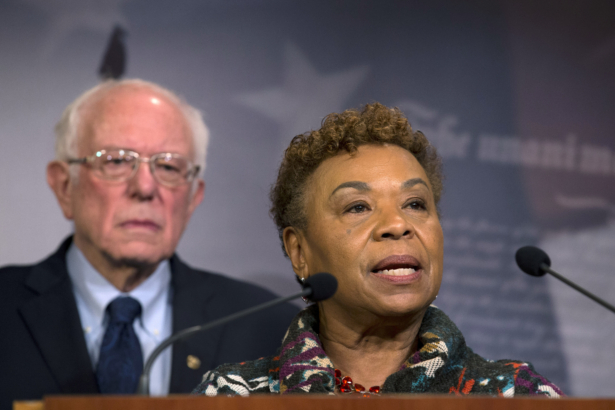
One of the bill's sponsors, Rep. Barbara Lee (D-Calif.), said that Democrats are also pushing to repeal the 2001 authorization of military force in Afghanistan "so that no future president has the unilateral power to plunge us into endless wars."
"It's been such a long time coming," Lee said before Thursday's vote. "It's Congress' responsibility to authorize the use of force, and that authorization cannot be blank checks that stay as authorizations for any administration to use the way they see fit."
In 2001 and 2002, Lee had voted against both war power measures in Iraq and Afghanistan.
Republicans who voted against the measure had expressed concern that revoking the war powers resolution would prevent the United States from swiftly responding to terrorism in the Middle East.
“The Iraq War has been over for nearly a decade,” Schumer said on the floor of the Senate this week. “The authorization passed in 2002 is no longer necessary in 2021.”
But by terminating the Iraq war authorization resolution, Schumer said that it doesn't mean the United States is abandoning its commitments to the country, which has been, for decades, beset by war and conflict. The measure also would not curb efforts to deal with ISIS terrorists, he said.
While criticizing the Trump administration, Schumer said that the former commander in chief used the 2002 resolution to carry out an airstrike against Iranian commander Qassem Soleimani.
A Senate committee is scheduled to take up the House bill next week, he said.