


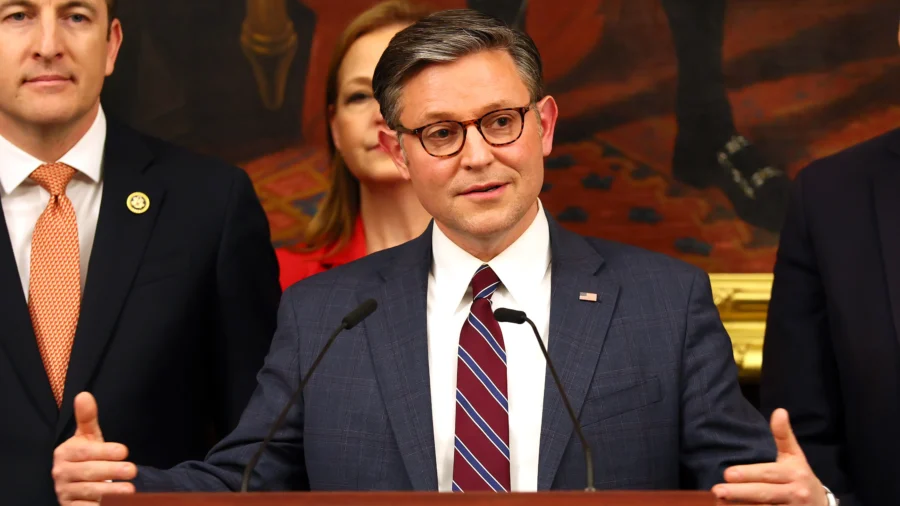
House Republicans remain committed to their legislative priorities, which include White House and border security, winning the Strait of Hormuz stalemate as a way to lower inflation, and election integrity.
First, federal lawmakers expect to finalize the reconciliation bill that will fund the Department of Homeland Security (DHS) for three years by June 1, according to Speaker of the House Mike Johnson (R-La.).
“We will fully fund both border security and immigration enforcement for the balance of President Trump's term,” Johnson said. “Maintaining border security and deporting dangerous criminal illegal aliens is the baseline that the American people demand and deserve.”
The reconciliation bill that will fund DHS is currently in draft form and being revised to meet fiscal targets. It is also undergoing a legislative process that includes review by the Senate parliamentarian Elizabeth MacDonough and a vote on both floors.
Johnson clarified that a request by the Secret Service did not include funding for the ballroom.
“There's an urgent need for increased security measures,” he said. “That's an objective fact and it should be something that's bipartisan. The ballroom is totally privately funded.”
Johnson based the Security Service funding urgency on an alleged attempt by Cole Tomas Allen, 31, to assassinate President Donald Trump at the April 25 annual White House Correspondents' Dinner.
Wednesday's House Republican press conference also addressed how resolving the Strait of Hormuz impasse will benefit the American economy.
On May 5, War Secretary Pete Hegseth announced Project Freedom, a new military operation that aims to restore commerce throughout the Strait of Hormuz.
“[President Trump] is laser focused on trying to resolve the conflict in Iran because if we get the Strait of Hormuz win, that will get the Straight of Hormuz reopened, which will alleviate a lot of pressure with gas prices and other things in the economy,” Johnson said.
The goals of Project Freedom include providing 24-hour protection with a red, white, and blue dome over the Strait, enforcing the U.S. blockade, ending Iran’s tolling system, and preventing potential shortages of energy worldwide.
During a question-and-answer session following the press conference, a reporter asked about the integrity of Louisiana Gov. Jeff Landry's April 30 executive order, which suspended the state's congressional primary elections.
In his reply, Johnson prioritized compliance with the U.S. Supreme Court.
“The ultimate election integrity concern is to ensure that you don't have an election on an unconstitutional map and when the highest court in the land says your map is unconstitutional, you cannot proceed,” he said. “That's why, not just Louisiana, but other states have reviewed their maps under this new rule in the clarification of the court to make sure that we do this right.”
The new interpretation of the VRA prohibits district lines only when they are the product of intentional racial discrimination, rather than discriminatory impact or outcomes.