


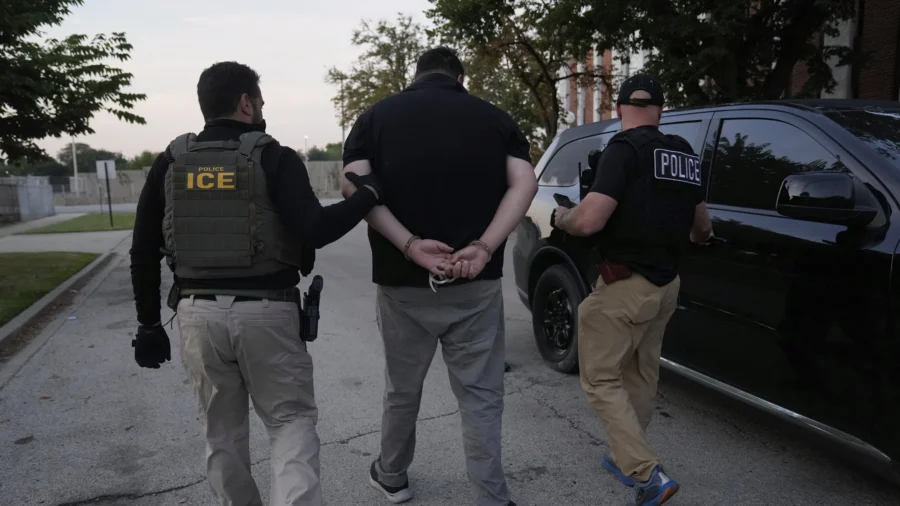
Immigration enforcement efforts in the Chicago area have resulted in the arrests of almost 550 individuals in less than two weeks, the Department of Homeland Security (DHS) said on Friday.
The initiative, known as “Operation Midway Blitz,” began Sept. 8 and is part of a renewed effort targeting large urban centers, such as Los Angeles and Washington, said Marcos Charles, the acting head of Immigration and Customs Enforcement (ICE)'s Enforcement and Removal Operations, on Friday.
“We’re going to be conducting this operation until we feel that we’ve been successful. There’s not an end date in sight,” Charles said.
He said the current total arrests are a “solid number” and that the effort is part of a multi-agency ongoing operation. He reported that both ICE and other federal law enforcement partners are involved in the operation, which has cast a wide net across the Chicago area.
The operation’s rollout has led to reports of more frequent sightings of immigration agents.
The injured officer was in stable condition after the incident. DHS officials at the time suggested Villegas-Gonzalez’s actions may have been influenced by social media campaigns calling for noncompliance.
“Viral social media videos and activists encouraging illegal aliens to resist law enforcement not only spread misinformation, but also undermine public safety, as well as the safety of our officers and those being apprehended,” said Assistant Secretary Tricia McLaughlin.
Charles said approximately 50 percent to 60 percent of the arrests so far have been targeted, focusing on specific individuals with criminal histories, outstanding removal orders, or other flags. The remainder were “collateral arrests,” involving people encountered during operations who were determined to be in the United States illegally.
Collateral arrests, which were prohibited under the previous administration, resumed under President Donald Trump as part of efforts to escalate deportations. Charles said that some collateral arrestees also have criminal records, stating, “Some of our collateral arrests ... also have criminal convictions and arrests. They just weren’t the people we were looking for at the time.”
Federal officials argue these policies force ICE to conduct more high-profile raids in communities, rather than rely on local law enforcement handoffs. Meanwhile, some local leaders contend that working with federal immigration authorities could discourage victims and witnesses from helping police.