


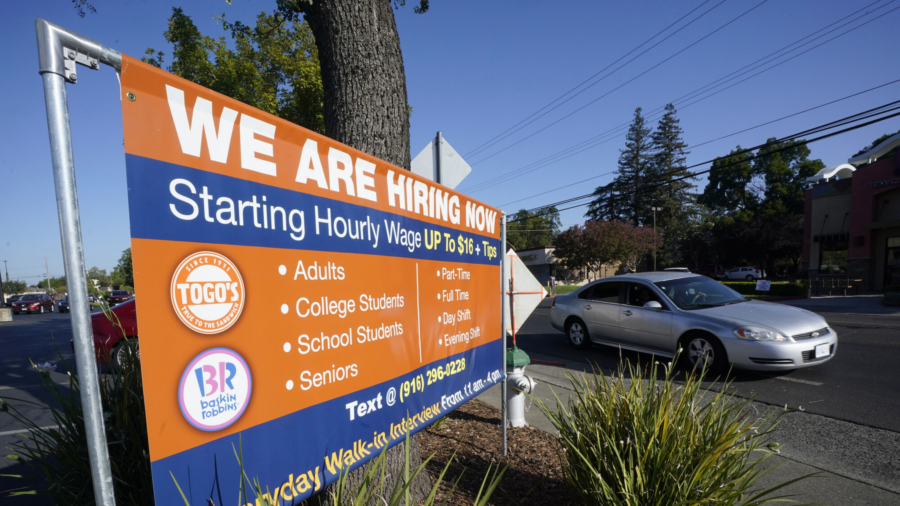
Companies big and small are raising wages to attract workers and hold onto employees as the economy revs back into gear.
But those fatter paychecks aren't going as far, thanks to rising inflation.
In fact, compensation is now lower than it was in December 2019, when adjusted for inflation, according to an analysis by Jason Furman, an economics professor at Harvard University.
The Employment Cost Index—which measures wages and salaries, along with health, retirement and other benefits—fell in the last quarter and is 2 percent below its pre-pandemic trend, when taking inflation into account. Wages and salaries are growing at a faster pace than benefits.
"The hot economy is heating prices more than it is heating wages," said Furman.
The index is not subject to the same distortions as other measures, such as average hourly earnings, because it keeps the composition of the workforce constant. The average hourly earnings metric has been swinging during the pandemic as many lower-wage workers lost their jobs initially and are now returning to work.
Not counting inflation, compensation rose 2.8 percent between March and June, despite the relatively high unemployment rate—a trend that reflects the tight labor market. Job openings are at record-high levels, according to the Bureau of Labor Statistics.
But at the same time, prices are soaring. Gas costs more. Food is more expensive. Car prices are at record levels.
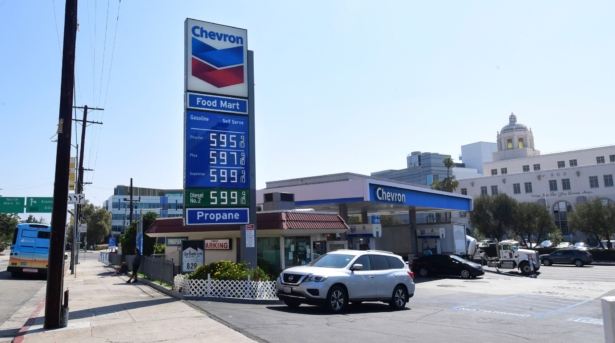
The consumer price index rose 0.9 percent in June and 5.4 percent over the past 12 months—the largest jumps for each since mid-2008, according to federal data.
Differences by Industry
Inflation-adjusted compensation is down in most industries, but there is one notable exception: Leisure and hospitality. That industry's employers are scrambling to find workers, resulting in a 1.6 percent bump in pay and benefits since December 2019, according to Furman's analysis.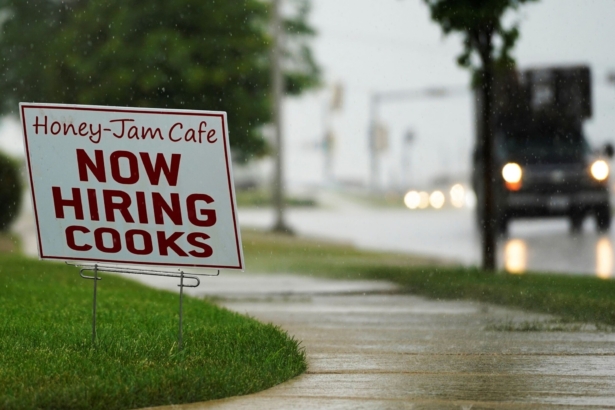
But employees of the utilities industry saw their real compensation slide 1 percent since December 2019. In education and health services, their real compensation slid 0.8 percent. Manufacturing fell 0.7 percent and in transportation and warehousing, real compensation slipped 0.6 percent.
Just how long the steep rise in inflation will last remains a subject of debate. President Joe Biden and the Federal Reserve are arguing that it won't be a long-term issue, while some experts worry that the price increases may be more entrenched.
But if the inflation growth rate starts to ease, workers will be better able to enjoy their boost in pay.