


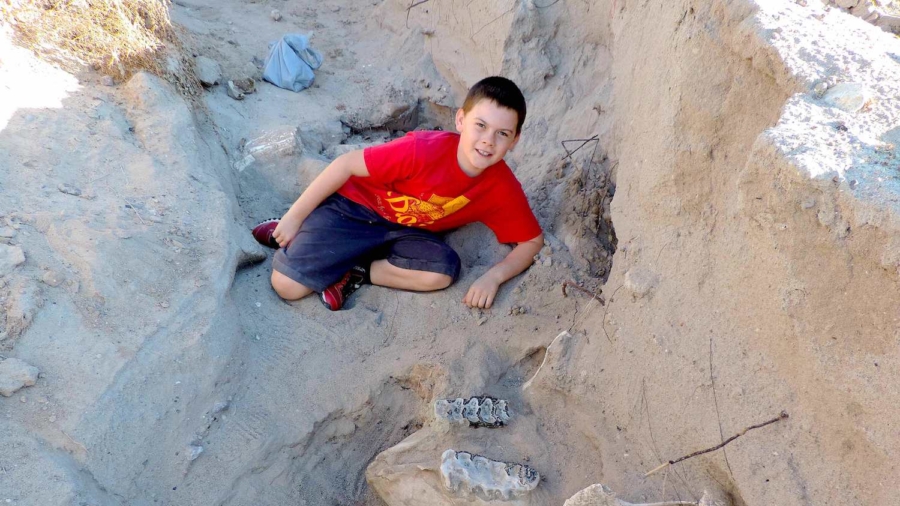
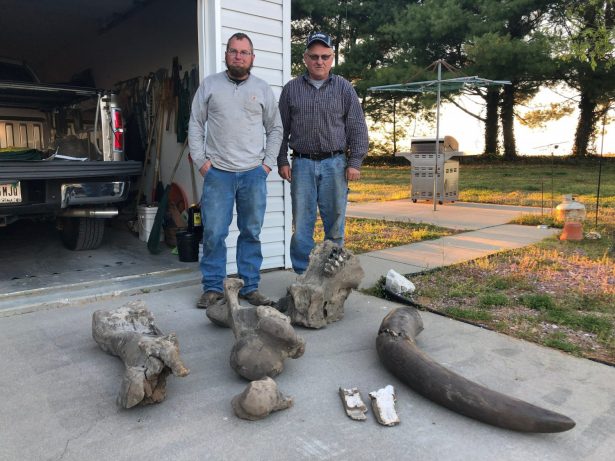
The remains were found on a farm and given to the University of Iowa's Paleontology Repository. The couple who owns the farm declined to be identified or have their farm named but said they had found mastodon remains on their property in the past.
The teen who discovered the bone was also not identified past being noted as a high school student.
Tiffany Adrain, the head of the repository, said that she and a team went to the land to get the bone and try to find evidence of where more bones could be on the property.
"Right away you know it’s mastodon because of these teeth," she added.
Adrain said the remains are not uncommon in the state, found most often along bodies of water.
"I think people are finding stuff all the time," she told the Press-Citizen. "Maybe they are out canoeing or fishing on a bank. Farmers, in particular, on the land can spot things pretty easily."
Adrain is the repository's only full-time employee. She had documented some 148,000 specimens with the help of students.
Mastodons
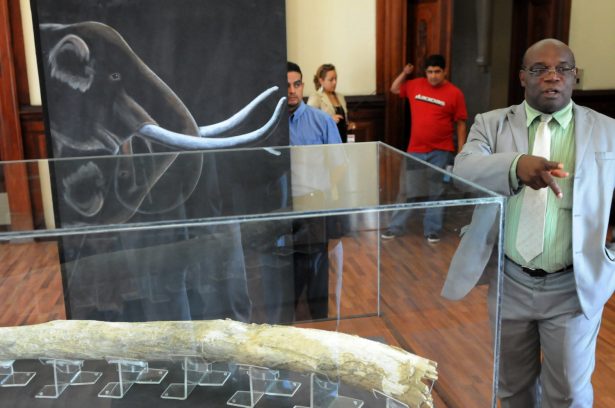
Mastodon bones may appear similar to mammoth bones but they're actually different, Pamela Groves of the University of Alaska wrote in a blog post for the National Park Service."Despite the superficial resemblance, mastodons were distinct from mammoths. Mastodons were shorter and stockier than mammoths with shorter, straighter tusks. Mastodons were wood browsers and their molars have pointed cones specially adapted for eating woody browse. Mammoths were grazers, their molars have flat surfaces for eating grass," she wrote.
"Recent evidence suggests that mastodon inhabited Beringia during a previous warmer episode, or interglacial, when there were trees or shrubs, probably [more than] >75,000 years ago."
"American mastodon most likely lived in small mixed herds that included adult females and their young. Males, upon reaching sexual maturity at about the age of 10, would then separate from the herd and live a more solitary life," the museum stated.