


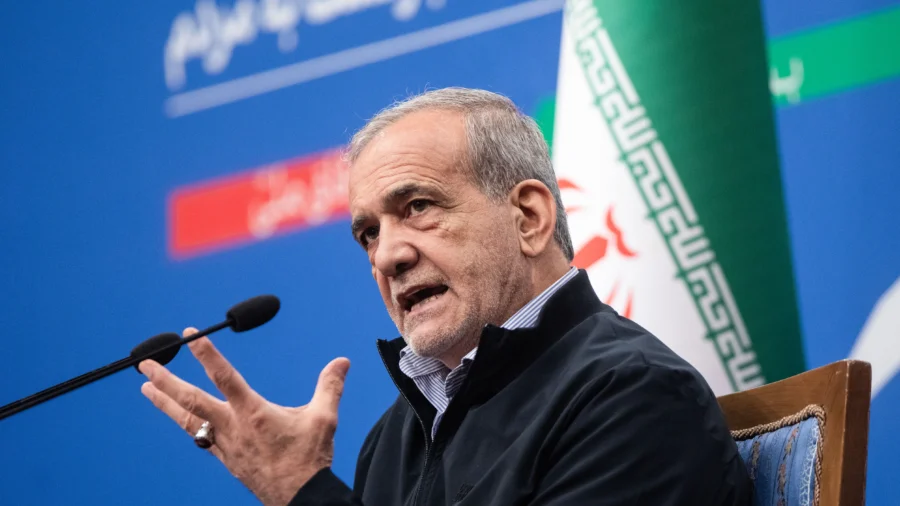
Iranian President Masoud Pezeshkian said that Iran wants to show that Tehran is not seeking to produce a nuclear weapon, as the Trump administration said over the weekend that a deal with Tehran is coming closer to fruition.
Pezeshkian said in comments carried by Iranian state-run media that Tehran “is ready to assure the world we do not seek nuclear weapons” and is “not seeking unrest in the region.”
Iran’s negotiators who are speaking with the United States “will never retreat from the country’s dignity and honor,” Pezeshkian also said, blaming the Israeli government for what he said is instability in the Middle East.
The comments from Pezeshkian were highlighted by U.S. President Donald Trump in a Truth Social post on Sunday. Trump did not provide any additional comment.
Trump said on Saturday that a deal between the United States and Iran had been “largely negotiated,” after calls with Israel and other regional allies. The sides have previously seemed close to a deal in recent weeks only to see diplomatic efforts falter.
“The negotiations are proceeding in an orderly and constructive manner, and I have informed my representatives not to rush into a deal in that time is on our side. The Blockade will remain in full force and effect until an agreement is reached, certified, and signed,” Trump said in a Truth Social post on Sunday. “Both sides must take their time and get it right. There can be no mistakes.”
Trump was referring to a U.S. naval blockade of Iranian ports that went into effect in April, after he announced a ceasefire that stopped fighting in a conflict that started on Feb. 28 and decapitated much of Iran’s leadership.
The U.S. president said Tehran cannot be able to produce or develop a nuclear weapon, reiterating previous comments he has made about Iran. Tehran has long said that it is not working to produce nuclear weapons and that its program is for peaceful purposes, although the U.S. and Israeli governments have disputed those assertions, and the International Atomic Energy Agency has stated that it could not verify the peaceful nature of the regime’s nuclear program.
On Saturday, Iranian Foreign Ministry spokesman Esmail Baghaei told state-run media outlets that there are “narrowing differences” between the Iranian and U.S. positions, but he added that Iran is cautious after being attacked twice in the past year during nuclear negotiations.
Meanwhile, the Iranian Revolutionary Guard Corps warned over the weekend that possible attacks from the U.S. or Israeli militaries would be met with a “devastating and hellish” response from Iran. The military organization further claimed that Iran’s government is unified against any potential attacks from the United States.
Trump said Saturday that a peace deal with Iran is nearing, adding that it would include reopening the Strait of Hormuz, which has largely been shut down since the conflict started. On a normal day, the strait allows for the transportation of about a fifth of the world’s oil, meaning that the closing of shipping traffic during the war has led to a spike in gas and energy prices worldwide.
“An Agreement has been largely negotiated, subject to finalization between the United States of America, the Islamic Republic of Iran, and the various other Countries,” Trump said in the post, adding that opening the strait was part of those terms.