


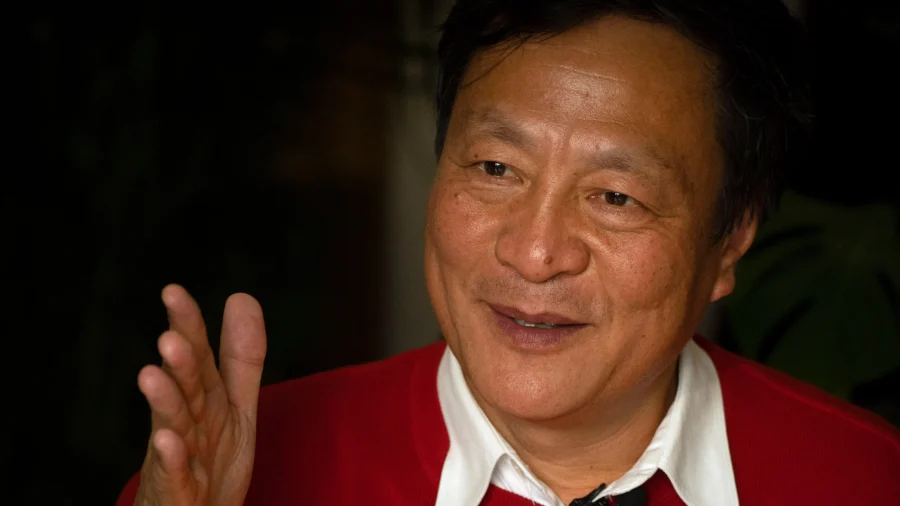
A renowned Chinese architect and urbanist was killed in a plane crash in Brazil, authorities said Wednesday. Kongjian Yu, known internationally for designing the “sponge cities” model, was among four people who died when a small aircraft went down in the Pantanal wetlands near Aquidauana, in Mato Grosso do Sul state.
Brazil’s Vice President Geraldo Alckmin confirmed the deaths, identifying Yu, 62, as one of the victims alongside Brazilian filmmakers Luiz Fernando Feres da Cunha Ferraz and Rubens Crispim Jr., and pilot Marcelo Pereira de Barros.
The crash took place Tuesday evening as the plane tried to land at a large farm roughly 62 miles from Aquidauana, the local fire department reported. Emergency crews responded to the scene and launched a search-and-rescue effort that lasted nine hours. The cause of the accident remains under investigation.
Yu was in Brazil for the São Paulo International Architecture Biennial, collaborating with filmmakers on a documentary that explored his water management philosophy. During his visit, he worked in the Pantanal, the world’s largest tropical wetland.
Born in Zhejiang Province, China, in 1963, Yu spent his childhood on his family’s farm, where he experienced firsthand both the destructive force and vital importance of water during the monsoon seasons. He earned degrees from Beijing Forestry University and went on to complete a Doctor of Design at Harvard University’s Graduate School of Design in 1995. Two years later, he returned to China to join the faculty at Peking University, where he founded the College of Architecture and Landscape Architecture and served as its dean.
Yu later founded the Beijing-based firm Turenscape, which became internationally recognized for projects such as the Sanya Mangrove Park in China’s Hainan Province, the Nanchang Fish Tail Park in Jiangxi Province, and the Benjakitti Forest Park in Bangkok, Thailand.
Yu’s ideas influenced not only Chinese urban planning but projects worldwide, including in Thailand and Saudi Arabia. In 2023, he received the Cornelia Hahn Oberlander International Landscape Architecture Prize.
Yu’s “sponge cities” concept aimed to tackle flooding by transforming conventional approaches to urban infrastructure. Rather than diverting stormwater through concrete channels, he championed the integration of wetlands, parks, and ponds into urban landscapes, enabling cities to absorb and retain rainfall naturally.
“The philosophy of living with water is the total opposite of living against water,” Yu explained in a 2024 interview. “We keep the water; we slow down the water; we embrace the water.”
Yu has also been called the Frederick Law Olmsted of China, being compared to Olmsted, the father of American landscape architecture. Olmsted designed famous American landscapes, such as Central Park.
He sharply criticized China’s version of the City Beautiful movement, denouncing it as “aimless and autocratic” for creating highways that divide communities, vast barren plazas, and parks devoid of native landscapes.
Yu also pressed mayors to stop demolishing historic homes, concreting riverbanks, and replacing centuries-old rice fields with ornamental lawns—criticizing such projects as empty displays of achievement that damaged both people and the environment.