


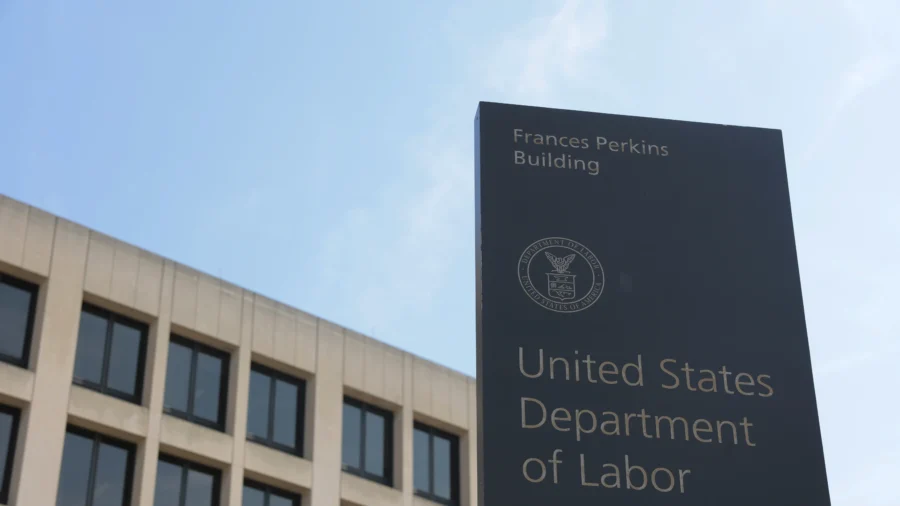
The Department of Labor has rescheduled the release of the September Consumer Price Index (CPI) report to later this month.
The CPI report measures how consumer prices change each month and serves as a primary gauge of inflation.
Officials had suspended work on the monthly CPI and postponed the release of other key figures due to the federal government shutdown, now in its tenth day. However, the bureau will proceed with publishing the inflation numbers because the Social Security Administration needs data for calculating cost-of-living adjustments, or COLA, before Nov. 1
“This release allows the Social Security Administration to meet statutory deadlines necessary to ensure the accurate and timely payment of benefits,” the agency said in a statement.
No additional reports will be issued or rescheduled until the federal government reopens, the bureau added.
As Republican and Democratic lawmakers hash out their differences, investors and Federal Reserve officials have been missing out on critical statistics to gauge the economy’s health.
The September jobs report, for example, was not published on Oct. 3. This comes as recent data suggest employment conditions have been deteriorating.
Wall Street and monetary policymakers have been relying on private-sector alternatives, including payroll processor ADP’s National Employment Report.
Inflation, meanwhile, has varied across different metrics.
Right now, the numbers are mixed, forcing the central bank to engage in a balancing act, says David Miller, co-founder and CIO at Catalyst Funds.
Another concern, experts say, is that upcoming inflation and labor data might not be accurate since federal workers have been unable to do their jobs and utilize resources amid the shutdown.
“If the shutdown continues, data collection for the October jobs report (survey week around October 12) is at risk,” Mark Hamrick, senior economic analyst at Bankrate, said in a recent statement to The Epoch Times.
“Mid-month inflation reports, critical to assessing the Fed’s path, may also be disrupted. That compounds the uncertainty.”
With key government data unavailable, investors, policymakers, households, and businesses are navigating decisions in the dark, he added.
For the seventh time, the Senate failed to pass funding bills that could reopen the government.
Sens. John Fetterman (D-Pa.), Catherine Cortez Masto (D-Nev.), and Angus King (I-Maine) voted with Republicans on Oct. 9 to fund the government through late next month.
Despite the prolonged government shutdown, consumers have largely shrugged off the political showdown.
“Interviews reveal little evidence that the ongoing federal government shutdown has moved consumers’ views of the economy thus far,” Joanne Hsu, University of Michigan Surveys of Consumers director, said in a statement.