


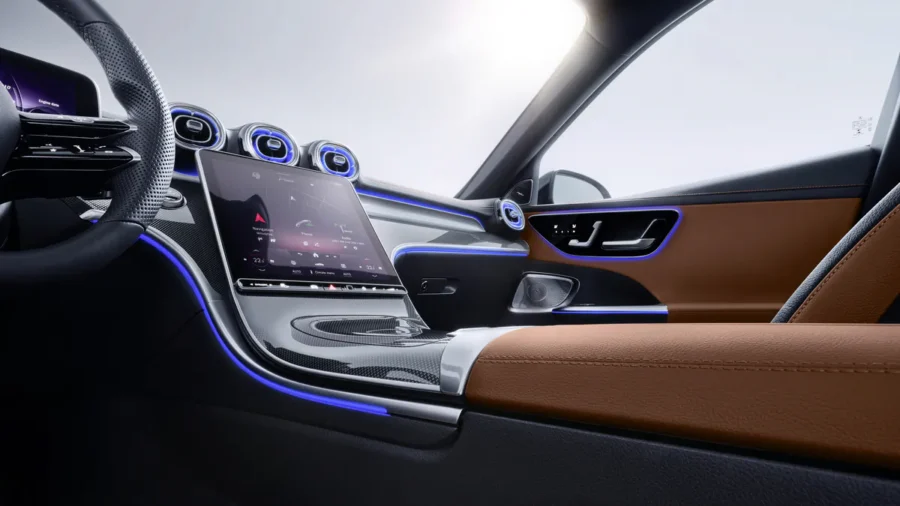
Premier luxury automaker Mercedes-Benz USA is recalling 144,049 vehicles due to a potential defect in instrument panel displays that may fail to display critical safety information, such as warning lights and speedometer readings, increasing the risk of an accident.
A National Highway Traffic Safety Administration (NHTSA) notice posted on X on May 8 indicates that the recall affects certain 2024–2026 AMG GT, C-Class, E-Class, SL, CLE, and GLC models. The NHTSA noted that the infotainment control unit may reset while the vehicle is in motion, causing the display panel to go blank.
Last August, the auto manufacturer rolled out the new software display designed to improve the overall system. In December last year, Mercedes-Benz began to receive a larger volume of customer complaints from the Korean market. That same month, the company submitted a foreign recall report to NHTSA.
In early April, the automaker discussed the software update with NHTSA as part of an analysis of vehicle owner questionnaires. At the time, nearly 62 percent of the vehicle population had already received an over-the-air (OTA) update.
However, on April 27, Mercedes-Benz decided to convert the remaining OTA campaign into a safety recall to improve consumer response rates. To date, the automaker is aware of many warranty claims and service reports concerning the faulty panel displays. It is not aware of any accidents resulting from this issue.
Kelley Blue Book also reported similar problems in a May 8 statement concerning a Chrysler recall of more than 20,000 Jeep and Dodge electric vehicles with malfunctioning instrument panels. Affected vehicles include 11,743 2024–2025 Jeep Wagoneer S models and 8,528 2024–2025 Dodge Charger Daytona models.
Owners are expected to receive notification by mail beginning May 21, and the updated software will be provided free of charge.
In December, Ram recalled over 72,500 trucks due to blank instrument displays. Kelley Blue Book reported that dealers will replace the instrument panel to remedy the problem.
According to software engineering firm ElectRay, software glitches now account for nearly half of automotive recalls. Its website indicates that many problems with today’s cars, considered “computers on wheels,” stem from the separation of hardware and software engineering during manufacturing.
The company also blames inadequate testing, a lack of adequate OTA infrastructure at the dealership level, and unrealistic product launch timelines.
“As vehicles become more connected, automated, and reliant on complex digital features, the stakes for getting software right have never been higher,” the website states.
“Failures in this domain are not just bugs—they are safety hazards, trust-busters, and have financial consequences and strategic setbacks.”