


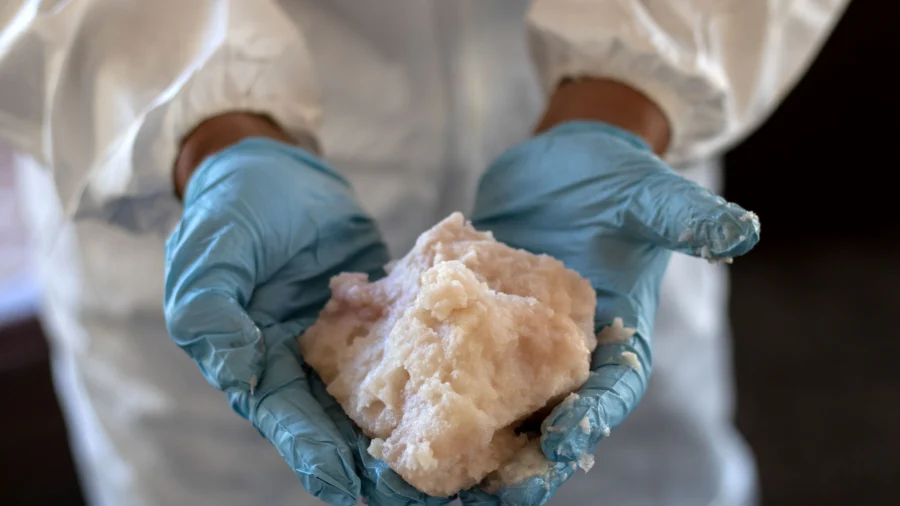
The use of methamphetamines was associated with around 1 in 6 heart attacks among adults treated at a hospital in California, according to an April 29 statement from the American Heart Association (AHA).
The AHA’s claim is based on a peer-reviewed study published in the Journal of the American Heart Association on April 29. The study assessed data of 1,309 patients aged 18–65, sourced from the Santa Clara Valley HealthCare system in Northern California, who experienced acute coronary syndrome (ACS) and underwent coronary angiography between 2012 and 2022.
ACS refers to a group of diseases in which the blood flow to the heart decreases, and includes heart attacks and chest pain.
Out of the 1,309 ACS patients, 194 individuals, or 14.8 percent, were found to have used meth, the study said. This represents 1 in 6 of the total number of patients.
The group linked to meth use was found to mostly be men with a median age of 52 years, while the non-meth group had a median age of 57 years.
Researchers found that 24.2 percent of people in this meth-use ACS group had nonobstructive coronary diseases, higher than the 10.6 percent rate among members of the ACS group who did not use meth. People in the meth-use group were also more likely to be readmitted for subsequent ACS events.
“Patients with ACS and methamphetamine use were mostly younger men and less likely to have traditional risk factors such as diabetes, hyperlipidemia, or chronic kidney disease,” the study said.
“These relative advantages, however, were offset by markedly higher rates of cigarette smoking, alcohol use, and homelessness. Consequently, patients with ACS and methamphetamine use experienced significantly higher rates of ACS‐related readmissions and all‐cause mortality.”
The American Heart Association said that the study may not fully reflect the impact of meth on heart attacks since not all patients who suffer such attacks are screened for drug use.
Study author Susan Zhao said the meth-user group was twice as likely to die after a heart attack than non-users, despite being generally younger and not having typical cardiovascular disease-related conditions such as obesity, high cholesterol, and Type 2 diabetes.
“As meth use rises on the West Coast of the U.S. and this trend moves eastward, heart attacks associated with meth use will increasingly occur in areas beyond California,” Zhao said.
Meth Use Stats
An August 2025 report from the Centers for Disease Control and Prevention said that overdose death rates involving psychostimulants with abuse potential, primarily methamphetamine, jumped from 3.9 individuals per 100,000 people in 2018 to 10.4 individuals by 2023.Among 309,274 overdose deaths between January 2021 and June 2024 across 49 U.S. states and the District of Columbia, 31.2 percent involved meth.
According to the National Center for Drug Abuse Statistics, in 2023, 2.6 million individuals in the United States aged 12 and older reported using meth in the past year.
In addition to heart issues detailed in the April 29 study, methamphetamine has been linked to several other health impacts.
Meth use can increase blood pressure, heart rate, and the risk of stroke. People who use the drug for long-term may suffer from skin sores resulting from scratching, serious dental issues, and extreme weight loss, according to the Wisconsin Department of Health Services.
“Methamphetamine use affects the levels of dopamine in your brain. Dopamine is a neurotransmitter. It affects, among other things, movement, motivation, emotions, and feelings of pleasure. Because meth causes a flood of dopamine to the brain, the natural supply gets depleted. Thus, activities that would increase pleasure may no longer do so. This can lead to depression,” the department said.
Using the drug “causes changes in the brain circuits that control reward, stress, decision-making, and impulse control, making it more and more difficult to stop using even when it is having negative effects on your life and health.”