

Michigan Faces Cyclosporiasis Outbreak as Cases Surge Across 43 Counties

Among those 1,500 reported cases, 44 people have been hospitalized, according to the latest update provided Friday, with the outbreak concentrated in southeast Michigan.
Published: 7/10/2026, 6:59:49 PM EDT
Michigan Faces Cyclosporiasis Outbreak as Cases Surge Across 43 Counties
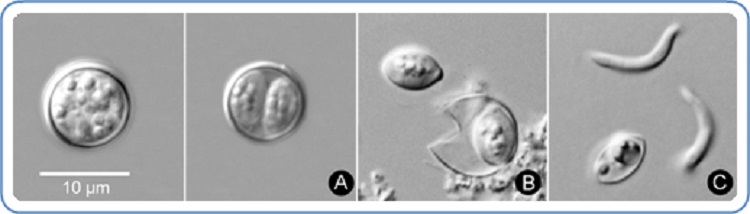
Infected people shed unsporulated (non-infective; immature) Cyclospora cayetanensis oocysts in their stool; immature oocysts usually require at least 1–2 weeks under favorable laboratory conditions to sporulate and become infective . An unsporulated oocyst, with undifferentiated cytoplasm, is shown (far left), next to a sporulating oocyst that contains two immature sporocysts (A). An oocyst that was mechanically ruptured has released one of its two sporocysts (B). One free sporocyst is shown as well as two free sporozoites, the infective stage of the parasite (C). (Credit: CDC/DPDx)

Michigan has become the epicenter of a historic cyclosporiasis outbreak, with a reported 1,562 cases across 43 counties, according to state health officials on Friday.

The outbreak has become one of the largest foodborne illness outbreaks the state has seen.

Among those reported cases, 44 people have been hospitalized, according to the Friday update, with the outbreak concentrated in southeast Michigan.
Health officials said the state typically sees only around 50 cases in an entire year, making this outbreak exceptionally large.

Officials have not yet identified a specific food source, but outbreaks in recent years have been the result of eating contaminated fresh produce, especially during the summer months. Previous outbreaks have been linked to contaminated bagged salads, cilantro, and berries.

Cyclosporiasis, caused by infection with the parasite Cyclospora cayatenensis, is not known to spread from person to person, health officials noted.

Symptoms occur two to 14 days after exposure and may include loss of appetite and weight, frequent watery diarrhea, abdominal cramps and bloating, and low-grade fever.

According to the Centers for Disease Control’s (CDC’s) latest update, 31 states have reported domestically acquired cyclosporiasis cases in 2026. These reported cases reflect overall infections and are not necessarily connected to one common source or part of the same outbreak investigation, the CDC said.

Although cases seem to be surging in and around southeastern Michigan, the outbreak has not been labeled a national health emergency.

There’s no evidence that the parasite has evolved to become more infectious, according to Dianna Blau, the CDC’s acting parasitic diseases branch chief.

Cyclosporiasis is less common than many other foodborne illnesses, such as the illnesses caused by salmonella and E. coli.

For years, only a small number of Cyclospora outbreaks were reported in the United States each year. However, cases began increasing about a decade ago, with particularly significant spikes in 2018 and 2019. which experts have linked, in part to, improvements in disease detection and reporting.

The state’s Health and Human Services Department said it continues to work with local health departments and partners to investigate cases and provide updates as more information becomes available.

“MDARD is committed to ensuring food safety across the state and is working in partnership with local health departments to identify the source of the outbreak and keep consumers safe,” Jennifer Bonsky, Director of the Human Food Division at MDARD, said in a statement. “In these moments, it becomes even more important to follow all of the essential food preparation guidelines, such as washing your hands before and after preparing food and washing produce before it is consumed.”
The Associated Press contributed to this report.