


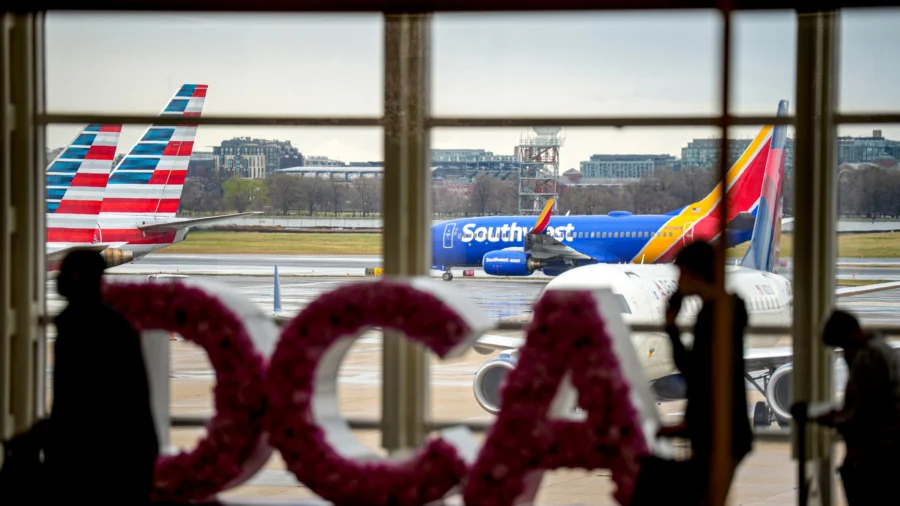
Powerful March storms have disrupted air travel across the United States since Sunday, leading to ground stops and delays at several major airports and causing airlines to cancel thousands of flights nationwide.
As of 10:15 p.m. ET Monday, more than 4,600 flights scheduled to fly into, out of, or within the United States on Monday had been canceled, and roughly 11,500 other U.S. flights were delayed, according to flight-tracking site FlightAware. More than 450 flights in the United States scheduled for Tuesday have been canceled.
Duffy also said ground stops were issued at Atlanta’s Hartsfield-Jackson International Airport and Charlotte Douglas International Airport, while a ground delay program was in place at George Bush Intercontinental Airport in Houston.
He urged travelers to check their flight status before heading to the airport, and to use nasstatus.faa.gov.
In a March 16 statement posted on X, the agency said: “Severe weather on the East Coast is causing flight delays and cancellations at airports.”
The FAA also advised passengers to check their flight status with airlines before leaving home and directed travelers to its real-time airport status page for updates.
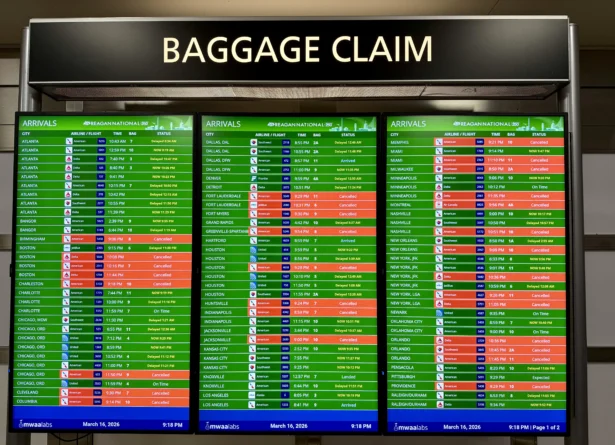
Severe Weather Disrupts Aviation Operations
The disruptions come as a large storm system moves across the country, bringing severe thunderstorms, strong winds and winter weather that have affected aviation operations nationwide. Schools along the East Coast have also closed in anticipation of the storm.Beyond the storms on the East Coast, significant winter weather is affecting parts of the Midwest and Great Lakes, where heavy snowfall and strong winds created dangerous travel conditions over the weekend.
The National Weather Service forecasted snowfall rates of one to three inches per hour as the system moved from the northern Plains into northern Michigan.
Blizzard warnings remain in effect, and "25–35 inches of snow have fallen across southeastern Minnesota, central Wisconsin, and northern Michigan," it stated.
On Monday, Forecasters said wind gusts of up to 50 mph and blowing snow could keep travel dangerous as the system moves east.
Data from the flight-tracking service FlightAware showed hundreds of cancellations at Chicago’s O’Hare International Airport and Chicago Midway International Airport on March 15 as snow and high winds affected operations.