


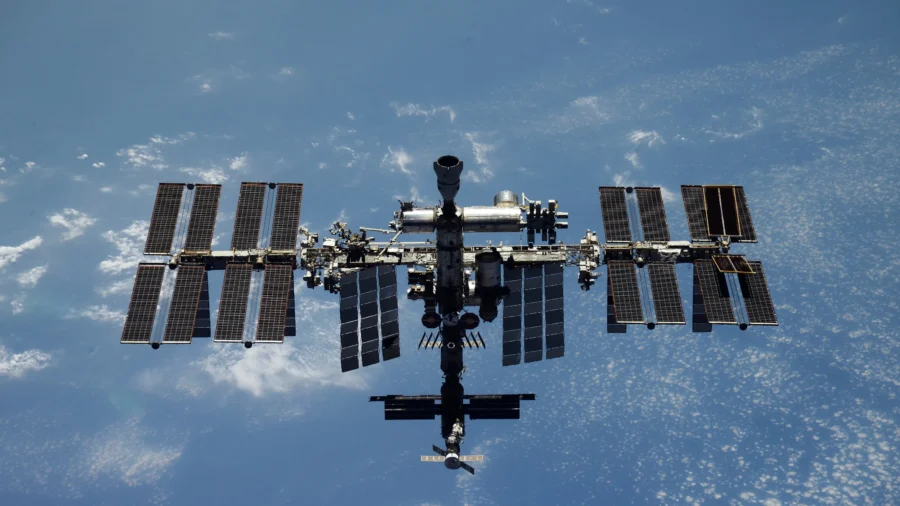
This November will mark the 25th year that the International Space Station has been orbiting 250 miles above the surface of the Earth, offering teams of international astronauts and scientists a chance to study and experiment in a semi-controlled environment in low-Earth orbit.
But in 2030, the year that the ISS turns 30, NASA will de-orbit the space station and send it plummeting through the atmosphere into a remote area of the Pacific Ocean.
The ISS has been regarded as a remarkable achievement in the history of space exploration, as it has been occupied for 24 hours a day, seven days a week since the turn of the 21st century, hosting spacefarers from the United States, Russia, Europe, Japan, and Canada.
More than 4,000 experiments have been conducted aboard ISS in the intervening quarter of a century, resulting in findings published in thousands of publications and helping improve and advance life here on Earth, while blazing a path for future space exploration activities like the planned manned mission to the vicinity of the moon next spring.
Earlier this month, NASA announced it was looking for input on the growth and expansion of commercial space stations, which will soon be developed, but will likely not be ready in the next five years, at which point ISS meets a fiery and watery end.
NASA is requesting feedback from American companies on the next phase of its commercial space stations strategy to ensure a seamless transition of activities in low Earth orbit from the International Space Station.
NASA Administrator Sean Duffy said in a press conference that the space agency is committed to continuing America's role in manned spaceflight in orbiting craft in low-Earth orbit. This continues NASA's plan to expand commercial opportunities in space, a plan that was crafted in 2021.
This would include collaborating with the Lyndon B. Johnson Space Center's Commercial LEO Development Program, which would assist in spurring the development of new destinations in low-Earth orbit.