


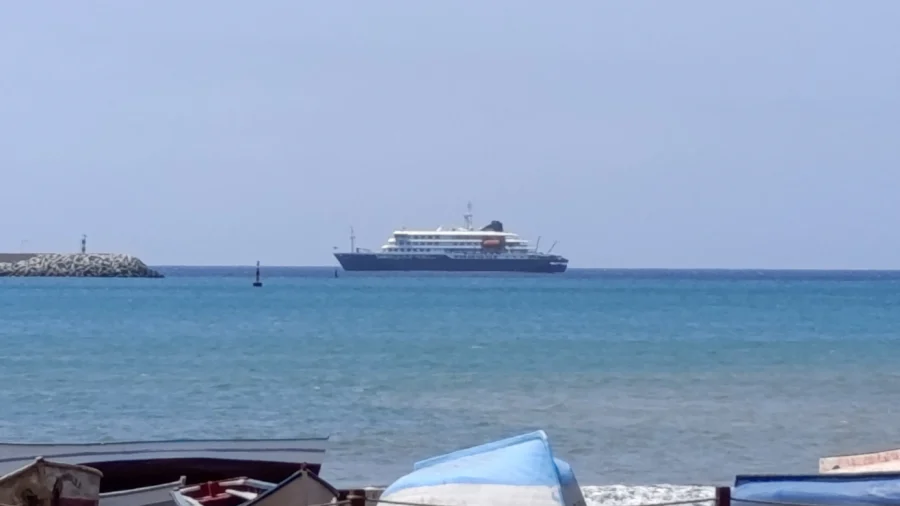
The Spanish government on Tuesday granted permission for the ship to dock in the Canary Islands.
Spain’s Health Ministry said it had been asked by the World Health Organization (WHO) and the European Union to receive the MV Hondius “in accordance with international law and humanitarian principles.”
Once in the Canary Islands, medical teams will examine and treat all passengers and crew before coordinating their return to home countries, the ministry said.
The virus outbreak aboard the Dutch-flagged MV Hondius sparked a multinational public health response, involving the WHO and authorities from South Africa, Spain, the Netherlands, the UK, and Cabo Verde.
According to the WHO, seven cases have been identified as of Sunday, including two laboratory-confirmed hantavirus infections and five suspected cases. Three passengers have died.
WHO officials said Tuesday they believe limited human-to-human transmission may have occurred among close contacts on the ship, including a married Dutch couple who shared a cabin before both died.
“We do believe that there may be some human-to-human transmission that’s happening among the really close contacts,” WHO epidemic preparedness chief Maria Van Kerkhove told reporters in Geneva.
The ship, operated by Netherlands-based Oceanwide Expeditions, departed Ushuaia, Argentina, on April 1 for an Antarctic and South Atlantic cruise that included stops at remote islands such as Tristan da Cunha, Nightingale Island, Saint Helena, and Ascension Island.
The first victim, a Dutch man, developed fever, headache, and gastrointestinal symptoms on April 6 before deteriorating rapidly and dying on board on April 11. His body remained on the ship for nearly two weeks before being removed at Saint Helena.
His wife later became ill and collapsed while traveling through Johannesburg's international airport in South Africa. She died on April 26, and laboratory testing later confirmed hantavirus infection.
A British passenger evacuated from the ship to South Africa remains in intensive care after testing positive for the virus. The WHO said another passenger died May 2, while additional suspected cases involving fever and gastrointestinal illness remain under evaluation on board.
Passengers have described growing fear and uncertainty as the ship waited offshore after Cabo Verde authorities refused permission to dock over public health concerns.
“We’re not just headlines. We’re people with families, with lives, with people waiting for us at home,” passenger Jake Rosmarin said in a video posted online from the ship.
“All we want is to feel safe and to get home,” he added.
WHO officials emphasized that the overall public risk remains low. “This is not a virus that spreads like flu or like COVID,” Van Kerkhove said.
Hantavirus is primarily spread through exposure to infected rodents or their urine, saliva, or droppings. The disease can cause hantavirus pulmonary syndrome, a severe respiratory illness that may quickly progress to pneumonia, respiratory failure, and shock.
The WHO said symptoms among cruise ship patients included fever, gastrointestinal illness, and acute respiratory distress. The agency said hantavirus infections can carry fatality rates as high as 50 percent in the Americas.
While human-to-human transmission is considered rare, the WHO said previous outbreaks involving the Andes strain of hantavirus in South America have documented limited spread among close contacts and health care workers.
Investigators are still working to determine where exposure occurred. The WHO said the Dutch couple had traveled in South America before boarding the cruise ship, while other passengers participated in excursions on remote islands with large rodent populations during the voyage.
The ship carries 88 passengers and 59 crew members from 23 countries. Oceanwide Expeditions said passengers have been advised to isolate in cabins and practice physical distancing while authorities coordinate evacuations and further testing.
Early Tuesday morning, the WHO said that Spain expressed willingness to receive the vessel in the Canary Islands, but officials had yet to confirm at that time where the ship would be allowed to dock.
South African health officials have also begun contact tracing involving airline passengers and others potentially exposed after infected travelers passed through Johannesburg.