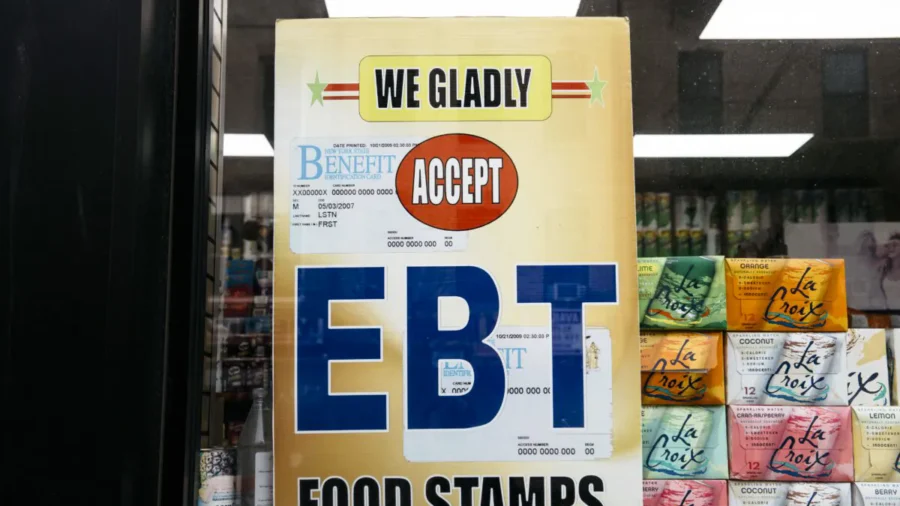
Millions of Americans who rely on food assistance are facing a significant change starting on Feb. 1.
Multiple states are starting to enforce tougher
work requirements for the Supplemental Nutrition Assistance Program (SNAP), according to the Food and Nutrition Service, an agency within the U.S. Department of Agriculture.
The shift comes after an expansion of eligibility rules signed into law by President Donald Trump as part of a massive tax and spending bill last July. According to the Food and Nutrition Service, the changes affect groups of people who were previously exempt from such requirements. This has created patchwork implementation across the country with varying timelines depending on where recipients live.
Who Is Affected and When
Illinois and Ohio will begin enforcing the new requirements on Sunday, according to separate notices from both states. Some states started implementation months ago. Texas started implementation of the requirements in October, meaning some residents there may have already had exhausted their benefits by Jan. 1. Alaska, Colorado, Georgia, and Hawaii all began the three-month clock in November, putting some residents at risk of losing benefits in the coming days.The timeline creates drastically different scenarios across the country. Recipients in Illinois and Ohio will have until May to comply before their benefits are affected. In contrast, California's exemption extends through January 2027, giving residents more than a year before the new standards take effect. Most of New York will begin enforcing the requirement in March, though it took effect in October 2025 for residents of Saratoga County.
Several regions have temporary protection. States with relatively high unemployment rates have been granted exemptions that delay implementation.
The New Rules Explained
The expanded requirements apply to two groups previously exempt from such restrictions. The law now extends work requirements to adults aged 55 through 64, expanding from the previous age range of 18 to 54. Additionally, parents without children younger than 14 are now subject to the requirements, whereas the previous threshold was children under 18.Under these new rules, affected recipients must work, volunteer, or participate in job training for at least 80 hours a month. Those who fall short will lose eligibility after three consecutive months of non-compliance during any three-year period.
The law eliminated longstanding protections for vulnerable populations. According to the SNAP Provisions of the One Big Beautiful Bill Act of 2025 memorandum, the law removes temporary exceptions for homeless individuals, veterans, and individuals aged 24 or younger who were in foster care on their 18th birthday. These groups, who had been shielded from requirements since 2023, are now subject to the same standards as other able-bodied adults.
The Scale of Impact
The changes carry major consequences for the nation's largest food assistance program. According to the Congressional Budget Office, these modifications will reduce the average monthly number of SNAP recipients by approximately 2.4 million people over the next decade.Currently, about 42 million Americans—roughly one in eight—receive SNAP benefits. According to the Center on Budget and Policy Priorities, the majority live in households with incomes below the poverty line, which is approximately $33,000 for a family of four. About three in five beneficiaries are in families with children, and more than one in three live in households with older adults or people with disabilities.
The average benefit per person reaches approximately $190 per month.
Many Recipients Already Work
A significant portion of the population facing the new requirements already participates in the workforce. According to the Center on Budget and Policy Priorities, nearly two in five SNAP beneficiaries live in households that include someone with a job.Beyond Work Requirements
The overhaul extends beyond work mandates. Beginning in October, states will be required to cover three-fourths of SNAP's administrative costs. Currently, states and the federal government split administrative costs roughly equally. In 2027, states with higher payment error rates will face additional penalties and be required to cover some benefit costs.Understanding the Three-Month Clock
The work requirement operates as a time-limited benefit—not a permanent loss of eligibility. Those who do not meet the 80-hour monthly threshold can receive benefits for three months during any three-year rolling period. After those three months, recipients regain eligibility once they meet the work requirement for a 30-day period or become excused from the requirement for another qualifying reason.According to the Food and Nutrition Service, recipients can satisfy the 80-hour requirement through paid employment, unpaid volunteer work, participation in SNAP employment and training program, participation in other federal, state, or local work programs, or participation in workfare.
New Protections for Indigenous Peoples
While the law removed protections for some groups, it added new exceptions. The law created exceptions for individuals meeting specific definitions of Indigenous peoples, including registered tribal members, Urban Indians residing in designated urban centers, and California Indians meeting particular criteria established under federal law.What Comes Next
State agencies must provide households with consolidated written notices and oral explanations of all applicable work requirements. Ohio has already announced that people will need to provide documentation of work starting in March, setting the stage for potential benefit terminations in spring.The Associated Press contributed to this report