

New State Laws Take Effect July 1 Across the US

These laws span critical areas including education, wages and employment rights, public health, environmental policy, and individual freedoms.
Published: 6/30/2025, 11:15:19 PM EDT
New State Laws Take Effect July 1 Across the US
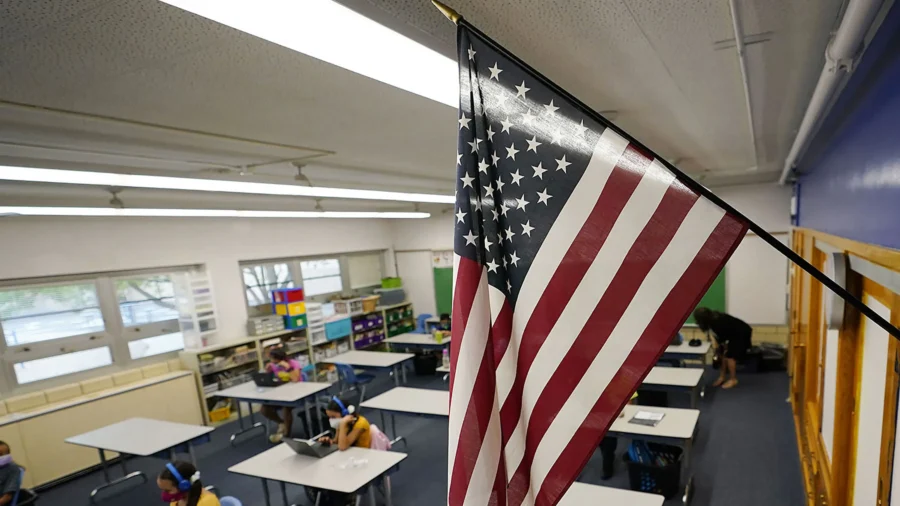
An American flag hangs in a classroom as students work on laptops in Newlon Elementary School, in Denver, Aug. 25, 2020. (AP Photo/David Zalubowski)
Across the United States, new state laws will go into effect on July 1, 2025, aligning with the start of many states’ new fiscal year. These laws span critical areas including education, wages and employment rights, public health, environmental policy, and individual freedoms.

Education Reforms

Several states are implementing education-related laws, covering issues such as cell phone restrictions in schools, parental notification and curriculum rights, and gender identity restrictions.

Tennessee now requires school boards to adopt policies restricting student devices like cell phones, tablets, and smartwatches during instructional time. Schools must also increase recess time for elementary students. And schools and employers can be sued if they use a student’s preferred name or pronouns without parental consent.

In Ohio, the Parents’ Bill of Rights mandates that school districts adopt policies promoting parental involvement. It affirms parents' fundamental right to make decisions regarding their child’s education and healthcare. Schools must notify parents about matters related to a child’s mental, emotional, or physical well-being, and gender identity content.
Iowa removed gender identity as a protected class and prohibits instruction related to gender identity and sexual orientation to students in kindergarten through sixth grade.
Georgia’s Riley Gaines Act bans transgender students from competing in sports teams that don’t match their assigned birth gender. This applies to students in K-12 and universities.

Workers' Rights and Wages

Alaska raises its minimum wage to $13 an hour and mandates paid sick leave. Employers are barred from requiring staff to attend political or religious meetings.
California increases minimum wage to $16.50 per hour, with higher rates in cities like San Francisco and Los Angeles.
Washington, D.C., raises its minimum wage to $17.95 per hour. The minimum wage for tipped employees will increase to $12.00 per hour.

Indiana mandates that employers provide time off for parents to attend school conferences for their child.

New Hampshire requires employers with six or more employees to provide nursing mothers a reasonable break time and a private, non-bathroom lactation space for up to one year after their child's birth.

Oregon increases the standard minimum wage to $15.05 per hour.

Vermont now requires employers with five or more employees to disclose salary ranges in job advertisements.

Washington state expands its paid sick leave law to include time off for immigration-related proceedings.

Other Notable State Measures

California becomes the first state to ban PFAS (perfluoroalkyl and polyfluoroalkyl substances) in textiles, cosmetics, and clothing. PFAS are man-made chemicals known to contribute to liver damage, cancer, thyroid disorders, and reproductive issues.

In Florida, new laws will ban fluoride in public water systems. There are also increased penalties for aggravated animal cruelty. Another law requires changing state references from the “Gulf of Mexico” to "Gulf of America” in state documentation.

Oklahoma enacted over 100 new laws going into effect on July 1, including one that prohibits the governor from closing any business during a pandemic without documented scientific evidence that the nature of the business contributes to the spread of the disease.