


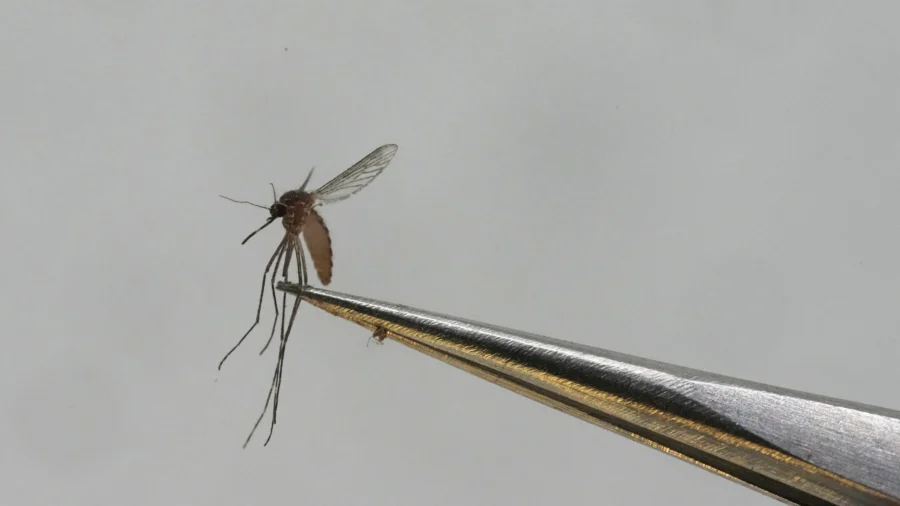
This is the first reported case in New York City so far in 2026.
“We’re encouraging New Yorkers to take extra precautions to minimize the risk of mosquito bites,” New York City Health Commissioner Dr. Alister Martin said. “West Nile virus is spread by mosquito bites and cannot spread from person to person. The good news is it’s preventable.”
At 76, the state of Arizona is recording the highest number of reports, followed by Texas with 31 cases, and California with 29 cases.
To stem the rising tide, the New York City health department conducted targeted mosquito control treatments in parts of Brooklyn this week on Monday and Wednesday.
The West Nile virus is spread through mosquito bites and can cause mild to moderate symptoms like fever, headaches, body aches, joint pain, vomiting, diarrhea, a rash, and in some cases, meningitis or encephalitis.
There is no vaccine against West Nile virus, making prevention the only line of defense.
Precautions include wearing insect repellent, covering up during dawn and dusk, and eliminating standing water around the home.
The CDC also recommends installing screens on windows and doors.
“All New Yorkers should take these precautions seriously, especially older New Yorkers and those with a weakened immune system,” Martin said.
The virus was first identified in Uganda's West Nile district in 1937 and reached the United States in 1999 when a strain linked to cases in Israel and Tunisia was detected in New York City and then spread across the entire continental U.S. in the years that followed.