


The global oil benchmark fell below $100 a barrel in early trading on March 25 as investor sentiment turned more optimistic about the prospect that a U.S.-led diplomatic effort might bring about an end to the Iran war, which has choked off Gulf oil supplies and driven sharp price swings in energy markets.
President Donald Trump announced on March 24 that the United States was engaged in negotiations with Iran, with the president indicating that White House adviser Jared Kushner and U.S. special envoy to the Middle East Steve Witkoff were involved, along with Vice President JD Vance and Secretary of State Marco Rubio.
“We’re in negotiations right now,” Trump told reporters at the White House. “We have a number of people doing it. And the other side, I can tell you, they’d like to make a deal.”
Senior Israeli officials in Jerusalem confirmed to Epoch Magazine Israel that the United States, through Pakistan, conveyed to Iran a 15-point plan aimed at ending the war, and that the Trump administration had briefed Israel on the details of the plan.
According to the officials, Washington is awaiting an Iranian response regarding a possible meeting in the near future to discuss the proposal.
Meanwhile, a Turkish official said that Turkey is helping mediate efforts to resolve the conflict by way of a separate diplomatic backchannel. Harun Armagan, vice chair of foreign affairs for Turkish President Tayyip Erdogan’s ruling party, said that Turkey “is playing a role passing messages” between the United States and Iran to further encourage de-escalation and direct negotiations.
Despite Iranian officials ruling out cease-fire talks and the Iranian military continuing to fire missiles at Israel and Gulf neighbors on Wednesday, market confidence appeared boosted by the Trump administration’s diplomatic efforts.
“The mood is on the positive side,” said Amelie Derambure, senior multi-asset manager at Amundi. “[The] market is trading now the idea that peace talks or a ceasefire could be on the way.”
Wall Street’s main indexes opened higher on Wednesday as prospects of a de-escalation in the Middle East appeared to outweigh investor concerns around prolonged disruptions to energy supplies.
At the opening bell, the Dow Jones Industrial Average rose 190.2 points, or 0.41 percent, to 46,314.24. The S&P 500 rose 42.0 points, or 0.64 percent, at the open to 6,598.35, while the Nasdaq Composite rose 244.5 points, or 1.12 percent, to 22,006.428 at the opening bell.
European stock indexes also rose, and bond yields fell, signaling a broader optimistic pulse washing over markets, despite warnings by some business leaders that risks to the oil supply remain.
BlackRock CEO Larry Fink told the BBC that oil prices could reach $150 a barrel and trigger a global recession, while Chevron CEO Mike Wirth said during S&P Global’s CERAWeek conference on Monday that he does not believe Iran’s blockade of the Strait of Hormuz has been fully priced in. The strait is a key global energy chokepoint through which roughly one-fifth of the world’s oil and liquefied natural gas flows.
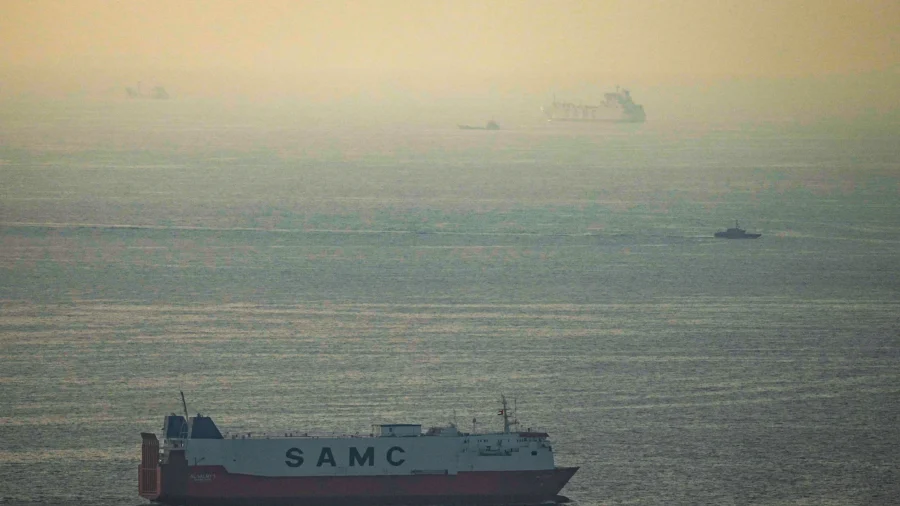
Iran has effectively blocked the strait in response to U.S. and Israeli strikes, saying it will remain closed until attacks stop. The disruption has slowed shipments of oil and other key commodities, raising shortage concerns and fueling price volatility.
Over the weekend, Trump issued a 48-hour ultimatum demanding that Iran fully reopen the Strait of Hormuz or watch the United States “obliterate” Iran’s power plants. On Monday, Trump touted “very good and productive” talks between Washington and Tehran, adding that he had instructed the Department of War to postpone planned strikes for five days to allow negotiations to take place.