


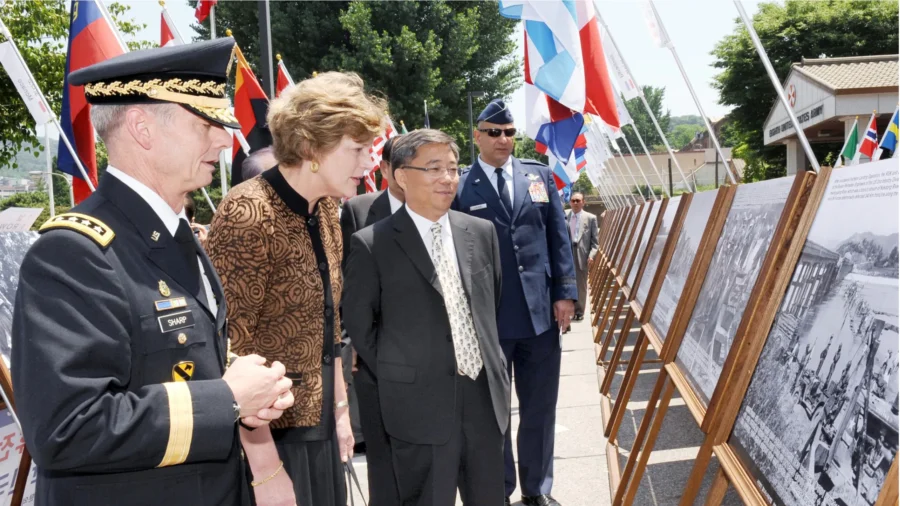
In the heart of downtown Seoul, the fluttering flags of 67 countries and poignant images from the Korean War (1950-1953) form a striking landmark outside the Seoul Finance Center.
The flags have flown and photographs have been on display at this location every day for the past three years, in a busy area where thousands pass by daily.
This is the "Voyage of Life: Korean War Photo Exhibition," a project that has, for two decades, sought to honor the sacrifices of those who fought for freedom on the Korean peninsula, according to Ahn Jae-chul who says he felt called to create the exhibition as part of his life's mission.
Ahn is the president of World Peace Freedom United (WPF), a non-profit civic organization established with the goal of preserving records of the Korean War and raising international awareness to educate the public about the greatness of free democratic nations and the tyranny of communism.
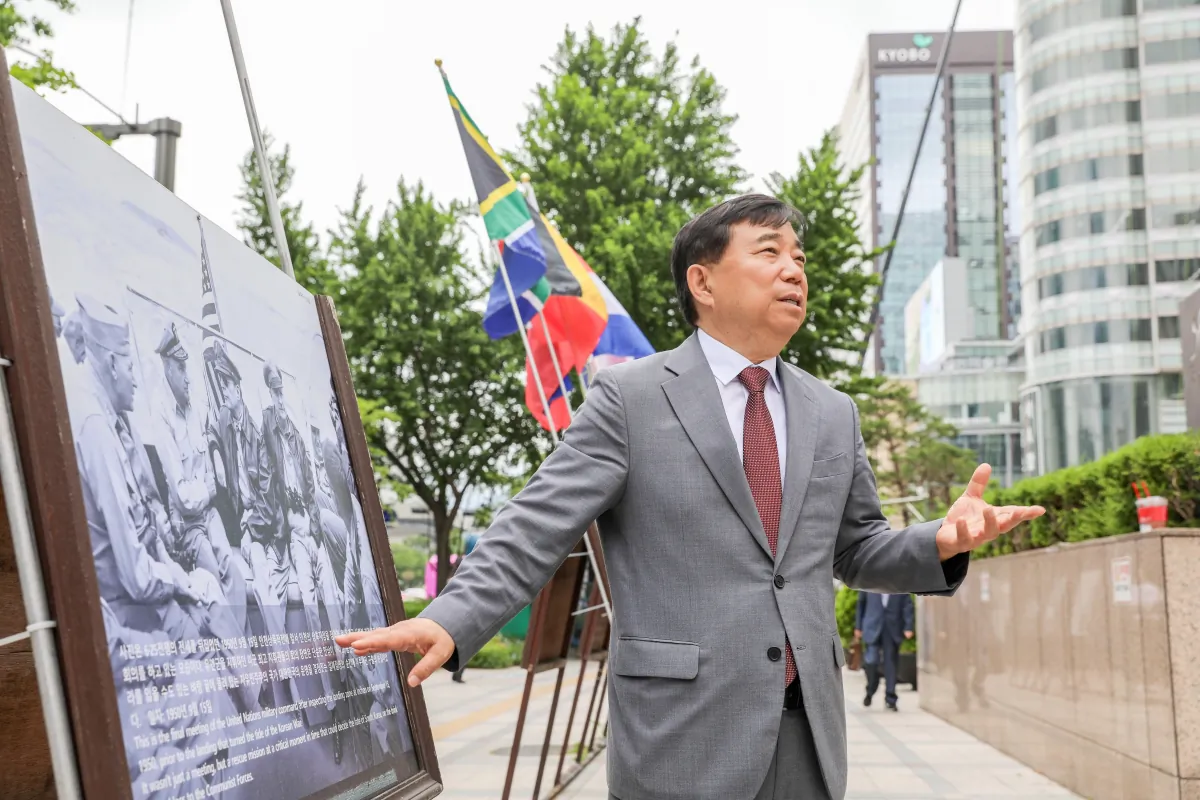
Ahn said his mission extends beyond remembrance; it is about gratitude and education.
“The Korean War was the most horrific event in our Korean peninsula’s history, but also a war to defend freedom. We must know what happened to protect this country, how many people sacrificed their lives, and what we’ve gained from it. It was a war to protect a world where people can live with dignity.
“Thanks to the dedication of many, Korea resisted communism. Now, it’s our turn to help countries facing similar hardship,” he said.
A Journey Sparked by a Funeral
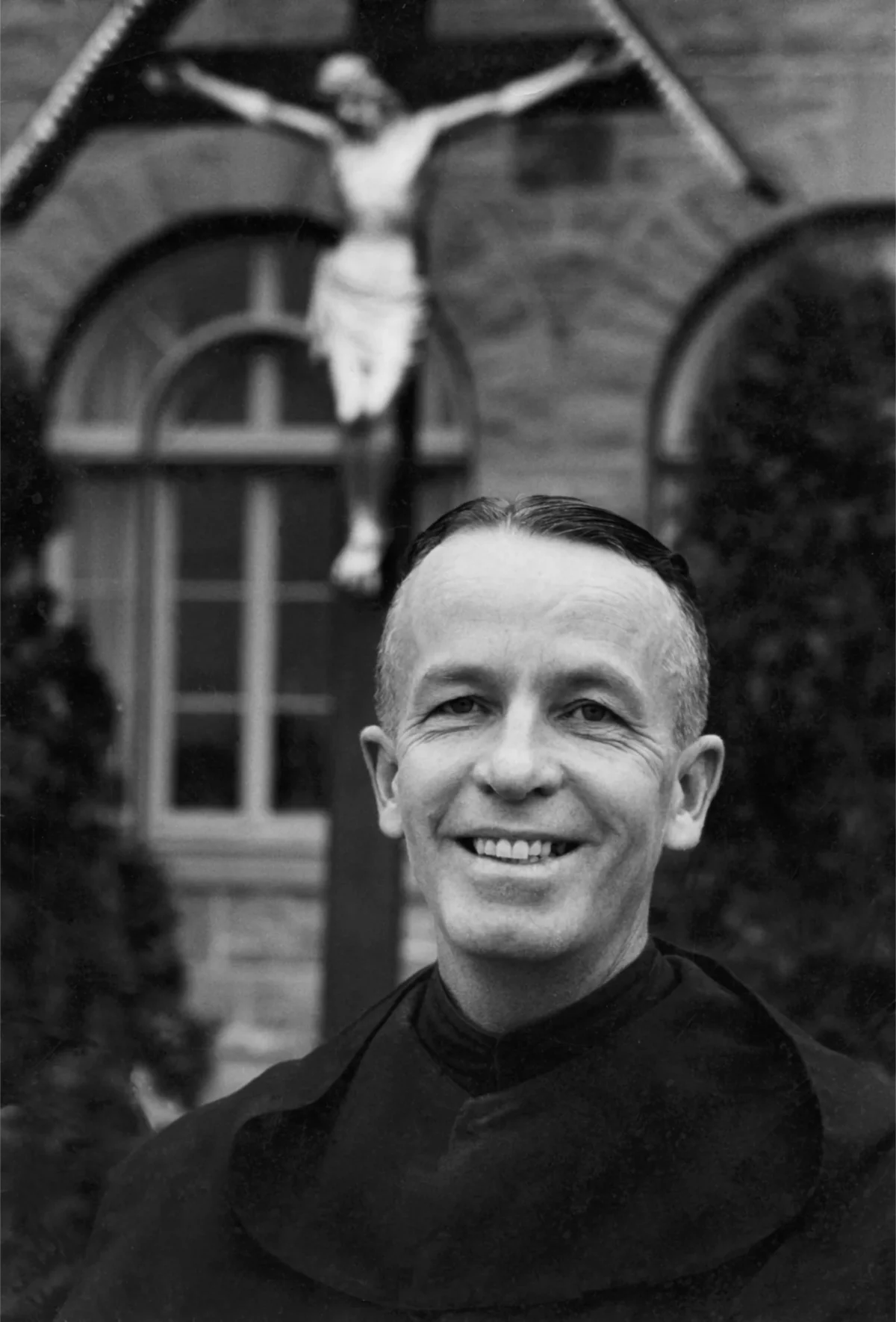
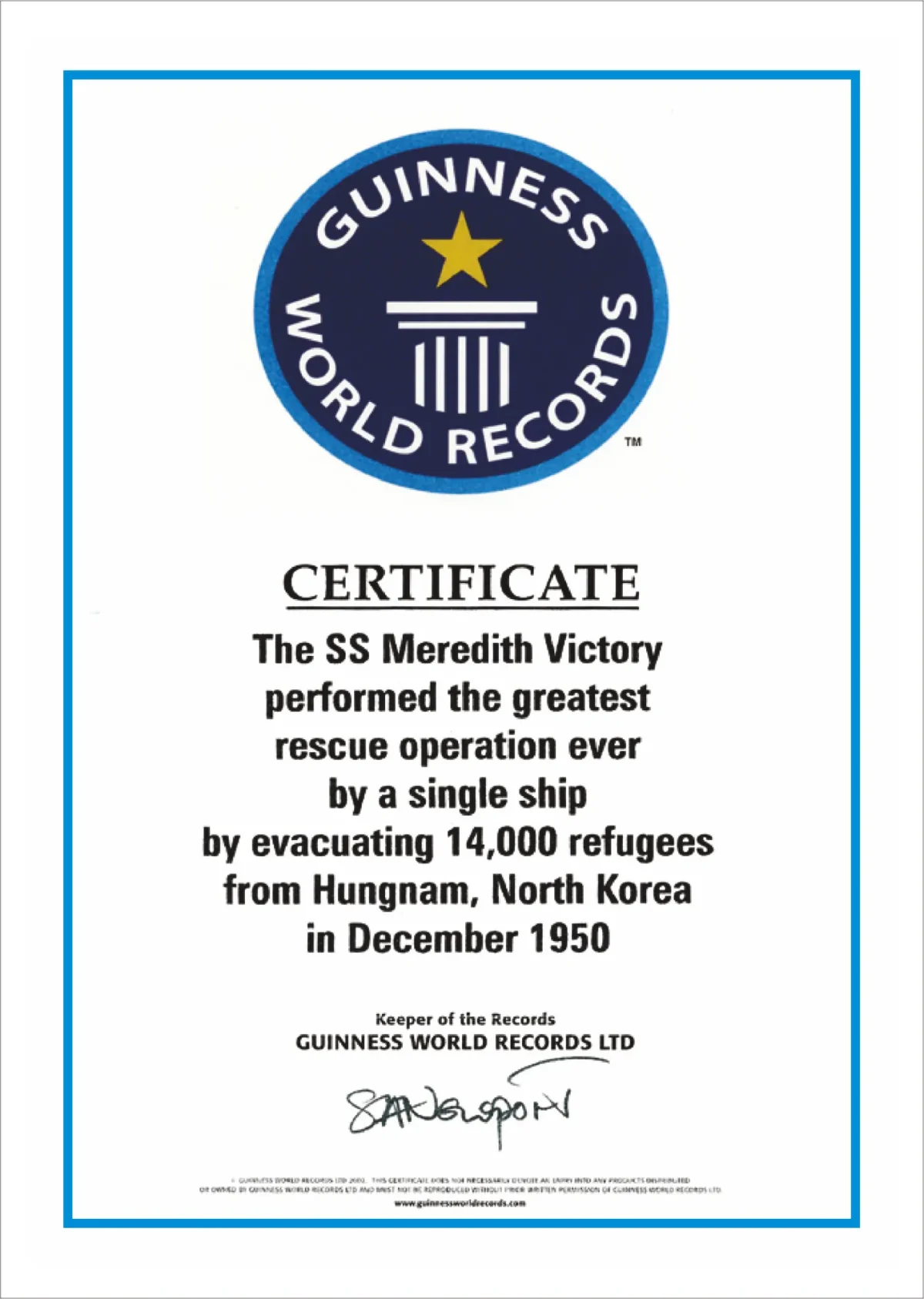
Ahn’s path to becoming the steward of this historical exhibition began unexpectedly on Oct. 14, 2001, at a Catholic monastery in New Jersey.He attended the funeral of Brother Marinus, formerly Leonard LaRue, captain of the SS Meredith Victory, the ship that famously rescued 14,000 refugees during the Hungnam Evacuation in the Korean War. According to Ahn, this event, known as the “Miracle of Christmas,” was officially recognized by Guinness World Records in 2004 as the greatest rescue by a single ship.
“Though I studied business, I’ve always been interested in history—especially Korean history,” Ahn told The Epoch Times, a sister media of NTD.
Born in South Korea, Ahn moved to the United States in 1983 for studies, earning an MBA from Minnesota State University. After starting his own business, he has worked to promote Korean War awareness since 2001.
Yearning for Freedom
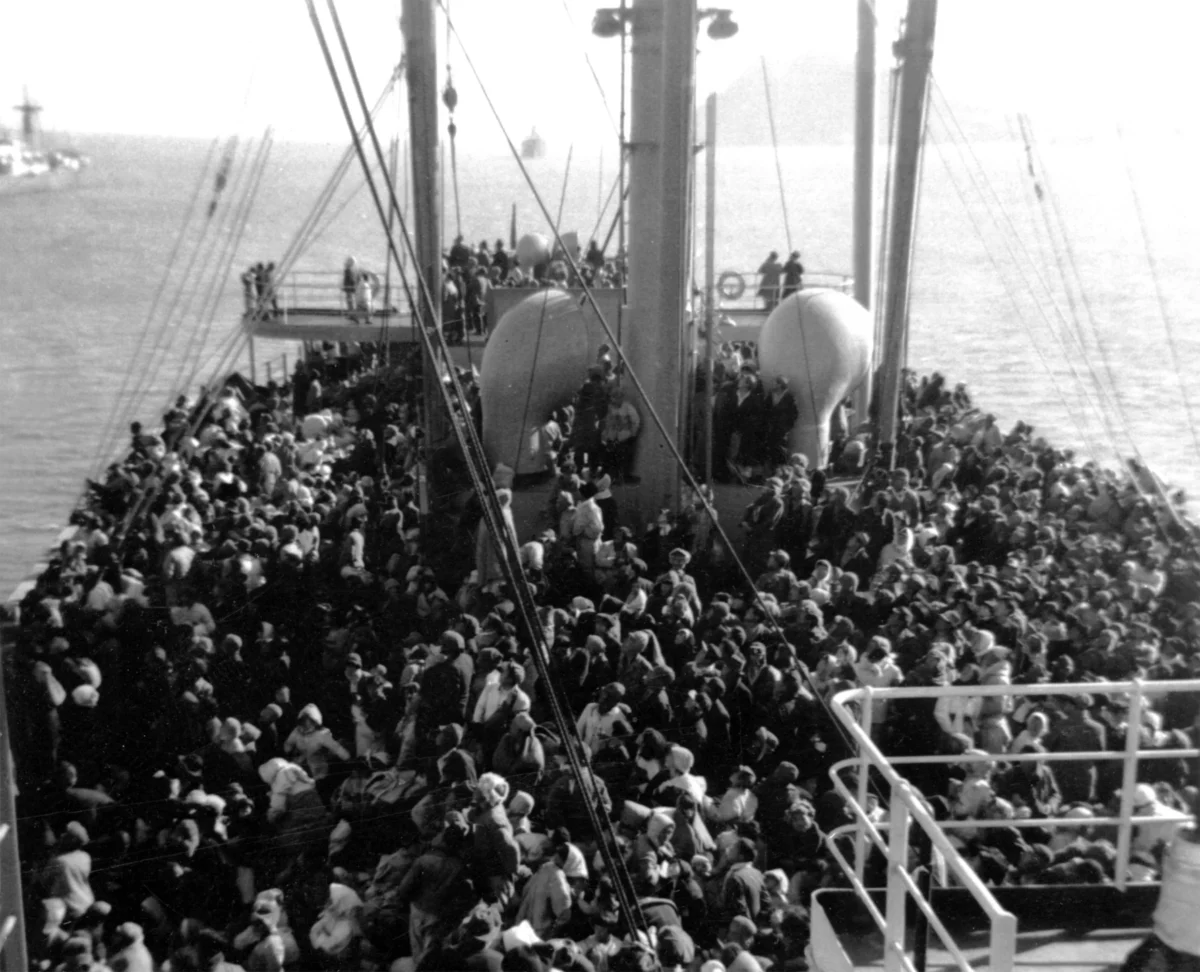
In December 1950, as communist Chinese troops pressed south along the Korean peninsula in the Korean War, one of the largest humanitarian evacuations took place at the port of Hungnam in North Korea.Nearly 100,000 United Nations soldiers, led by the United States, along with tens of thousands of Korean civilians, were transported by sea to safety in anti-communist South Korea.
The Meredith Victory, originally a cargo vessel, carried 14,000 North Korean refugees to safety at Jangseungpo Port on Geoje Island, South Korea, on Dec. 25, 1950. Five babies were born during the journey, bringing the total to 14,005 lives saved to a life of freedom that Christmas, according to Ahn.
Inspired, Ahn launched the Korean War photo exhibition in Seoul in 2005 and has since displayed it in South Korea and abroad, with the flags of the 67 nations that assisted South Korea added to the exhibition in 2009.
Ahn’s collection of over 50,000 high-resolution images, many never before made public, comes from sources such as the U.S. National Archives and Records Administration (NARA), the U.S. Department of Defense, and the U.N. Headquarters.
He also received personal photographs from Dr. Robert Lunney, a senior crew member on the Meredith Victory, whose images vividly capture the era. “Not a single one lacks an original caption—each photo clearly states who took it and when,” Ahn noted.
Curating History: Humanity Amid War
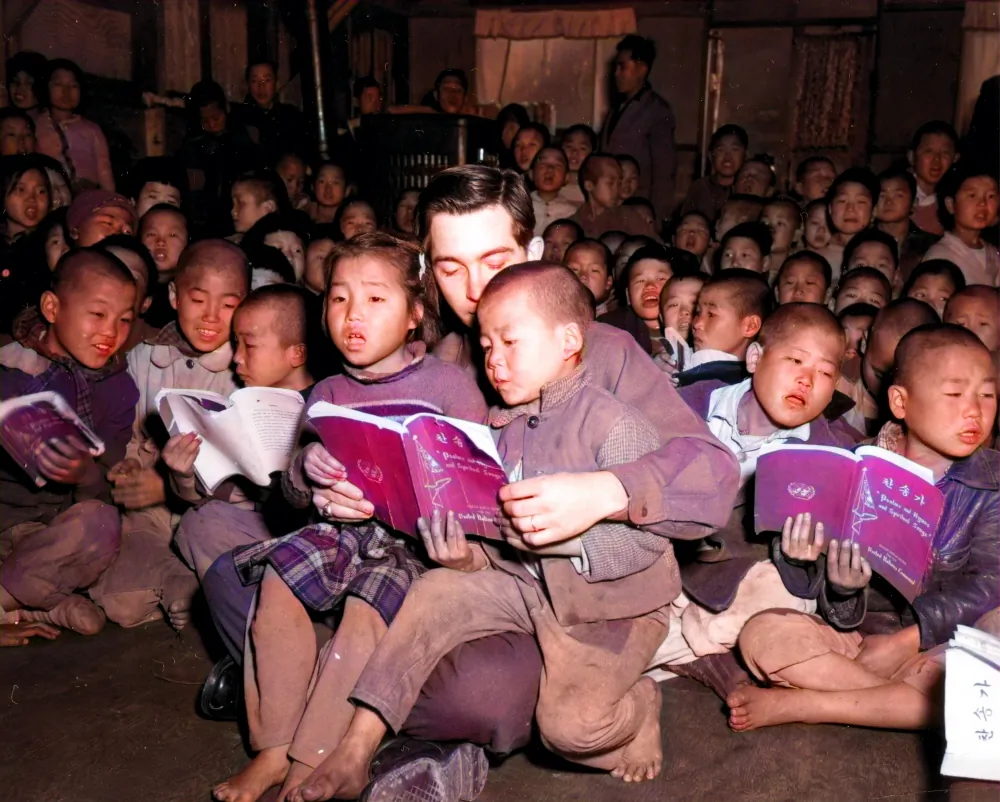
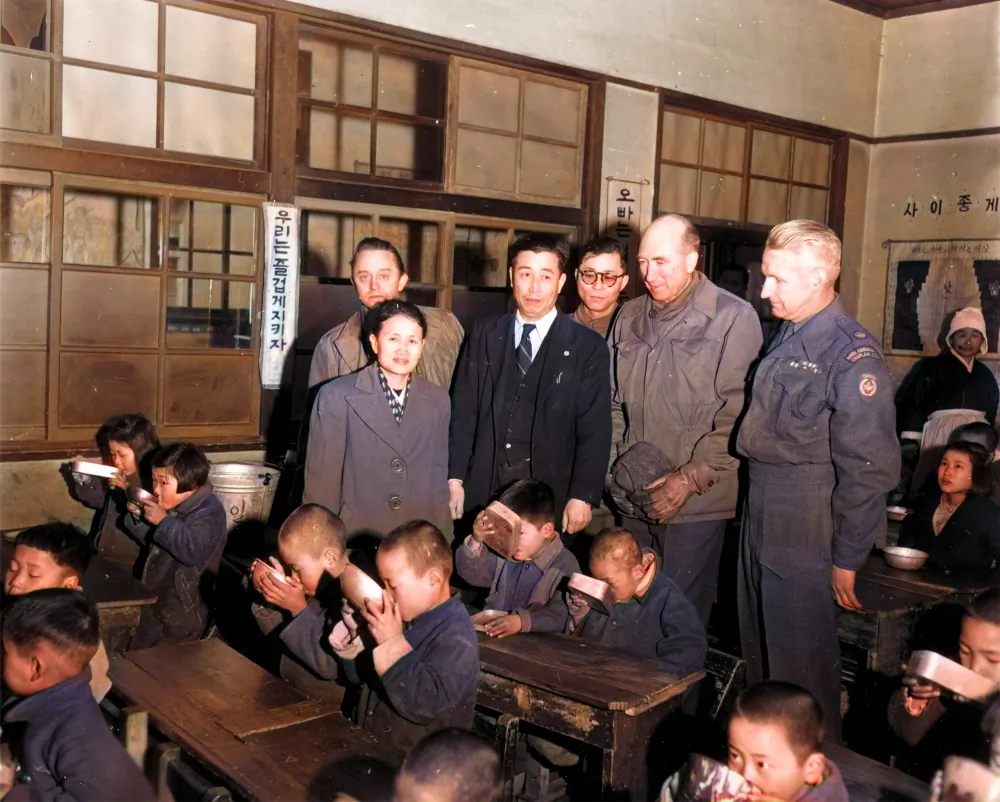
The exhibition is carefully curated to tell the story of the Korean War, with a preference for images that highlight acts of humanity—children being fed and clothed, religious activities, and the resilience of those caught in conflict.“The American soldiers at that time were mostly the children of those who lived through the Great Depression of the 1920s. I believe that made their sense of mission even stronger,” Ahn said.
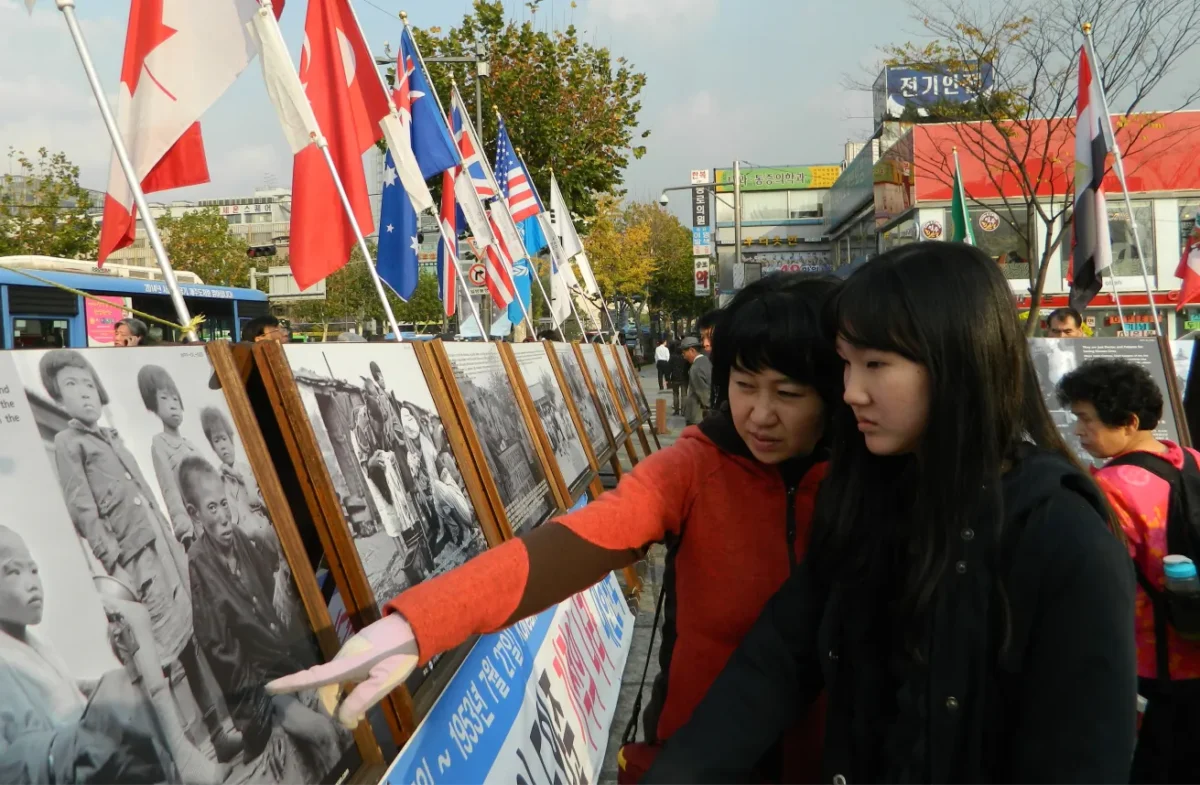
Since its inception, the exhibition has been held over 5,800 times in various locations, including major Korean cities and across the United States. The current Seoul site runs 365 days a year, making it a fixture for locals and tourists alike.
“About one-third of the people who look closely at the photos are foreigners. Whether it’s at the Lincoln Memorial in the U.S. or Cheonggyecheon Plaza in Seoul, many come more to see their national flag than the photos themselves,” Ahn said.
“People from poorer countries, especially, get excited when they see their flag. I’ve even heard this exhibition has become a must-visit destination for foreign tourists. I take pride in the role we play in civilian diplomacy.”
In 2012, Ahn published "Korean War and Vision of Korea," a 1,240-page volume containing over 1,150 photos and 27 maps, to further this educational mission. He also recently published "The Korean War in Photos," a comprehensive, chronological account featuring a balanced selection of images, including many of South Korean soldiers—an aspect he felt was underrepresented in previous works.
Overcoming Challenges
Ahn has faced many difficulties over the years, including attacks from leftist, pro-communist groups who deny South Korea’s legitimacy as a free democracy.“During the 2008 mad cow disease candlelight protests, demonstrators burned and destroyed many of our photos. Some were vandalized with red spray paint. In 2011, a nighttime attack damaged 57 of the 69 national flags we had on display,” he recounted. Bureaucratic hurdles have also posed challenges, with exhibition permissions denied during certain presidential administrations.
Despite these difficulties, Ahn said he remains undeterred.
“Just showing these photographs brings tremendous educational impact. It also brings comfort to the souls who sacrificed their lives in the Korean War. That’s one reason I can’t stop this work, no matter how difficult it gets. But above all, what drives me is my faith.
"I believe this is a mission entrusted to me. Human will and ability have limits. Yet, whenever we’re in need, someone shows up to help. When we’re short on funds, support arrives. It’s a repeating pattern. Honestly, I experience miracles every day, and I’m grateful,” he said.
The Road Ahead
Looking to the future, Ahn is preparing a musical titled "Voyage of Life," insisting that President Syngman Rhee and General Douglas MacArthur be featured, as both played pivotal roles in the Korean War. He also aims to host the exhibition in all 16 countries that sent combat troops and to establish an international organization involving all 67 supporting nations.Ahn’s vision is to continue spreading the message of gratitude and the value of freedom.
“We must never forget that this country was built upon countless sacrifices. Due to the misguided teachings of the Korean Teachers’ Union, there are many people who deny the legitimacy of South Korea. But freedom wasn’t just handed to us—it came through noble devotion and sacrifice. Without understanding this historical truth, how can we prepare for the future?” he said.