


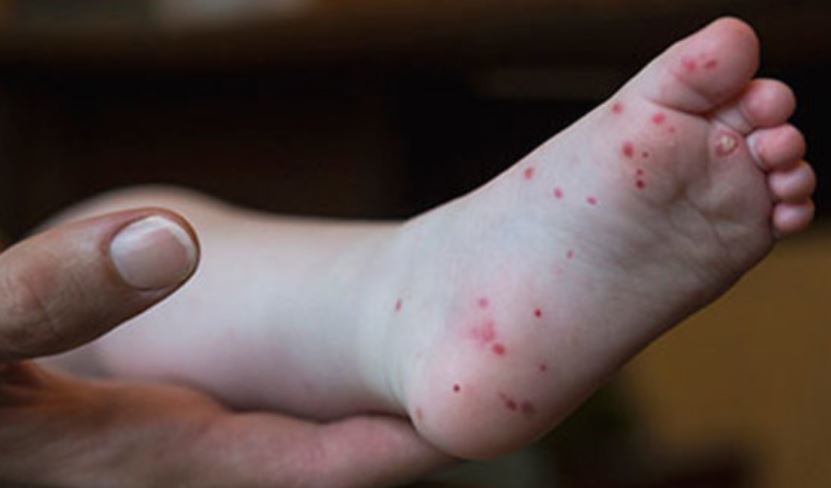
Health officials have issued a public alert following a surge in hand, foot, and mouth disease cases across Delaware County, with outbreaks especially affecting daycare centers and schools since early August.
The Delaware Public Health District announced the health alert Sept. 8 after tracking increased reports of the illness among school-aged children throughout the district.
Hand, foot, and mouth disease typically strikes infants and young children but can also affect teenagers and adults, the health district said. The Centers for Disease Control and Prevention (CDC) states the illness is most common in children under 5 years old, though anyone can contract it.
Symptoms usually develop three to six days after exposure and include fever, sore throat, and painful mouth sores that begin as small red spots before turning into blisters. The disease results in a distinctive rash of flat or raised red spots or blisters that appear on the palms and soles of the feet, though it may spread to other parts of the body.
The CDC notes that most children experience mild symptoms lasting seven to 10 days, including fever, sore throat, painful mouth blisters, and rashes commonly found on hands and feet.
Some of those who contract the virus, mostly adults, may show no symptoms while still capable of spreading the virus to others.
The disease spreads through direct contact with nose and throat fluids or stool from infected people. Transmission also occurs by touching contaminated surfaces like toys and doorknobs, then touching the eyes, nose, or mouth.
The CDC says the illness also spreads through contact with contaminated objects, surfaces, blister fluid, and waste.
Infected individuals remain contagious starting two days before the virus appears and throughout the initial onset of the sickness. The virus can persist in stool for several weeks.
Students and those in daycares need not be excluded from activities unless they have a fever or feel too unwell to join, the health district said. Those with fever may return once their fever has faded for at least 24 hours without the use of any medication and feel well enough for normal activities.
No vaccine or specific treatment exists for hand, foot, and mouth disease. Most cases are mild and go away on their own within seven to 10 days.
Health officials recommend schools and daycares promote regular handwashing among students, staff, and attendees, especially after diaper changes, restroom use, and before eating or preparing food.
Health care providers should be notified if anyone infected with the disease cannot stay hydrated, experience severe symptoms that don't improve, is younger than 6 months, or if pregnant women believe they've been exposed.
Ohio Administrative Code Chapter 3701-3 requires reporting suspected or confirmed outbreaks to the Delaware Public Health District by the next business day's end. An outbreak is defined as two or more similar illnesses reported at the same location.
The Delaware Public Health District's Disease Control and Response Unit can be reached for outbreak reporting or information at 740.368.1700 or [email protected].