


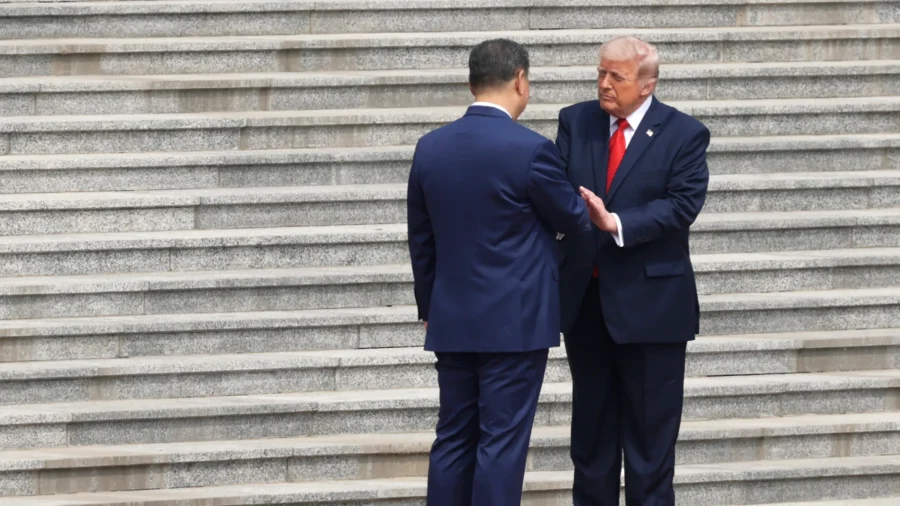
A few weeks ahead of Chinese leader Xi Jinping’s visit to the United States for a summit with U.S. President Donald Trump, the two nations have escalated tensions.
On Wednesday, China's Ministry of Commerce announced a series of sanctions targeting the United States and its businesses, spanning from Applied DNA Sciences and drones to imported office equipment.
China said that the measures were a response to Washington’s recent actions against Chinese companies.
Last week, Washington added more than 40 Chinese entities to the Uyghur Forced Labor Prevention Act (UFLPA) Entity List and imposed an additional 12.5 percent tariff on Chinese imports.
This comes with defense supply chain restrictions, dedicated funding to counter China’s global influence, and targeted technology blockades.
China also stated that controlled drones, key components, and related technologies bound for the United States will now undergo stricter case-by-case reviews, which could delay shipments.
Additional restrictions include suspending follow-up factory inspections conducted by U.S. bodies under China's Compulsory Certification (CCC) system, potentially increasing costs for manufacturers and delaying production.
Additionally, Beijing launched a national security investigation into imported printing, copying, and office equipment.
Last year, the United States and China were locked in intense trade friction for most of the year, including increased tariffs, export controls on critical minerals, and high-tech blockades. Following a meeting between Trump and Xi last October, the two sides reached a temporary truce.
Both countries are simultaneously preparing for the upcoming Xi-Trump summit scheduled for September.
In early July, China's Vice Minister of Foreign Affairs Ma Zhaoxu visited the United States, a trip that was widely regarded as preparatory for Xi’s upcoming visit.