


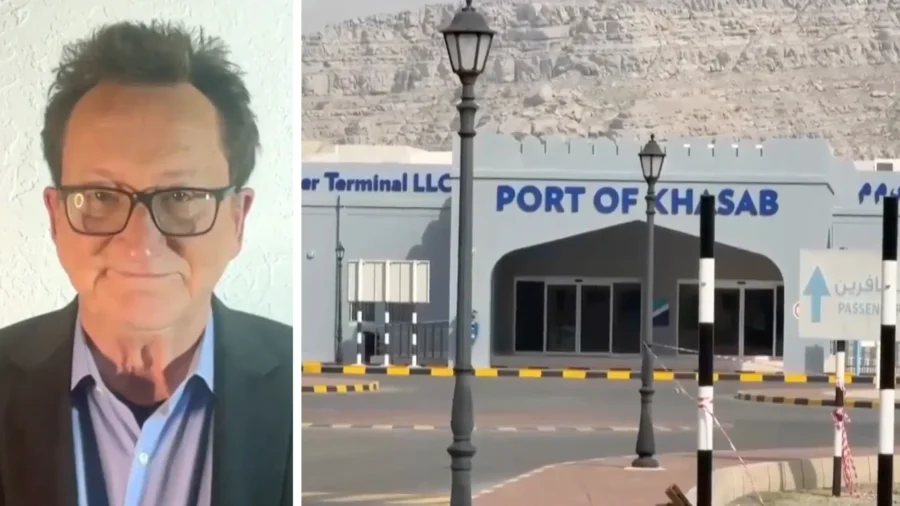
Dennis Kneale, award-winning journalist, best-selling author, and former host of CNBC and Fox Business, discussed with NTD's Steve Lance the economic effect of the Strait of Hormuz disruption on the United States. As the United States is one of the largest energy producers in the world, the disruption doesn't have to effect gas prices in the country. Kneale says the market always overreacts in the short-term.
Kneale says that while 80 percent of Iran's oil goes to China, China relies on Iran for only 17 percent of its oil imports but it could hurt growth. Kneale also discussed how higher oil prices end up sucking extra money that would otherwise go to other expenses, like luxury items, and how his research found that higher prices end up being anti-inflationary, tamping prices down but the market fears it. That fear, Kneale says, is why the price goes up.
Kneale also discussed President Donald Trump's military action in Venezuela, and working with Venezuela on energy and rare earth minerals, and now it reduces U.S. reliance on China. Kneale says small nuclear plants can fit on a flat bed truck and travel to remote areas, like Greenland, to help mine rare earth minerals. Kneale says China is losing its grip on one of the rare earth minerals market. Kneale also discussed the pro-Iran disinformation shown on foreign television networks, and the American media omitting it from its reporting.