


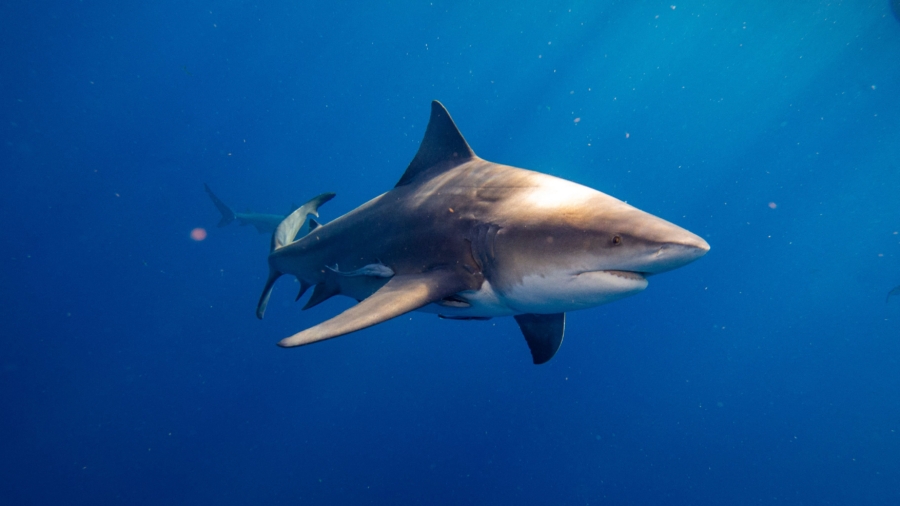
Two American women on vacation in the Bahamas were bitten by a shark and needed to be airlifted for their injuries, police said.
Initial reports from the police indicate that the two women, both U.S. nationals, were swimming in the waters at Bimini Bay, 50 miles off the coast of Florida, when they were attacked by a shark.
Both sustained injuries and received first aid at a local clinic before being airlifted to New Providence in Nassau island for further medical attention.
According to the Royal Bahamas Police Force, one of the women suffered serious injuries.
The Royal Bahamas Police Force did not immediately respond to questions from NTD.
Sharks have an extraordinary sense of smell—it is one of their most effective hunting tools—so never go into the water when you are bleeding, even if it’s just a small cut on your fingers. Menstruating women are also advised to stay out of the water.
Avoid going into the water at twilight or at night, when sharks are most active. Wearing shiny jewelry is another bad idea, as the reflected light resembles the sheen of fish scales and may lure nearby sharks.
However, should a shark decide to charge you, keep in mind that humans cannot outswim a shark.
“Hitting a shark on the nose, ideally with an inanimate object, usually results in the shark temporarily curtailing its attack,” the museum said. “Try to get out of the water at this time.”
“If a shark actually bites, we suggest clawing at its eyes and gill openings, two sensitive areas. You should not act passively if under attack as sharks respect size and power.”