


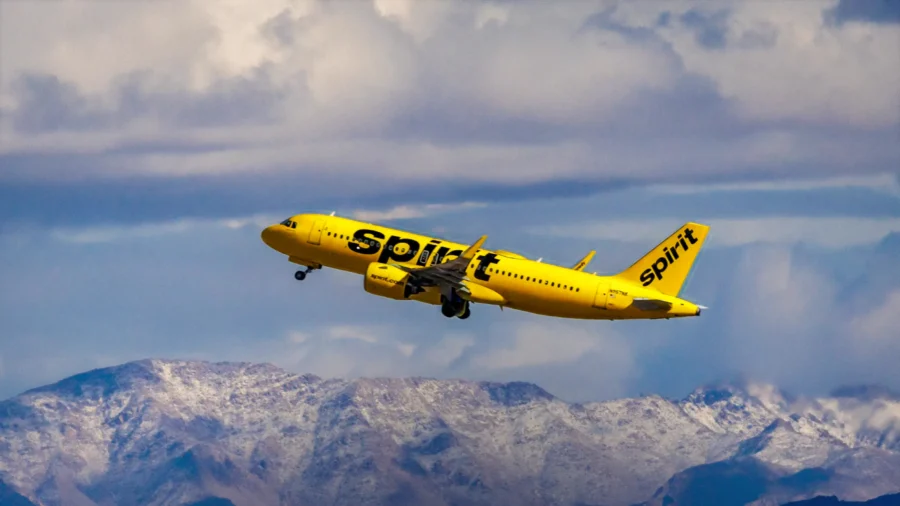
Spirit Airlines has issued a warning about its ability to survive the next 12 months, raising substantial doubts about the budget carrier's future just five months after emerging from Chapter 11 bankruptcy protection.
The disclosure sent the Florida-based carrier's shares tumbling 42 percent as investors reacted to the alarming financial outlook for the airline known for its bright yellow fleet of aircraft.
Spirit attributed its continued struggles to adverse market conditions that have shown no signs of improvement since its March bankruptcy exit. According to the filing, the company has been "affected by adverse market conditions, including elevated domestic capacity and continued weak demand for domestic leisure travel in the second quarter of 2025, resulting in a challenging pricing environment."
The airline warned that it "expects these trends to continue for at least the remainder of 2025”.
The carrier's most pressing challenge stems from the minimum liquidity requirements embedded in its debt obligations and credit card processing agreement. According to the filing, these covenants "require financial results to improve at a rate faster than what the Company is currently anticipating."
Cost-Saving Measures
To address mounting financial pressures, Spirit has already implemented several cost-saving measures. In July, Spirit said it would furlough about 270 pilots, while demoting another 140, as part of broader efforts to conserve cash and reduce operational expenses.Looking ahead, the company outlined plans for additional measures, including "the sale or other monetization of certain aircraft and real estate, the sale of excess airport gate capacity, elimination of certain fixed costs and other transactions to raise additional liquidity."
According to the filing, Spirit "is in discussions with various stakeholders related to some of these future initiatives." However, the company provided no assurance that such efforts would succeed, stating "there can be no assurance that such initiatives will be successful."
Spirit's current predicament represents another major step back since its emergence from bankruptcy protection on March 12. The restructuring process had successfully eliminated large debt obligations while establishing new financing arrangements. The airline also completed a holding company reorganization that made Spirit Aviation Holdings the new parent company.
The carrier began trading on the NYSE American stock exchange on April 29 under the symbol "FLYY," marking what appeared to be a fresh start for the troubled airline.
The bankruptcy exit involved several key financial maneuvers. Spirit issued $840 million of senior secured notes due 2030 with an interest rate of 12 percent per annum, with 8 percent payable in cash and 4 percent payable in-kind. The company also entered into a new revolving credit facility providing $275 million in credit capacity.
Worse-Case Scenario
Spirit outlined the consequences if its liquidity enhancement efforts prove unsuccessful.According to the filing, "management believes it is probable that the Company will be unable to comply with the minimum liquidity covenants under the Company's debt obligations and credit card processing agreement at some point in the next 12 months."
Such a scenario "would result in an event of default," potentially causing "the maturity of the Company's debt obligations to be accelerated." This could effectively trigger another financial crisis for the airline that only recently escaped bankruptcy protection.
Spirit Airlines was the first major U.S. carrier to file for Chapter 11 bankruptcy since 2011.