


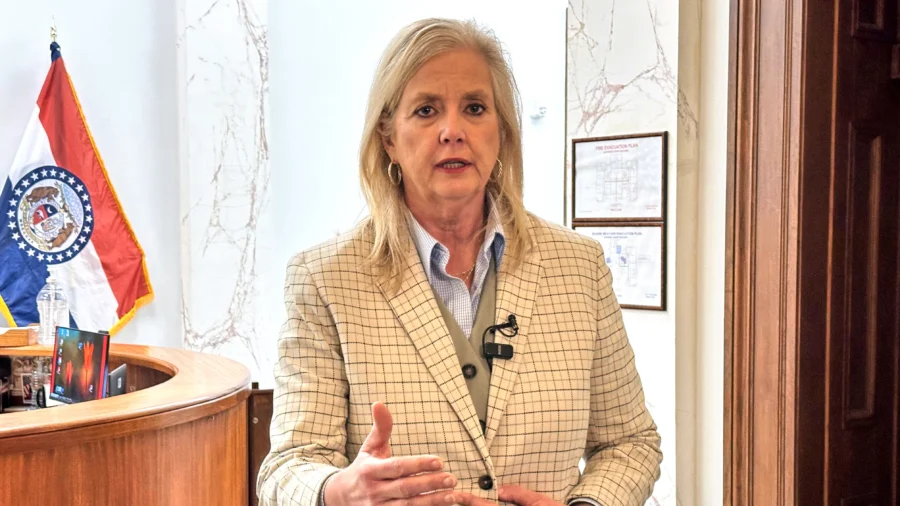
A coalition of attorneys general is urging the Environmental Protection Agency (EPA) to amend its Draft Sixth Contaminant Candidate List (CCL) to include mifepristone.
The CCL tracks unregulated contaminants in the public water system that may require further investigation for potential health effects.
Mifepristone is a pharmaceutical used to terminate pregnancies.
The attorneys general, led by Missouri AG Catherine Hanaway, sent the letter in response to a public notice published in the Federal Register, which established a 60-day public comment period that concluded on June 5, 2026.
Under the Safe Drinking Water Act, the CCL is published by the EPA every five years.
“Conventional wastewater treatment is not designed to remove these type of contaminants, so there is strong reason to conclude that the compounds persist in both the environment and the water supply,” the coalition wrote.
Other states whose attorneys general signed the letter include Alabama, Alaska, Arkansas, Florida, Idaho, Indiana, Kansas, Kentucky, Louisiana, Nebraska, Oklahoma, South Carolina, and Texas.
The Guttmacher Institute estimates that chemical abortions accounted for 63 percent of abortions nationwide in the formal health care system as of 2023, compared to 31 percent in 2014 and 14 percent in 2005.
The letter argues that the increase has resulted in the chemical being flushed directly into the sewage system.
“It follows that if mifepristone reaches sufficient concentration, pregnant women who unintentionally ingest the drug through the public water supply could be at greater risk of health complications than the general population,” the attorneys general warned.
In a footnote, the law enforcement officials said that Multiple abortion providers encourage women to pass and flush their aborted embryos down the toilet.
According to EPA guidelines, the agency regulates wastewater under the Clean Water Act, and when a toilet is flushed, the contents travel through municipal sewer lines to a local Wastewater Treatment Plant where human waste and tissue paper are removed before the water is discharged back into rivers, streams, lakes, or underground aquifers. EPA water management data shows that most cities and towns pull their public drinking water directly from these same rivers, lakes, or aquifers.
“As acknowledged by the EPA notice and request for comment, the CCL is to serve “as a first level of evaluation for unregulated drinking water contaminants that may need further investigation of potential health effects,” the letter states. “As mifepristone’s use is now at an all-time high, its inclusion on the CCL is a logical step to further investigate the impact of its newfound prevalence on the public health.”