


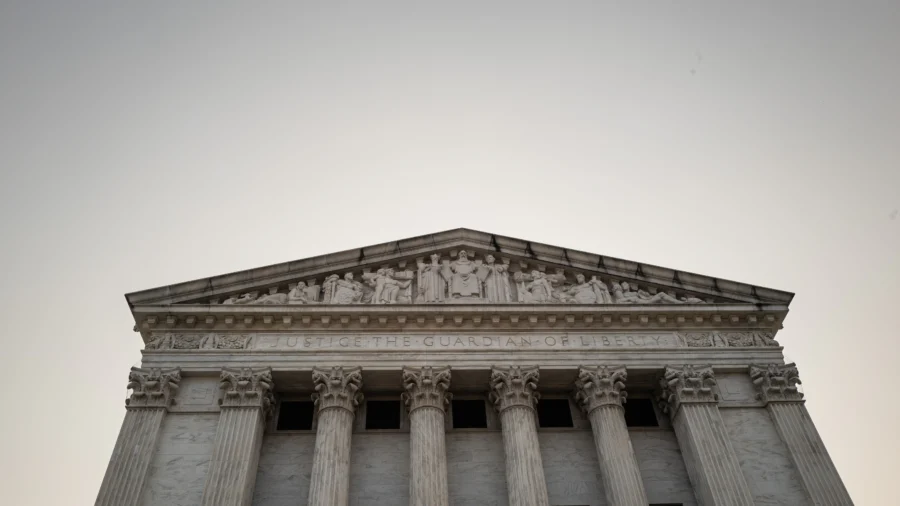
The Supreme Court has declined to take up Republicans’ allegation that judges in Pennsylvania violated the Constitution with a ruling on election procedures within the state.
The case centered on a provision of Pennsylvania law that said election officials should not count provisional ballots if they came from voters who had already cast normal ballots in a timely manner.
Two voters—Faith Genser and Frank Matis—had cast mail-in ballots for the 2024 primary election but failed to enclose them in a secrecy envelope required under state law. Genser and Matis sent in their provisional ballots after the Butler County Board of Elections sent them a notice that their ballots might not be counted. After weighing the mailing envelope, the board had reached a tentative conclusion that Genser and Matis failed to use a secrecy envelope.
When the case reached the state supreme court, a majority of the justices said that the voters’ ballots should be counted. The court said that ballots without secrecy envelopes were “void” and therefore had “no legal effect,” nor were they ballots under the state election code.
The Republican National Committee, state Republican party, and board of elections told the U.S. Supreme Court that the state justices had defied the state Legislature’s intent. In so doing, they said, the judges violated the Electors and Elections Clause of the U.S. Constitution, which generally gives state legislatures the power to regulate elections.
The party and board said in January that allowing the state supreme court’s decision to stand would send “a strong message that judicial review under the Elections and Electors Clause is illusory.” They added that “the result would directly contravene the Constitution: State courts would be left with ‘free rein’ to usurp legislatures’ constitutional function and to rewrite federal election rules with impunity.”
“The lower court’s judgment concerns just two votes in the long-completed Pennsylvania primary,” Justice Samuel Alito said in a statement joined by Justices Clarence Thomas and Neil Gorsuch. “Staying that judgment would not impose any binding obligation on any of the Pennsylvania officials who are responsible for the conduct of this year’s election.”
Genser, Matis, and the Pennsylvania Democratic Party said the case shouldn’t be taken up by the nation’s highest court. Among other things, they said Republicans and the board failed to raise the argument about the Electors and Elections Clause in lower court proceedings.
According to the state Democrats, the U.S. Supreme Court lacked jurisdiction to hear the case. It said federal law only allowed the justices to review decisions by state high courts in limited circumstances, none of which occurred in the case before them.