


The Department of Homeland Security (DHS) said on Friday that two siblings accused in an attempted bombing outside MacDill Air Force Base in Tampa, Florida, in March were born in the United States to Chinese nationals who entered the country illegally. Their parents remained in the U.S. for nearly three decades despite deportation orders.
Federal authorities said the case represents what acting DHS Assistant Secretary Lauren Bis described as “a severe national security threat” tied to illegal immigration and birthright citizenship.
Investigators believe Alen Zheng is currently in China, while his sister was taken into federal custody upon her return to the United States.
Federal authorities arrested the siblings’ parents, Qiu Qin Zou and Jia Zhang Zheng, on March 18 after discovering the pair had illegally remained in the country for years. Immigration and Customs Enforcement said Zou and Zheng entered the U.S. at an unknown location and applied for asylum in 1993, but an immigration judge rejected their claim and ordered them removed in 1998. The Bureau of Immigration Appeals repeatedly upheld that decision.
DHS said the family’s history exposes what it called the “grave danger” of extending automatic U.S. citizenship to the children of illegal immigrants.
“Automatically granting citizenship to children of illegal aliens born in the U.S. is based on a historically inaccurate interpretation of the Citizenship Clause and poses a major national security risk,” Bis said. “That reality became apparent last week when two U.S.-born children of Chinese illegal aliens were indicted for planting a potentially deadly explosive device outside MacDill Air Force Base in Florida.”
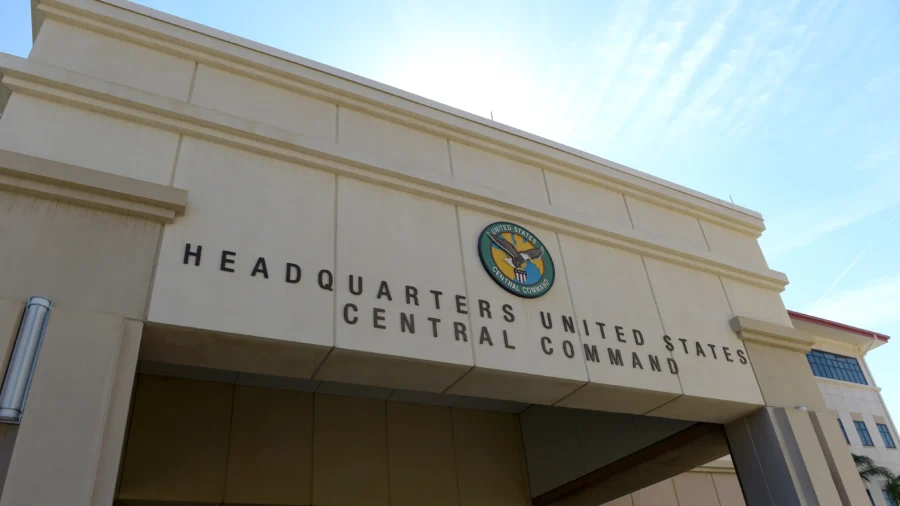
FBI Special Agent Bomb Technicians and Tampa Police closed the gate and redirected traffic while testing the package for explosives, the FBI’s Tampa field office said. Tampa Police temporarily shut down MacDill Avenue south of Interbay Boulevard as a precaution.
By late afternoon, officials deemed the area safe and reopened the base.
In its announcement, DHS pointed to President Donald Trump’s executive order issued on his first day in office last year, “Protecting the Meaning and Value of Citizenship.” The order challenges decades of precedent on birthright citizenship and awaits review by the Supreme Court.
“The privilege of United States citizenship is a priceless and profound gift,” Trump said when signing the order. DHS said it intends to continue enforcing immigration policies that “put the American people first.”