


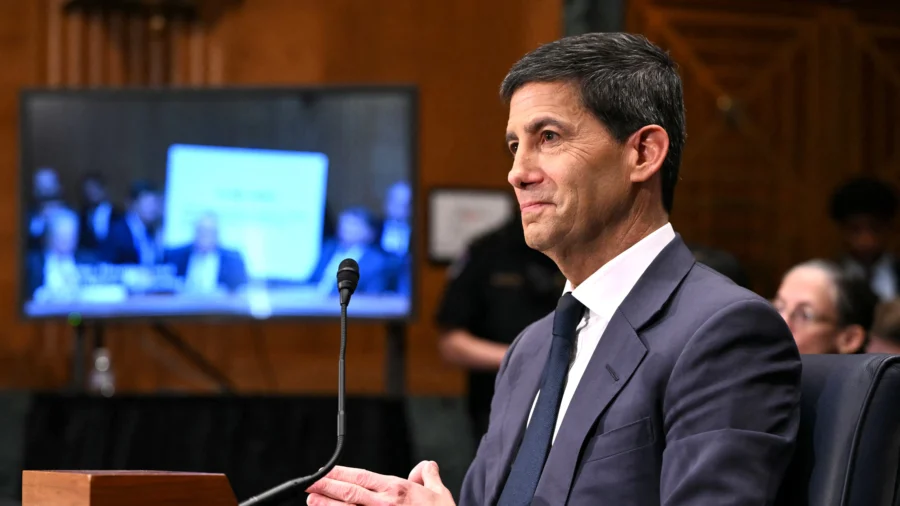
President Donald Trump’s pick to lead the Federal Reserve has pledged to act independently if he’s confirmed to the role and responded to lawmakers' issues about his personal, vast wealth.
Financier Kevin Warsh, 56, appeared before the Senate Banking Committee on Tuesday for his confirmation hearing.
Warsh needs a majority approval vote in the Senate to be confirmed as Federal Reserve chair. Lawmakers will recommend whether to confirm him to a seat on the Fed's Board of Governors, as well as a four-year term as head of the central bank.
Fed Independence, Rate Cuts
Trump tapped Warsh to serve in the role in January following months of frustration with current Chair Jerome Powell, particularly over high interest rates.Warsh has maintained he’s committed to ensuring the Fed remains strictly independent.
"Monetary policy independence is essential," Warsh said in a public statement to the Senate Banking Committee, adding that it was "largely up to the Fed" to maintain that independence by succeeding in its goals and not straying beyond its mandate from Congress.
Warsh added that he didn’t believe the Fed’s independence is particularly threatened when elected officials—including presidents and lawmakers—state their views on interest rates.
"The president never asked me to pre-determine, commit, fix, decide on any interest rate decisions in any of our discussions, nor would I agree to do so," Warsh told Sen. Kennedy when pressed on the issue.
Personal Finances, Vast Wealth
Democrats have questioned Warsh's vast wealth, pointing out that he holds assets worth more than $100 million, according to financial filings, putting him on track to be the wealthiest chief of the central bank ever.Warsh pointed out that he worked tirelessly with ethics officials to come to an ethics agreement.
Federal Reserve ethics rules limit what Fed officials and their immediate families can hold, and how they can manage their investments.
Meanwhile, Sen. Thom Tillis (R-N.C.) said he will block Warsh's nomination until a criminal investigation into Powell has been resolved. Powell revealed earlier this year that the Justice Department had subpoenaed the Fed over Powell’s Senate testimony about the central bank’s $2.5 billion building renovation project.