


Collingsworth County commissioners approved a broad ordinance, which outlaws both abortion and the use of local roads to obtain an abortion.
The framework for Sanctuary Cities for the Unborn has been touted by conservative communities as a blueprint for other cities, counties, and states.
"What is most unique is not just the anti-abortion language used within the ordinance but how the ordinance attempts to regulate driving intent—whether someone intends to go somewhere to obtain an abortion—through normal public roads,” attorney Nick Heimlich told NTD.
The ordinance specifically criminalizes the use of U.S. Highway 83, State Highway 203, and all other public roads within the unincorporated areas of Collingsworth County if they are used to transport an individual to obtain an abortion.
By enacting the measure, Collingsworth County joins a geographic block consisting of Hall, Motley, King, Dickens, Crosby, Lubbock, Lynn, Dawson, Borden, Howard, Mitchell, and Sterling counties, which have similar local laws.
“This ordinance demonstrates that local governments can use roadway-use ordinances as a way to experiment with state policies and also provide an opportunity for local government to enforce these policies using private parties rather than relying solely upon county prosecutors,” Heimlich said.
The wall of ordinances spans some 12,000 square miles; however, Heimlich believes the practical application is limited to unincorporated Collingsworth County.
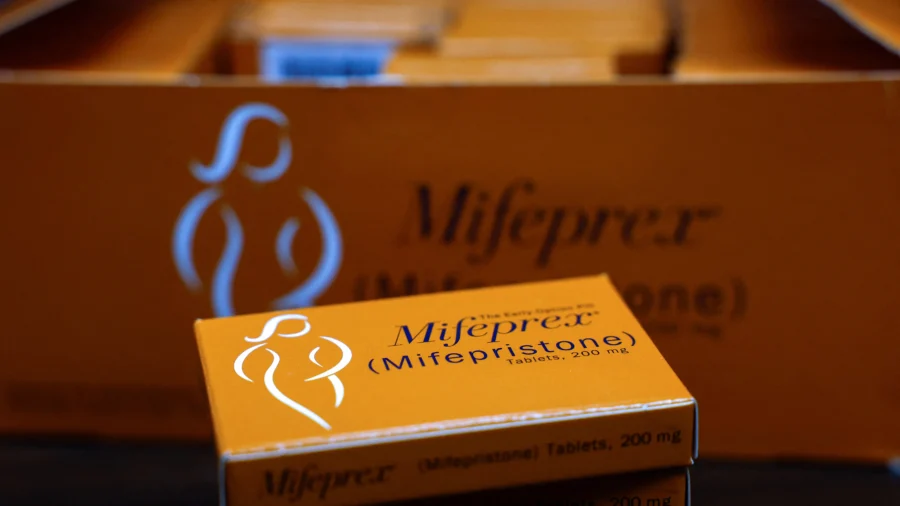
The ordinance also bans abortion-inducing drugs within unincorporated county limits and relies on private civil enforcement by allowing private citizens to file civil lawsuits against anyone suspected of violating the law.
“Private enforcement methods tend to result in inconsistent and often confusing claims against motorists; thus creating the possibility of significant litigation surrounding issues such as proving the driver's intent, the motorist having standing in court, the appropriate jurisdiction, and limitations established under the Constitution,” Heimlich added.
Texas already has some of the toughest anti-abortion laws in the country.
Last year, lawmakers approved House Bill 7, which allows private citizens to sue abortion pill manufacturers, doctors, and anyone who mails the medication.
Republican Gov. Greg Abbott signed the legislation into law and it became effective in December 2025. Nationally, women were granted temporary permission to obtain abortion-inducing pills at pharmacies or through the mail without an in-person visit to a doctor while the U.S. Supreme Court more broadly considers arguments.