


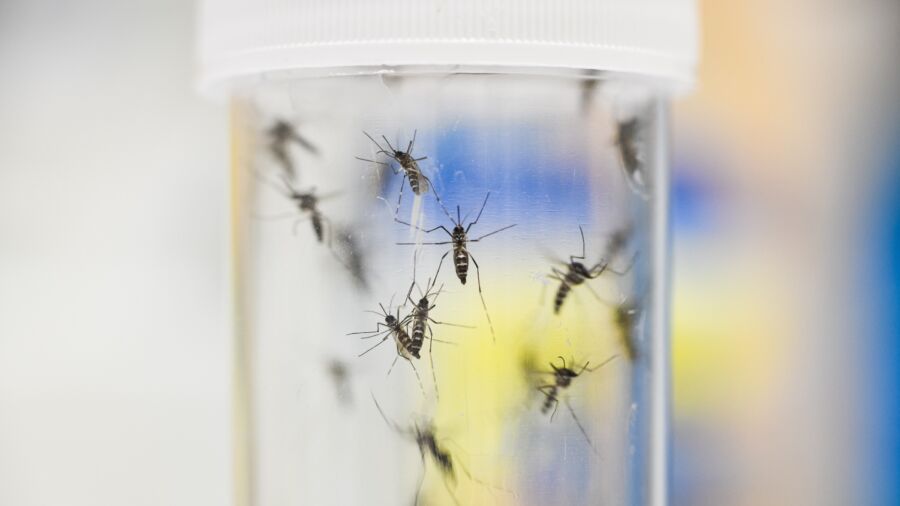
The resident was diagnosed with West Nile neuroinvasive disease—the most severe form of the infection—which can cause tremors, convulsions, neck stiffness, disorientation, paralysis and, in some cases, death.
"West Nile and other mosquito-borne illnesses are a fact of life in Texas in the warmer months, and all Texans should take precautions against mosquito bites to stay safe and healthy," DSHS Commissioner Jennifer Shuford said in the release. "By removing standing water around the home, people can eliminate mosquito breeding grounds and reduce insect populations in their area."
Over the past five years, Texas has recorded 976 total West Nile cases—encompassing both West Nile fever and neuroinvasive disease—and 106 deaths attributed to the virus. The deadliest recent year was 2024, which saw 57 deaths, while 2025 recorded the fewest fatalities at just nine. Both figures are provisional and subject to change.
Most people who contract West Nile never know it. Roughly 80 percent of those infected show no symptoms at all. About 20 percent will develop West Nile fever, a milder illness marked by fever, headache, nausea, muscle and joint aches, and fatigue. Fewer than 1 percent will progress to neuroinvasive disease, the severe neurological condition present in the Harris County patient.
The virus was first identified in Uganda's West Nile district in 1937. It didn't reach the United States until 1999, when a strain linked to cases in Israel and Tunisia was detected in New York City and then spread across the entire continental U.S. in the years that followed.
There is no vaccine against West Nile virus, making prevention the only line of defense. Health officials recommend eliminating standing water around the home—from flowerpots, buckets, kiddie pools, dog bowls, toys, and clogged rain gutters—all of which can serve as mosquito breeding sites.
Baylor College of Medicine notes that female mosquitoes lay between 30 and 300 eggs at a time and require standing water to complete their life cycle, meaning even small containers can become major breeding grounds.
Texans venturing outdoors should wear long-sleeved, loose-fitting shirts and pants, and use mosquito repellents containing DEET or picaridin.