


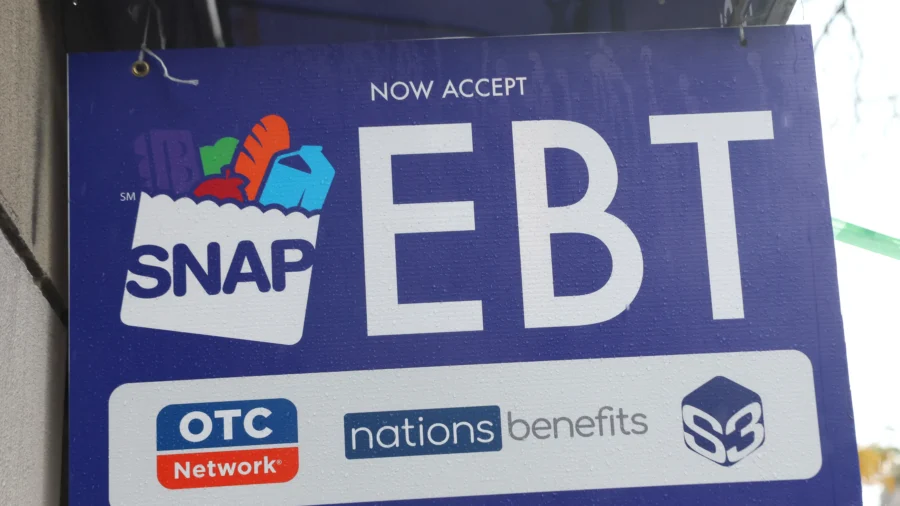
The Trump administration said on Monday that it will partially fund the Supplemental Nutrition Assistance Program (SNAP) by using contingency funds.
The update comes after a long legal battle over how to keep the country's largest food aid program running during the ongoing federal shutdown.
Federal judges in Massachusetts and Rhode Island ruled separately but similarly Friday, requiring the federal government to use at least one emergency fund to partially pay for the program.
What Happens Next?
While SNAP benefits will restart, it will only be half the normal amount and payments will likely be delayed.According to Monday's court filing, the government will tap into a contingency fund of more than $4.6 billion to cover about half of the amount that recipients would normally get for November. The federal program normally costs about $8 billion a month.
But the U.S. Department of Agriculture, which oversees the program, warned in the court filing that it could takes weeks or even months for SNAP recipients to see the reloaded value on their debit cards. The process, according to the USDA, involves state and federal government agencies and vendors.
California Attorney General Rob Bonta said it would take his state about a week to load benefit cards once the funding is made available.
“These are folks who are hungry, and every day matters,” Bonta said during a news conference.
It's also unclear exactly how much beneficiaries would receive under the reduced benefits. The average monthly benefit is usually about $187 per person.
A Temporary Fix
But funding for the program is only a temporary fix. Depleting the contingency fund sets the stage for a same scenario next month if both parties don't come up with an agreement to resolve the federal government shutdown by then.Republicans have urged Democrats to support a clean, continuing resolution reopen the government so American's don't go hungry. Democrats want Republicans to extend enhanced subsidies for the Affordable Care Act (ACT) which are set to expire at the end of the year.
The standoff on Capitol Hill has ultimately led to the depletion of SNAP funds.
Federal judges gave the government the option to use additional money to fully fund the program, but the administration revealed in Monday's court filing that it declined to do so.
Patrick Penn, the USDA's Deputy Under Secretary Food Nutrition and Consumer Services, explained that the agency chose not to tap other emergency funds to ensure there won't be a gap in child nutrition programs for the rest of this fiscal year that runs through September 2026.
USDA Agriculture Secretary Brooke Rollins previously argued that Democrats' efforts to keep the program running is purely political.