


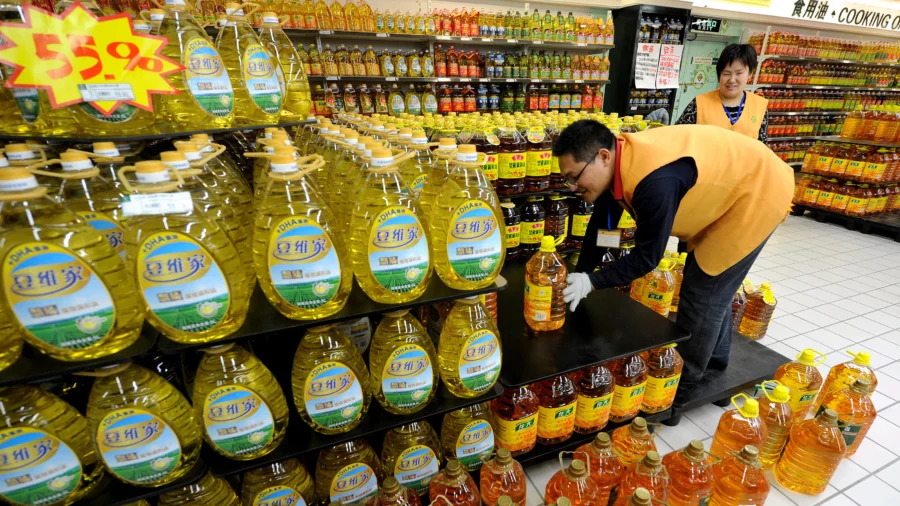
President Donald Trump said on Oct. 14 that he is considering ending cooking oil and other goods trade with China as “retribution” for Beijing’s refusal to buy American soybeans during the two nations’ trade war.
“We are considering terminating business with China having to do with Cooking Oil, and other elements of Trade, as retribution.”
Trump suggested that the United States could “easily produce” cooking oil domestically, and that it doesn’t need to import the product from China.
China—the world’s largest purchaser of soybeans—is now buying the crop from South America while negotiations over tariffs with the United States continue.
“We’re going to make sure that our farmers are in great shape, because we’re taking in a lot of money. Ultimately, the farmers are going to be making a fortune. But it’s a process—it has to kick in,” Trump said at the time.
On Oct. 1, Trump said China had made American soybeans an inflection point in trade negotiations with his administration and suggested it would be a “major topic of discussion” when he soon meets with Chinese leader Xi Jinping.
“It’s unfortunate that Chinese leadership has decided to use the American farmers, soybean farmers in particular, as a hostage or pawn in the trade negotiations,” Bessent told CNBC.
Bessent said further news on the potential bailout would come on Oct. 7, but thus far, the administration has not yet announced offering American soybean farmers financial support during Washington’s trade war with Beijing.
The White House did not respond to a request for comment by publication time.
Soybeans accounted for nearly 71 percent of those losses, upward of $9.7 billion annually.
The first Trump administration offered a $23 billion bailout to American farmers to blunt the impact of Trump’s previous trade war with China.