

President Donald Trump announced during his State of the Union address Feb. 24 that his administration has secured agreements with tech companies to pay a greater share of the costs that electric utilities—and their residential customers—incur when data centers and other high-tech “large load” users boost demand and stress supply.
The president introduced “a rate payer protection pledge” in which tech companies, or “hyperscalers,” agree to pay more for electricity used to power data centers and vow to “pay their own way” to ensure their high demand for electricity does not affect utility consumers’ bills.
“We're telling the major tech companies that they have the obligation to provide for their own power needs,” he said.
“They can build their own power plants as part of their factory, so that no one's prices will go up and, in many cases, prices of electricity will go down for the community, and very substantially down.”
A qualifying project will have at least $500 million in committed private capital investment—especially if it generates its own “behind-the-meter” electricity and can be a generative source for nearby utilities.
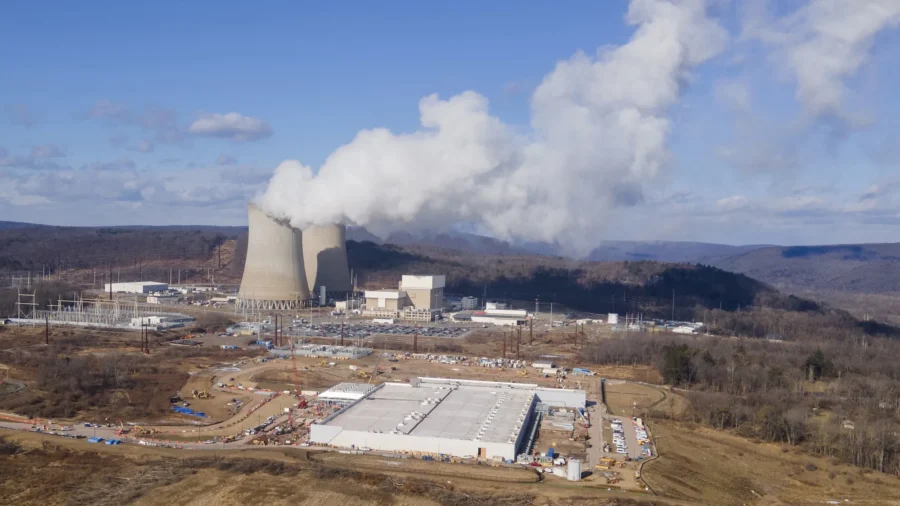
The president supports "co-location" of new energy sources and data centers to accelerate the build-out of AI infrastructure with initiatives that fast-track permits, reduce regulatory hurdles, and make federal land available for these projects.
But how data center development affects residential consumer rates is hotly debated and is certain to be an issue in the 2026 midterm elections, including in dozens of House races.
The White House did not reveal which “top tech companies” have agreed to the “rate payer protection pledge,” but several notable data center developers within the last year have unveiled projects that don't tap into consumer grids.
Examples include Meta agreeing to build a data center on the site of a planned 400 megawatt natural gas plant in New Albany, Ohio, and Google partnering with Intersect Power to build co-located data centers in “energy parks” alongside solar and storage generation in a nationwide $20 billion venture.
Amazon, Google, and Microsoft are also heavily investing in Small Modular Reactors (SMRs) for AI data centers. Among the most ambitious is the planned 12 SMR Cascade Advanced Energy Facility near Richland, Washington, to be built by Energy Northwest and Amazon, the company announced on Oct. 16.