

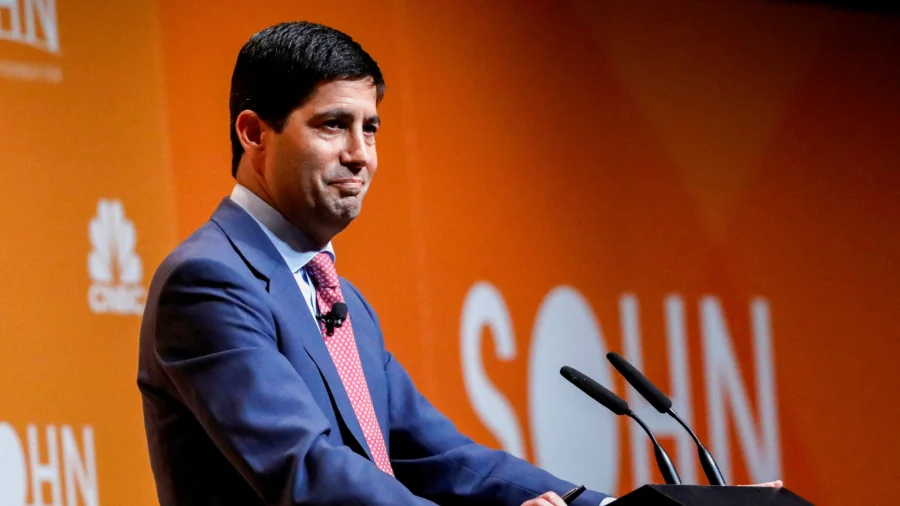
Kevin Warsh, President Donald Trump’s pick to lead the Federal Reserve, will appear on Capitol Hill for his nomination hearing on April 21.
The formal nomination process, before the Senate Banking Committee, has already been clouded by controversy.
Powell Probe in Spotlight
Fed Chair Jerome Powell, whose term expires on May 15, remains under investigation surrounding renovations of the institution’s headquarters in Washington.Despite a federal judge quashing two subpoenas—describing them as a pretext to political pressure—the case has not been closed.
Trump does not believe it should be shut down, though continuing a probe could threaten Warsh’s ascension to Fed chairman.
But a chorus of lawmakers in the upper chamber has argued that the nomination should either be delayed or that Warsh should not be confirmed until the Powell investigation is complete.
Sen. Thom Tillis (R-N.C.) has been one of the most vocal officials on this issue in recent months, repeatedly stating he would not support Warsh.
“Everybody needs to understand, this isn't just about the Fed chair. I mean, it's about the independence of the Fed,” Tillis told reporters on April 15.
“So, if I think on a micro level, it's about the independence of the Fed, and it would be devastating to send the signal that the Fed is no longer independent.
"They're a bedrock. They have their flaws. They have their barnacles.”
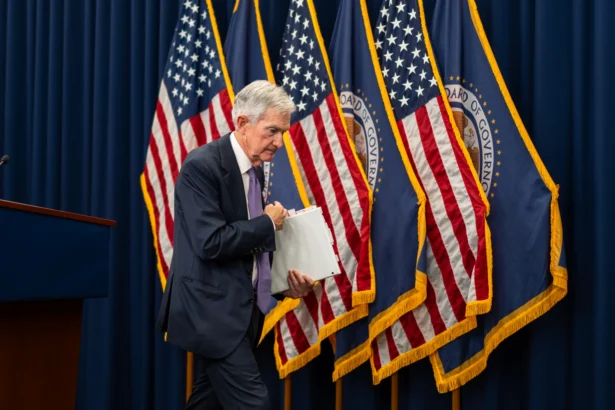
“I’ve held back [from] firing him. I’ve wanted to fire him,” Trump told Fox Business anchor Maria Bartiromo. “But I have to be controversial, you know. I want to be uncontroversial. But he will be fired.”
Sen. Mike Rounds (R-S.D.), who serves on the Senate Banking Committee, thinks Warsh is the best man for the position.
Public Policy Stance
While Congress will be focused on what Warsh would do in one of the hottest seats in Washington, the White House will also be centered on the hearings for hints on upcoming policy decisions.Since Trump’s announcement, there has been debate over whether Warsh could craft monetary policy similar to Arthur Burns in the 1970s.
Under pressure from President Richard Nixon, Burns had lowered interest rates, leading, in part, to the aggressive inflation of the 1980s.
While Warsh has articulated his admiration for Paul Volcker—he eviscerated inflation in the 1980s by hiking interest rates—he has also been sympathetic to Trump’s call for rate cuts.
But rather than simply cutting rates, Warsh has advocated for an overhaul of the institution.
"What the Fed really needs to do is change their operating framework," he said in an October 2025 interview with Fox Business.
"They need to change their models. They need to change a lot of personnel, and in some ways, their policies need to be as focused on Main Street as President Trump's policies."
If the Fed cuts interest rates and reduces the balance sheet, the central bank can restore affordability to Main Street, he added.
"Wall Street right now is booming. They don't need any extra help. They don't need excess money. But that excess money can go to Main Street, and that will give us room for lower interest rates," he stated.
Should he arrive in time for the June 16–June 17 Federal Open Market Committee policy meeting, Warsh might have to contend with elevated inflation—fueled by the war in Iran—as one of his first major tests as central bank chief.
Several Fed colleagues—from Chicago Fed President Austan Goolsbee to Fed Governor Christopher Waller—have defended keeping interest rates unchanged for the foreseeable future to ensure inflation does not spiral out of control amid the oil price shock from the conflict.
This was driven almost entirely by a 21 percent surge in gasoline prices, also the highest since the consumer price index series launched in 1967.
Underlying inflation, however, has been in check.
The 12-month consumer core inflation rate, which strips out volatile energy and food prices, came in below economists’ expectations of 2.6 percent.
“Do I think rates should be lowered? Eventually. I think now that we have to wait and see,” Bessent said during a stage interview at Sema's World Economy Summit on April 13.
Traders have added to bets that the Fed will follow through on a quarter-point rate cut this year.
But the futures market is still pricing in the central bank leaving policy alone until 2027.