


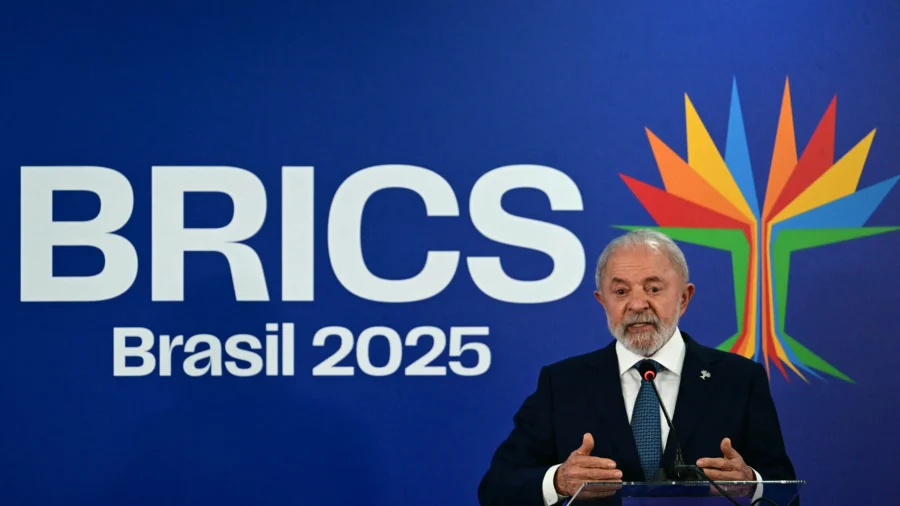
Lord Jim O’Neill, the prominent British economist and former Goldman Sachs executive who originally coined the "BRIC" acronym to describe Brazil, Russia, India, and China, has co-founded a new international policy think tank alongside a former senior director at China’s official state news agency.
Serving as chair and co-founder, O’Neill leads the initiative alongside CEO and co-founder Gemma Cheng’er Deng. According to a report by The Telegraph, Deng previously spent seven years at Xinhua in senior roles typically reserved for Chinese Communist Party members.
Scrubbed Online Presence and Transparency Concerns
A Telegraph investigation revealed that Deng’s extensive background in Chinese state media—previously highlighted across multiple public platforms—was scrubbed from the internet prior to the launch of BRICS+ Thinking. Furthermore, reporting was unable to verify her Chinese name.Sam Dunning, director of the non-profit research group UK-China Transparency, strongly criticized the lack of disclosure regarding her background:
“The fact is that someone seeking to influence the discourse about China in the UK has concealed working for nearly a decade for Chinese state media. This is irresponsible, injurious to trust and naturally raises questions about the motivations of this person, whose Chinese character name appears also to be untraceable.”
He added that her professional history “plainly indicates someone who passed muster as far as the Chinese Communist Party was concerned, profiting personally and perhaps making high-level official connections through a career contributing to state propaganda.”
O’Neill has frequently criticized the UK’s longstanding diplomatic and economic reliance on the US, arguing that Britain must cast its trading net more widely and open the door to Beijing.
He further suggested that Britain “should be open to increasing its trade with countries like China,” adding: “We have to be clear and consistent about the values we really hold and we need to be consistent.”
Additionally, O'Neill maintains that as emerging markets within the BRICS bloc expand, these nations could eventually establish a viable alternative to the U.S. dollar. While critics have previously dismissed the concept as "fanciful," he now considers such a financial structure realistic given recent advancements in payment technologies.